- Outstanding visual art style
- Strategic dice mechanics drive gameplay
- Excellent immersive soundtrack experience
- Engaging and intriguing story
- Dice system feels unfair and punishing
- Frequent bugs and technical issues
Emotions
Archetypes
What players like:
Common complaints:
Gameplay feedback:
Performance notes:
Recommendations:
Other player notes:
Similar games
Blend with other games





Review evidence
Why players say this
Review evidence
Why players say this
Steam review verdict
Stunning art, strategic dice-driven gameplay, an immersive soundtrack, and an intriguing story are undermined by an unfair, punishing dice system and frequent bugs.
What players like
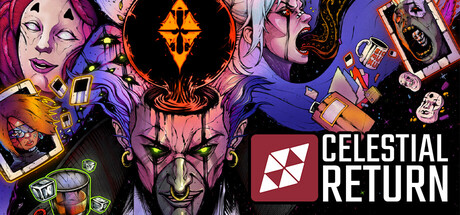
Outstanding visual art: Players consistently praise the game's artwork as beautiful, unique, and alive. The visual style is a major strength that draws players in and leaves a strong impression.
Strategic dice mechanics: The dice system is seen as interesting, innovative, and tense, turning probability into a strategic resource. It creates engaging decisions and adds fun tension to gameplay.
Excellent immersive soundtrack: The soundtrack is repeatedly described as excellent, immersive, and well-fitted to the atmosphere. Music enhances the overall experience and is a standout feature.
Engaging and intriguing story: The narrative is described as interesting, compelling, and intriguing, keeping players curious and invested. The story and its progression are a key draw.
Strong and enjoyable writing: The writing is frequently praised as great, enjoyable, and well-crafted. It stands out and contributes significantly to the game's quality.
Common complaints
Dice system feels unfair and punishing: Players report that the dice mechanic is unbalanced, difficult to manage, and can end runs through outcomes outside player control. Running out of dice causes automatic failure of all skill checks, and the system can even softlock the game.
Bugs and technical issues are frequent: Players encounter numerous annoying bugs, including a reviewer's save becoming bugged. The save and load system sometimes fails to work at multiple story points.
Endings are unsatisfying and lack closure: The ending is described as disappointing, abrupt, and leaving many questions unanswered. Players feel endings are unfinished and provide no real resolution or closure.
Writing quality is weak for narrative game: Reviewers criticize the writing as not great and of low quality, which is a problem for a game carried by its story. The narrative also has many gaps and unanswered questions.
Dice tutorial is nearly absent: The tutorial and explanation of the dice system are almost absent, leaving players to figure out a feast-or-famine mechanic that feels unbalanced and hard to parse.
Gameplay and performance
Dice serve as dual currency and action resource: Multiple clusters describe dice functioning both as the currency for purchasing items and as the random resolution mechanism for combat, dialogue, and skill checks. Players must spend dice to buy from merchants and to attempt actions, making them a central economic and gameplay resource.
Dice are limited and require careful management: Dice are a consumable, non-renewable resource that must be rationed and planned for. Players feel the scarcity when performing meaningful actions and passing skill checks, making resource management a core strategic concern.
Dice-based skill checks drive progression and narrative: Dice rolls resolve skill challenges and gate dialogue options, with success and failure both continuing the story. These checks determine outcomes, open or lock branches, and are tied to the narrative structure.
Choices lead to multiple endings and branching paths: Player decisions carry consequences that open different dialogue lines, quest outcomes, and at least two or three distinct endings. The game features branching paths across multiple playthroughs, though the overall route remains somewhat linear.
Text-heavy visual novel with RPG elements: The game is predominantly text and narrative, presented as a visual novel with light RPG mechanics. It includes interactive dialogue trees and branching narrative, with the gameplay centered on reading and choices.
Crashes and freezes disrupt play: Multiple users report crashes, frequent freezes, and repeated lockups that force restarts. These stability issues appear across different points in the game, including Act 1 and after making choices.
4K fullscreen rendering broken: Players experience black screens, blurry colors, and failure to render in fullscreen at 4K resolution. This makes the game unplayable in common display configurations.
Graphical loading errors occur: Users report infrequent graphical loading errors and various graphical bugs that are usually correctable. These issues affect visual fidelity but are not always game-breaking.
Audio bugs: missing and stuttering music: Music sometimes fails to play when loading a save, and stutter issues occur in Book 3. These audio problems detract from the atmosphere but are not universal.
Runs well on Steam Deck: Several users confirm the game runs successfully on SteamOS and Steam Deck with default graphics settings. This positive note contrasts with other technical complaints.
Recommendations
General recommendation for genre fans: A large number of reviewers simply recommend the game to fans of the genre, including CRPGs, RPGs, and story-driven games. They encourage supporting indie projects like this.
Mixed or negative reviews exist: Some reviewers do not recommend the game or have refunded it, citing issues such as poor dice balance or unmet expectations. A few warn that it may not appeal to those expecting a Disco Elysium/Cyberpunk 2077 hybrid.
Appeals to cyberpunk and noir fans: Reviewers consistently recommend the game to fans of cyberpunk settings, noir detective stories, and bleak futuristic atmospheres. The combination of these elements is a major draw.
Flawed but still recommended: Reviewers acknowledge jank and inconsistencies but still recommend the game, often because the positives outweigh the negatives. It is described as having soul despite shortcomings.
Strong recommendation for Disco Elysium fans: Numerous reviewers explicitly recommend the game to fans of Disco Elysium and similar narrative-driven RPGs. They highlight the deep narrative and existential tone as key similarities.
Buying context
Community fair range: $10.00 - $15.00.
Game completion: 5.0h.
Story completion: 5.0h.
Endgame: 4.0h.
Mixed reports: some players are engaged almost immediately, but the clearest time-to-fun account says the game clicks only after the first twenty minutes once slow pacing and unexplained systems are endured.
Friction: Slow early pacing; Dialogue-heavy, investigation-focused pacing; Almost absent tutorial and system explanation; Unexplained nonrenewable dice and tutorial dice carryover; Randomness limiting broader appeal; Progression-lock risk requiring a new game.
Unlock drivers: A gradual incline toward the hook until the game clicks; Appreciation of details as the story develops; Patience as the game gets better the longer you sit with it; Slow character development and consequential minor actions paying off.
Player profiles
Narrative CRPG Enthusiast: Plays through the story blind on a first run, follows natural dialogue choices, and compares the experience to genre touchstones. Motivation: Experiencing a Disco Elysium-like narrative RPG with meaningful choices and roleplaying depth. Stance: buy.
Story-Driven RPG Newcomer: Approaches the game as a reading-heavy narrative experience and explores the genre for the first time. Motivation: Finding an accessible entry into story-driven RPGs and cyberpunk narrative experiences. Stance: buy.
Art-Focused Worldbuilding Explorer: Explores the game for aesthetic and worldbuilding payoff, treating the story as an atmospheric experience. Motivation: Immersion in distinctive artwork, cyberpunk/noir atmosphere, and a vividly built world. Stance: buy.
Platform notes
Steam Deck: The game runs successfully on Steam Deck with suitable default performance, but the experience is not fully seamless. Users report small or unscaled interface text in some locations and controller/input friction, including incomplete default controller access and prompts that may show keyboard, mouse, or non-Steam Deck icons. These issues make the game playable but require occasional workarounds such as touchscreen interaction, a community layout, or the virtual keyboard.
Linux and Proton: The available Linux/SteamOS evidence is positive: the game is reported to run successfully on SteamOS with suitable default performance, and a user completed the whole game on Steam Deck. The only caveat is the official Playable rather than Verified Deck rating, but no launch failures, Proton tweaks, anti-cheat issues, or Linux-specific instability are reported.
Other review notes
Frequent Disco Elysium comparison: Players repeatedly compare the game to Disco Elysium, especially for its internal voice system, inner-monologue writing, voiceover, and dialogue-driven design, while noting it maintains its own world, plot, and protagonist.
Cyberpunk and Citizen Sleeper inspirations: The game is described as taking inspiration from cyberpunk, noir, Disco Elysium, Citizen Sleeper, Prey, TTRPGs, and FMV imagery.
Kickstarter-funded indie project: The game was funded via Kickstarter by a small first-time indie studio, a detail frequently mentioned by reviewers.
Fast developer patches: Developers released patches quickly to fix launch issues and bugs, including a progress-blocking bug, and are working on dice economy improvements.
Favorable Citizen Sleeper comparisons: Reviewers compare the game to Citizen Sleeper for resource management mechanics, with some claiming it may be better than Citizen Sleeper 2, though others consider Citizen Sleeper better.