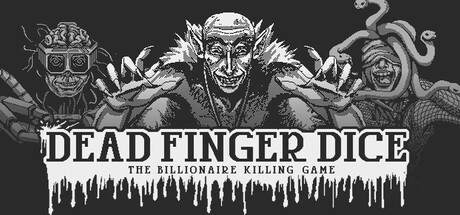
- Stylish pixel art visuals praised
- Engaging and fun gameplay
- Unique dice roguelike mechanics
- Excellent soundtrack and music
- Rigged AI dice rolls frustrating
- Boring and tedious gameplay moments
Emotions
Archetypes
What players like:
Common complaints:
Gameplay feedback:
Performance notes:
Recommendations:
Other player notes:
Similar games
Blend with other games




Review evidence
Why players say this
Review evidence
Why players say this
Steam review verdict
Stylish pixel art, engaging dice roguelike mechanics, and an excellent soundtrack are undermined by frustratingly rigged AI rolls and stretches of tedious gameplay.
What players like
Stylish pixel art praised: Reviewers consistently highlight the attractive art style, including grim stylized pixel art and retro color palettes. The visuals are frequently cited as a major draw and polished aspect of the game.
Engaging and fun gameplay: Many players find the game highly engaging, addictive, and exciting, with cool vibes and a thrilling experience. This positive emotional response is a recurring theme across reviews.
Unique dice roguelike mechanics: The game's distinctive dice-based roguelike mechanics are frequently mentioned as novel and fun, with item synergies adding depth. Reviewers appreciate the fresh take on the genre.
Excellent soundtrack and music: The music and soundtrack are repeatedly praised as excellent, cool, and captivating. Sound design contributes significantly to the overall experience.
Easy to learn and play: Players find the gameplay smooth, easy to understand, and not overly challenging. This accessibility makes the game approachable for a wide audience.
Common complaints
Rigged AI dice rolls: The robot boss frequently rolls four- or five-of-a-kind, and the AI appears to draw impossibly strong hands. This creates a strong feeling that outcomes are rigged and unfair.
Boring and tedious gameplay: Players repeatedly describe the game as boring, tedious, slow, and offering poor variety. The core loop fails to stay engaging for many reviewers.
Unclear puzzle hints and passwords: Puzzle hints are too unclear and password hints provide too little information, making puzzles hard to solve. Puzzle design is described as unfriendly.
Lack of dice depth: The dice system lacks depth, with only 1-2 useful dice combinations. The custom dice mechanic is barely useful and not fully explored.
Unskippable slow finger-cutting animation: The finger-cutting sequence cannot be skipped and becomes very boring after a while. It slows down pacing significantly.
Gameplay and performance
Dice poker gambling core: The game is fundamentally a dice-based poker gambling game where players roll dice to form poker hands and bet against opponents.
Fingers as betting stakes: Players wager their fingers instead of chips, and losing can result in fingers being chopped off by a guillotine.
Dice crafting and modification: Players can craft custom dice with special abilities and modify die faces with effects like Iron, Stone, or Magnetic.
Boss fights with dice: Boss encounters involve dice rolls and combinations, with multiple phases and abilities, including a robot boss.
Roguelike structure: The game features a roguelike or roguelite structure with runs starting from scratch and tough challenges.
Black screen on launch: Players report the game launching to a black screen where audio plays but no visuals appear, effectively blocking play. This issue is reported both at initial launch and after the title screen.
Audio bug after victory: One player encountered an audio bug triggered after winning a match. This is an isolated report with limited detail.
Animations feel too slow: Feedback suggests animations could be sped up for a smoother experience. The request is vague and low frequency.
Recommendations
Worth the price: Multiple clusters emphasize that the game is worth its price. Reviewers frequently consider the cost reasonable for the experience offered.
Strong overall recommendation: Many reviewers give a clear positive recommendation, often with enthusiasm. Clusters 1 and 57 explicitly express thumbs-up and five-star endorsements.
Better on discount: Several reviewers suggest waiting for a sale, with some specifying a 70% discount. The game is considered worth buying mainly at a reduced price.
Good for short sessions: Reviewers describe the game as suitable for killing a few hours or a couple of evenings. It is seen as a fun small-scale experience rather than a long commitment.
Appeals to gambling roguelike fans: The game is recommended for players who enjoy gambling-themed roguelikes, dice games, and probability management. It offers strategic depth and risk-reward gameplay.
Buying context
Community fair range: $3.00 - $5.00.
Game completion: 5.5h.
Session length: 3.0h.
Players often need to get past weak explanations, a harsh learning curve, and slow early pacing before the game becomes fun through understanding mechanics and dice combinations. Some players find it immediately addictive, while others never click with it or tire of it later.
Friction: Tutorial explanations are sparse or mechanics are not clearly explained; Harsh learning curve and punishing roguelike difficulty; Slow and unbalanced early core loop; Early meta progression feels stretched out; Waiting for good rolls against predictable monsters becomes tedious; Inability to alter dice limits experimentation.
Unlock drivers: Understanding the game's mechanics; Discovering effective dice combinations; Reading the available tutorial or documentation; A better tutorial system.
Player profiles
Dice Roguelike Genre Fan: Compares builds and dice synergies across runs, values strategic risk management, and seeks games similar to other roguelike deckbuilders. Motivation: Run-based dice and deckbuilding strategy with gambling-style risk. Stance: buy.
Atmospheric Indie Experience Seeker: Plays casually for atmosphere and narrative flavor, enjoying short rounds and presentation over hardcore optimization. Motivation: Immersion in the game's music, art style, humor, and spooky old-school mood. Stance: buy.
Price-Conscious Weekend Player: Plays in short sessions or over a weekend, focuses on completing the available content, and weighs length against cost. Motivation: A short, affordable roguelike experience that feels worth the money. Stance: sale.
Platform notes
Steam Deck: User feedback is dominated by severe launch failure: multiple players report persistent black screens with audio and an inability to enter the game despite standard troubleshooting. A separate Steam Deck comment describes gameplay and RNG frustration rather than a technical fault, and one Linux stability report is positive. Overall, the experience is broken for affected users.
Other review notes
Very short game length: Numerous players report the game can be completed in just a few hours, with specific times ranging from about 30 minutes to 5-7 hours for full achievement completion. The overall content is small relative to the mechanics.
Small amount of content: Beyond the short length, reviewers specifically note scarce content and a small scope relative to the game's mechanics. Some wish for more content, possibly DLC or updates, to dive deeper into the story.
Heavily inspired by Inscryption: Reviewers frequently note strong inspiration from Inscryption in story, gameplay, and art, with many comparisons to its board game that grows more complex. Some feel it falls short compared to its influence.
Compared to Balatro: The game is frequently compared to Balatro, with some seeing it as a cash-in and others noting it stands out due to its standard poker base and extra content. One reviewer calls it a communist-themed counterpart.
Grim gambling game genre: The game fits into the growing genre of grim gambling games alongside Clover Pit and Buckshot Roulette, with a premise of billionaires forcing victims to gamble. It evokes comparisons to Kaiji, the Man from the South, and Hostel.