- Fun and cool gameplay
- Strategic variety and depth
- Unique dice combat mechanic
- Difficulty is inconsistent
- Gameplay is repetitive
- Game balance is poor
Emotions
Archetypes
What players like:
Common complaints:
Gameplay feedback:
Performance notes:
Recommendations:
Other player notes:
Similar games
Blend with other games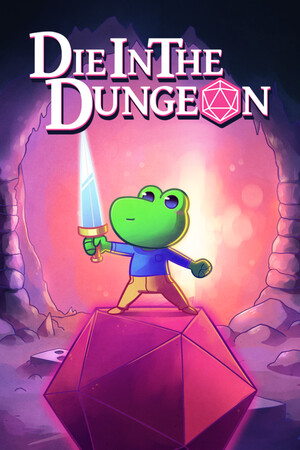


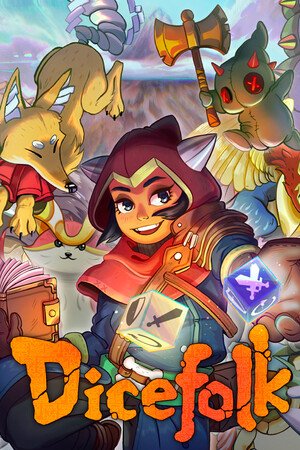




Review evidence
Why players say this
Review evidence
Why players say this
Steam review verdict
Fun dice combat offers strategic variety and depth, but inconsistent difficulty, repetitive gameplay, and poor balance hold it back.
What players like
Game is fun and cool: Players consistently describe the game as fun, cool, and excellent, highlighting its engaging concept and enjoyable gameplay. This positive reception is widespread across many reviews.
Strategic variety and depth: The game allows for many types of strategies, with a variety of characters, artifacts, and skills enabling diverse approaches. This strategic depth is appreciated by players who enjoy planning and optimization.
Unique dice combat mechanic: The dice-based combat is a standout feature, offering original and strategic gameplay that sets the game apart. Players enjoy the depth and decision-making it adds to battles.
High replayability and content: The game offers substantial replay value through unlockable characters, skills, blessings, artifacts, and randomly generated dungeons. Players appreciate the variety and the many ways to approach each run.
Challenging and rewarding gameplay: The game offers a satisfying challenge that is both engaging and rewarding, with thought-provoking puzzles and addictive mechanics. Players appreciate the balance between difficulty and reward.
Common complaints
Difficulty is inconsistent: Players report that the game is either too hard or too easy, with early levels being punishing and late-game becoming trivial. The difficulty heavily depends on luck with artifacts, making runs feel unfair.
Gameplay is repetitive: A large number of players find the game repetitive due to limited enemy variety, few room types, and a lack of events or choices. The right-and-down movement and same 3x3 tile layouts contribute to monotony.
Game balance is poor: Many reviews highlight severe balance issues, including overpowered artifacts, weak bosses, and extreme difficulty swings. The game can become trivial with certain items or brutally hard without them, leading to frustration.
Translation quality is poor: Multiple reviews mention poor translations in French, Italian, Chinese, and Japanese, with machine-generated text and errors. This affects understanding of enemy abilities and game mechanics.
Enemy difficulty is unreasonable: Enemies deal too much damage, have overpowered skills, and appear in unfair compositions, especially early on. This leads to unavoidable damage and frustration.
Gameplay and performance
Turn-based dice combat: The core gameplay is turn-based combat where players roll dice and assign them to enemies or abilities. Enemies have dice slots instead of health, and are defeated when all slots are filled.
Roguelike dungeon crawler: The game features roguelike elements with procedurally generated dungeons and a dungeon crawl theme. Players must clear twelve levels per dungeon, with dungeons available for each character.
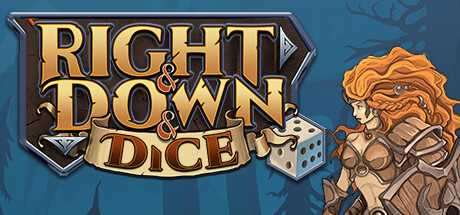
Sequel to Right & Down: The game is a direct sequel or spin-off of the previous game 'Right & Down'. It retains the movement restriction of only moving right or down through dungeon levels.
Dice-based strategy mechanics: The game combines dice with complex mechanics, requiring players to decide which die to use for each situation. It is a dice-based strategy game with colored dice and various abilities.
Skills and artifacts synergy: Each character has different skills and artifacts that can be combined for synergistic effects. Skills can draw additional dice, and artifacts can increase starting dice count.
Steam Deck compatibility issues: The game is only rated Playable on Steam Deck, with small text and control prompts referencing non-native inputs. Despite this, the game generally works well on the device.
Crash on picking up dice: The game crashes every time the player picks up a dice, making the game unplayable at that point. This is a critical bug that needs immediate fixing.
Autosave fails after crash: If the game crashes or is force-exited, the autosave does not function, causing players to lose significant progress. This is a serious reliability problem.
Windowed mode setting bug: The windowed mode option does not work unless the resolution is selected first before enabling it. This is a minor but annoying UI issue.
Recommendations
Recommended for dice game fans: Multiple reviewers strongly recommend the game to fans of dice manipulation and controlled randomness. The game's core mechanics appeal to players who enjoy strategic dice-based gameplay.
Best bought on discount: Several reviewers suggest purchasing the game at a discount or through bundles like Fanatical. This implies the full price may not be justified for all players.
Worth its price: Several reviewers state the game is worth its price, with some noting it is reasonably priced. The value proposition is generally positive, especially for the target audience.
Not recommended by some: A few reviewers do not recommend the game, with one planning to refund. This indicates mixed reception, possibly due to gameplay preferences or balance issues.
Good for quick sessions: The game is suitable for both short play sessions and longer grinding sessions. This flexibility appeals to players with varying time commitments.
Buying context
Community fair range: $4.00 - $10.00.
Game completion: 50.0h.
Session length: 0.8h.
Most players report the game as a repetitive, RNG-dependent slog that never becomes enjoyable, with no clear anchor event or timing for fun.
Friction: RNG-dependent difficulty; Repetitive gameplay; Grind-like loop; Tedious UI (no drag and drop); Long levels; Lack of progression.
Player profiles
Dice & Board Game Enthusiast: Tactical dice placement, exploring synergies, and comparing to similar board games. Motivation: Enjoyment of dice manipulation and strategic placement puzzles. Stance: buy.
Roguelike Veteran & Balance Critic: Optimizing, breaking the game, and critiquing design flaws. Motivation: Seeking a challenging, well-balanced roguelike experience. Stance: no buy.
Series Veteran: Comparing to the predecessor, exploring new mechanics, and completing the full experience. Motivation: Continuation and evolution of the series they already enjoy. Stance: buy.
Other review notes
Comparisons to Right & Down: Multiple reviewers compare the game to its predecessor, Right & Down, with some preferring the original and others liking this sequel more. The game is seen as smaller, more complex, and different in focus, with one noting it deviates by adding dice and strategy.
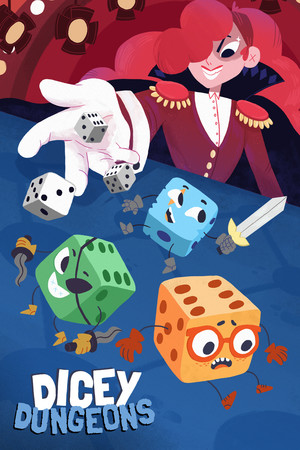
Comparisons to Dicey Dungeons: Several reviews compare the game to Dicey Dungeons, noting visual and gameplay similarities, but some feel Dicey Dungeons offers more interesting decisions regarding equipment and turn optimization. The combat is described as using points and suits to combine skills or cards.
Game is a sequel: The game is identified as the second in a series, a sequel to Right & Down by mc2games. It is more challenging than the first game, and some reviewers liked the previous one more.
Localization issues in multiple languages: Reviewers report poor quality translations in French, Japanese, and Chinese, with the French translation being incomplete for some enemy abilities. These localization problems detract from the experience for non-English speakers.
Comparisons to One Deck Dungeon: The game is compared to One Deck Dungeon, with one reviewer feeling it is a streamlined, simpler version, while another says it tries to improve on areas where One Deck Dungeon struggled but misses the mark. It is also compared to solo board games like Mini Rogue and 20 Strong.