- Engaging fun deck-building gameplay
- Strong Lovecraftian theme and atmosphere
- Highly addictive roguelike card game
- Unique card upgrade system
- Poor game balance
- Poor story and writing
Emotions
Archetypes
Hardware
What players like:
Common complaints:
Gameplay feedback:
Performance notes:
Recommendations:
Other player notes:
Similar games
Blend with other games




Review evidence
Why players say this
Review evidence
Why players say this
Steam review verdict
An addictive Lovecraftian roguelike deck-builder with engaging card play and a unique upgrade system, though poor balance and weak story and writing hold it back.
What players like
Engaging and fun deck-building gameplay: Many clusters describe the core deck-building as fun, satisfying, and replayable, with fresh mechanics that keep players hooked. The card gameplay is widely praised as the heart of the experience.
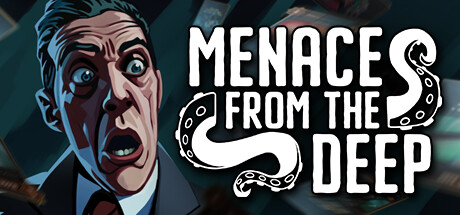
Strong Lovecraftian theme and atmosphere: Multiple clusters praise the game's pervasive Lovecraftian/Cthulhu mood, from story and characters to art and overall vibe. Reviewers repeatedly cite the atmosphere as a major strength that elevates the experience.
Visually striking art and atmosphere: Reviewers consistently highlight the outstanding art style, visuals, and mood they create. The art direction is described as distinctive, gorgeous, and a key selling point.
Highly addictive roguelike card game: Players frequently call the game addictive, often staying up late to play more. The roguelike loop combined with card battles creates a compelling, hard-to-put-down experience.
Unique card upgrade system: The mechanic of upgrading cards through repeated use, with branching paths, is frequently highlighted as a distinctive and interesting feature. It adds depth and customization to the deck-building.
Common complaints
Poor game balance: Multiple clusters highlight balance issues: overall balance is uneven, card and monster balance is poor, numerical balance makes fights nearly unwinnable, and enemy scaling outpaces player power. Build balance and character balance are also problematic.
Poor story and writing: The story is thin, uninteresting, and poorly written. Dialogue and writing quality are often criticized as horrendous.
High difficulty and steep curve: The game is considered too hard, with a steep and uneven difficulty curve. Early game is very painful, and the difficulty is not introduced gradually.
Unfavorable comparison to genre leaders: Players repeatedly find the game inferior to Slay the Spire in content, depth, satisfaction, polish, and balance. Learning curve and overall elegance are also seen as worse compared to similar games like Balatro or Monster Train.
Repetitive and boring gameplay: Core gameplay gets boring quickly, becoming monotonous and repetitive. The game also feels like a slog and is grindy, with late-game becoming too easy and repetitive.
Gameplay and performance
Deckbuilding roguelite core gameplay: The game is fundamentally a deckbuilding roguelite with card-based combat, relics, and meta-progression. Many players compare it to Slay the Spire and highlight the mix of card play, roguelike runs, and strategic deck construction.
Similar to Slay the Spire: Many players describe the game as similar to Slay the Spire in its deckbuilding and roguelike mechanics. This comparison is frequent but the game adds its own twists.
Cthulhu and Lovecraftian theme: The game features a strong Cthulhu Mythos and Lovecraftian theme, including cosmic horror monsters, events, and atmosphere. This thematic skin is frequently mentioned as a key differentiator.
Cards upgrade through repeated use: Cards gain experience and level up as you play them during runs, with multiple upgrade paths available. Upgrades are earned by using cards a certain number of times, such as 4-6 plays, and some cards can upgrade multiple times.
Custom deck building: Players can create and customize their own decks, with options to unlock and compose decks for different classes. Deck management includes avoiding deck bloat and making strategic card choices.
Freezing during gameplay: The game frequently freezes when playing cards, selecting events, or when combo/block stacks reach high numbers, often requiring a restart.
Severe optimization issues: Many users report poor optimization, including lag from Chapter 4, long delays when clicking options, and overall terrible performance.
Steam Deck compatibility is positive: Multiple users report the game runs well on Steam Deck, even with default trackpad layout, despite being listed as Unsupported.
Frame rate drops and stuttering: Frame rate drops significantly during turns as cards are drawn and discarded, and stuttering occurs during cutscenes.
General performance is smooth: Some players experience no bugs and report the game runs well with native settings requiring no adjustments.
Recommendations
Strong recommendation for Lovecraft and card game fans: Many reviewers recommend the game specifically to fans of Lovecraftian horror and card games. Cluster 1 (19 mentions) and Cluster 2 (11) highlight this as the primary audience.
Recommended for deckbuilding enthusiasts: The game is highly recommended for those who enjoy deckbuilding mechanics. Cluster 5 (6 mentions) and Cluster 4 (8) show strong appeal to card game and deckbuilding fans.
Better to buy on sale with DLC: Many suggest purchasing the game and DLC at a discount. Cluster 9 (5 mentions), Cluster 10 (5), and Cluster 14 (3) advise waiting for sales.
Great for Slay the Spire fans: Reviewers frequently compare the game to Slay the Spire and recommend it to players who enjoy that style. Cluster 3 (10 mentions) and Cluster 19 (2) emphasize this comparison.
Good for roguelike deckbuilder fans: Reviewers recommend the game to fans of roguelike deckbuilders, often mentioning similar games like Inscryption. Cluster 7 (6 mentions) and Cluster 20 (2) support this.
Buying context
Community fair range: $10.00 - $17.00.
Game completion: 22.0h.
Story completion: 25.0h.
Session length: 1.1h.
Endgame: 79.4h.
Reports mostly describe a rough opening of difficult fights, many systems, and slow early progression, then a turn toward fun once mechanics click and cards or upgrades open up. A minority found it addictive immediately, while others never got past the grind.
Friction: Steep learning curve and many systems/statuses to learn; Punishing early difficulty and frequent deaths; Slow or unbalanced early meta-progression; Resource/material grinding tied to runs; Repetitive early fights and forced card picks; Limited deck options before unlocks.
Player profiles
Veteran Deckbuilder Optimizer: Min-maxing deck construction, hunting combo lines, and replaying difficult runs to test strategies. Motivation: Mastering card synergies and breaking runs with optimized builds. Stance: buy.
Lovecraft Lore Purist: Story-focused and immersion-driven; evaluates writing, translation, and thematic consistency more than pure card optimization. Motivation: Experiencing authentic Lovecraftian horror, story, and atmosphere. Stance: no buy.
Casual Card-Game Newcomer: Plays defensively, uses custom or chill modes, and values approachable mechanics over hardcore optimization. Motivation: Relaxing, accessible deckbuilding with appealing visuals and low-pressure runs. Stance: buy.
Platform notes
Across the Windows 8-11GB VRAM cohort, feedback is positive, with users reporting the game runs well and offers enjoyable deckbuilder gameplay.
Windows 8-11GB VRAM: positive. Users report the game runs well, with praise for its graphics, art, and deckbuilder gameplay.
Steam Deck: Steam Deck feedback is mixed. Some users report excellent out-of-box performance, but multiple reviews describe frequent freezes and crashes during card draws or heavy turn actions, along with small text and workaround-dependent input using trackpads and the on-screen keyboard. The repeated crash and freeze evidence places the experience in the Broken band despite positive reports.
Linux and Proton: Linux/Proton-specific evidence in the provided reviews is limited to Steam Deck reports. Most reviewers say the game runs great or works out of the box on Steam Deck, with one positive note that the trackpad/trigger mouse mapping is functional. There is one isolated complaint about Steam Deck optimization and one reference to a non-full playable rating, but no repeated Linux launch failures, Proton tweaks, anti-cheat blockers, DRM issues, or crashes are reported. Overall, the evidence supports a works-well verdict.
Extra review signals
Monetization: The audit found no direct evidence of real-money gacha, loot boxes, a cash shop, paid stat boosts, currency obfuscation, or pay-to-win. Monetization discussion is dominated by paid DLC: some users view the fourth character and new content as a cash-grab or overpriced content split, while others praise the DLC and recommend buying it, often on sale. Under the scoring rules, DLC/expansion pricing alone caps the score at 20.
Other review notes
Slay the Spire comparison: The game is frequently compared to Slay the Spire, with many noting it follows the same formula but introduces novel mechanics. Some view it as a strong complement, while a few consider it less polished.
DLC adds characters and content: The game has paid DLC that introduces new characters, items, and additional content such as a fourth act and new routes. Players mention that DLC reduces difficulty and adds significant value.
Ukrainian localization and voiceover: Reviewers highlight the inclusion of Ukrainian language support and voice acting, with some noting the game is made by Ukrainian developers. This is a notable point of appreciation.
Darkest Dungeon and Arkham Horror comparisons: The game is often compared to Darkest Dungeon for its mechanics and horror theme, and to Arkham Horror for its setting and vibe. These comparisons highlight its dark, tactical style.
Made by Ukrainian solo developer: Several reviewers note that the game is developed by a Ukrainian solo developer, which adds to its appeal and authenticity. This is sometimes mentioned alongside the game's Ukrainian origins.