- Realistic medical gameplay mechanics
- game runs smoothly with few bugs
- high potential for future development
- stretcher movement frustratingly bad
- game becomes repetitive quickly
- game feels unfinished and empty
Emotions
Archetypes
Hardware
What players like:
Common complaints:
Gameplay feedback:
Performance notes:
Recommendations:
Other player notes:
Similar games
Blend with other games 80%Bio Inc. Redemption
 79%Project Hospital
 78%Two Point Hospital
 78%CURE - A Hospital Simulator
 77%Quarantine Zone: The Last Check
 77%War Hospital
 76%Sanatorium - A Mental Asylum Simulator
 76%EMERGENCY 20
 75%Medic: Pacific War
 75%112 Operator
 75%Surgeon Simulator
 75%Emergency Call - The Firefighting Simulation 3
Review evidence
Why players say this
Review evidence
Why players say this
Steam review verdict
Realistic medical gameplay and smooth performance show potential, but frustrating stretcher movement, repetitive tasks, and an unfinished, empty feel hold it back.
What players like
Realistic medical and gameplay mechanics: Players appreciate the realistic implementation of medical processes, including stretcher handling, bed controls, blood draws, and diagnostic tools. This realism adds to the immersive experience.
Game runs smoothly with few bugs: Players report the game starts without issues, runs fluidly, and has relatively few bugs. The game performs as described on the store page, contributing to a positive experience.
High potential for future development: Many reviewers see strong potential for the game's future, mentioning its promising foundation and the possibility of DLCs for other medical specialties. The game's framework is considered sound.
Wide variety of diseases and cases: The game offers a diverse range of diseases, symptoms, and clinical pictures, which players find engaging and non-repetitive. This variety contributes to the game's replay value.
Diagnostic tools are well implemented: The ECG, X-ray, and other diagnostic tools are praised for their quality and realistic implementation. Players find these tools fit the game well and enhance the medical simulation.
Common complaints
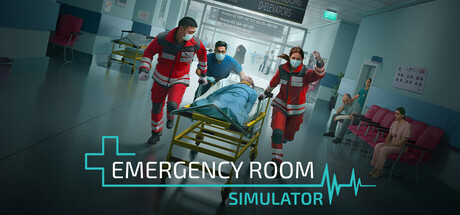
Stretcher movement is frustrating: Players consistently report that moving the stretcher is tedious, difficult, and gets stuck on doorways, making it a major source of frustration. The controls are awkward and unresponsive, with some describing it as skating on ice.
Game fails to start: A common issue is the game not starting, often getting stuck on the main menu or returning to it when trying to load a game. This prevents many players from accessing gameplay at all.
Game becomes repetitive: The game is described as monotonous and repetitive, with limited case variation and the same procedures for each patient. Players find it boring after a short time, often within the first hour.
Lack of vital sign monitoring: Players note the absence of vital sign monitoring such as pulse, blood pressure, SpO2, and temperature. This reduces the game's realism and clinical depth, as they expect to see these values on monitors.
Game feels unfinished: Players compare the game to early access or beta, citing lack of polish and unfinished elements. It seems rushed and not fully developed for release.
Gameplay and performance
Medical ER simulation core: The game is primarily a medical emergency room simulation where the player treats patients, diagnoses conditions, and levels up. It involves interviewing patients, monitoring them, and working through various patient conditions in a hospital setting.
Stretcher and bed movement: A notable gameplay element is moving patients using stretchers or beds, including steering and sprinting with them. This feature appears frequently and is considered part of the core mechanics.
Guided step-by-step gameplay: The game heavily guides the player through each case with tutorials, task lists, and a tablet that provides instructions and diagnoses. This reduces decision-making and makes the gameplay feel more like following a checklist than solving puzzles.
Medical tools and diagnostics: The game includes a variety of diagnostic tools such as X-ray, CT scans, ECG, ultrasound, auscultation, and blood draws, providing results to the player. These tools are integral to the treatment process.
Limited decision-making freedom: Many players criticize that the game leaves no room for independent decision-making, as it directs each step. This leads to an arcade-like feel rather than a simulation that tests medical knowledge.
Game unplayable after updates: Updates, including day-one patches, cause the game to crash, loop opening credits, or hang in the start menu, making it unplayable. Specific updates have broken the game entirely.
Game freezes and lags frequently: Players experience frequent lag and freezing during gameplay, which severely impacts performance and user experience. This issue is mentioned across several clusters, highlighting its widespread occurrence.
Saves fail to load: Players report that the game fails to load saved games, which prevents them from continuing their progress and leads to a frustrating experience. This issue is mentioned in multiple reviews.
Buggy and broken state: Reviews indicate the game has many bugs and is broken, including issues like falling through the map and the sprint feature breaking after one use, showing a lack of polish.
New Game action fails: Starting a new game sometimes fails and returns to the main menu, preventing players from beginning or continuing their experience. This is a critical blocker for new players.
Recommendations
No current recommendation: A significant number of reviewers state they cannot recommend the game right now, often due to bugs or incomplete content. They suggest waiting for updates or a price drop.
Not recommended at current price: Many reviewers advise against purchasing the game at its current price, citing bugs and unfinished state. The price is considered too high for the current quality.
Wait for future updates: Some reviewers prefer to wait for the first round of updates before buying. They believe the game may improve but needs more polish and content.
Positive but cautious outlook: Some reviewers recommend the game but with caveats, seeing it as having good potential for a release. They enjoy the gameplay but acknowledge its flaws.
Recommended for emergency room fans: Some reviewers recommend the game for players interested in emergency room gameplay. They see value in the niche experience it offers.
Buying context
Community fair range: $9.99 - $14.99.
The game is engaging in the first hour or few hours but quickly becomes repetitive and boring, causing enjoyment to drop.
Player profiles
Bug-Ridden Early Adopter: trying to play but consistently blocked by bugs and crashes. Motivation: wanting a stable, functional game to play. Stance: no buy.
Medical Simulation Perfectionist: methodical, detail-oriented, seeking immersive realism and career progression. Motivation: a deep, varied, and realistic medical simulation with manual procedures and progression. Stance: deep sale.
Platform notes
The only provided cohort, Windows systems with less than 8GB VRAM, shows negative performance with lag and freezing reported.
Windows <8GB VRAM: negative. Users report frequent lag and freezing issues on systems with less than 8GB VRAM.
Steam Deck: The game is technically functional on Steam Deck, but suffers from severe stretcher control issues and save/load bugs that disrupt gameplay, requiring players to reload frequently and possibly adjust control schemes. No Steam Deck-specific proton or launcher barriers were reported.
Other review notes
Potential but unpolished: Multiple reviews indicate the game has promise and potential if updates are provided, but it is currently unpolished and lacking content. There is a consensus that with more events and improvements, the game could become much better.
Price too high: Several reviewers find the game overpriced relative to the content offered, with specific complaints about the price tag being a factor in their negative recommendation. Some mention the price as a mockery given the current state of the game.
Limited language support: The game advertises support for eight languages, including Chinese, but only English and German are actually available. This discrepancy is a major point of frustration for non-English speakers, with some using a user-made patch.
Released too early: The game was released prematurely, appearing in an incomplete state with issues. Some reviewers expected it to be labeled as beta or early access, and others noted that it was released as a finished product despite being far from complete.
Lacks medical depth: Reviewers with medical expertise and general players alike criticize the game for missing medical depth and realism, such as equipment usage and vital systems. It is considered not deserving of the 'simulation' label.