- Major visual improvements made
- Game is generally enjoyable
- Firefighting simulation core engaging
- Frequent crashes and freezes
- Traffic collision bugs present
- Poor value for price
Emotions
Archetypes
Hardware
What players like:
Common complaints:
Gameplay feedback:
Performance notes:
Recommendations:
Other player notes:
Similar games
Blend with other games 89%Emergency Call 112 – The Fire Fighting Simulation 2
 84%Firefighting Simulator: Ignite
 83%Firefighting Simulator - The Squad
 81%Global Rescue
 81%Responding
 79%Airport Simulator 2019
 79%City Car Driving 2.0
 79%Truck Mechanic: Dangerous Paths
 79%Streamer Life Simulator 2
 79%Drive Beyond Horizons
 78%Car Service Together
 78%LOTUS-Simulator
Review evidence
Why players say this
Review evidence
Why players say this
Steam review verdict
Visual upgrades and engaging firefighting core are overshadowed by frequent crashes, traffic bugs, and poor value.
What players like
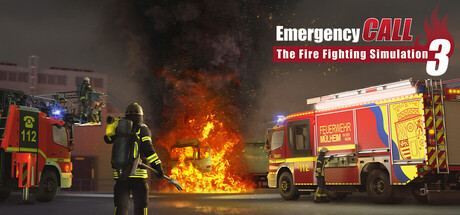
Major visual improvements: Graphics are significantly better than previous series entries thanks to the new game engine. Visuals are highlighted as a clear upgrade.
Game is enjoyable: Players find the game fun, solid, and well-designed with a convincing core idea. The overall reception is positive.
Game has potential: Reviewers consistently note the game's strong foundation and great promise for future development. Many see a good basis and concept.
Well optimized performance: The game runs smoothly without lag or stutters, especially compared to previous titles. Performance is good despite high-quality graphics.
No bugs experienced: Some players report no bugs or crashes during their playtime. The game appears stable and functional.
Common complaints
Traffic collision bugs: AI traffic has bugs where vehicles have no hitboxes or drive through cars. This breaks immersion and logic.
Boring and empty gameplay: The game is described as empty, boring, with long waits between calls. This reduces player engagement.
Thermal camera downgraded: The thermal camera in this game is a regression from the previous installment, showing only 'OK' status instead of embers and temperature differences. This removes a key gameplay mechanic for detecting hotspots.
Poor value for price: Players feel the game offers very little content relative to its price, making it not worth the money. This is a common complaint about value for cost.
Game feels too incomplete: Multiple players state the game is too unfinished for Early Access, feeling like an alpha version rather than a playable release. This indicates a lack of readiness.
Gameplay and performance
Firefighting simulation core gameplay: The game is a firefighter simulation involving missions such as responding to fire calls, extinguishing fires, driving, and setting up hose systems.
Early access with content: The game is in early access or alpha stage, with content planned for future updates, featuring a tutorial and missions.
Training courses for progression: The game includes various training courses such as respiratory protection and fitness, and a tutoring system for progression.
Drivable vehicles with crew roles: Players drive fire trucks with crew positions and set up hoses to fight fires, with vehicles like HLF and RTW.
Stamina and fitness mechanics: The game has a stamina system and fitness training with QTEs that improve stamina and progression.
Frequent crashes and freezes: Multiple players report crashes and freezes as a frequent occurrence. These problems appear in menus, missions, and after extended play, which severely reduces accessibility and reliability.
High resource usage: Players note high CPU usage, elevated temperatures on both CPU and GPU, and specific freeze patterns near vehicles. These issues persist on high-end hardware, suggesting inefficient resource management.
General poor performance: Performance is described as poor, inconsistent, and slideshow-like across various hardware configurations. This suggests the game is not well-optimized for a wide range of systems yet.
Frame rate cap disliked: The frame rate is capped at 60 FPS, which displeases many players who prefer higher refresh rates. The inability to disable motion blur further diminishes visual clarity and customization options.
Stutters and hitches: Players experience stutters and hitches that break the virtual world's immersion. These issues detract from smooth gameplay and can be disorienting, especially during action sequences.
Recommendations
Not recommended at current price: Most reviewers advise against purchasing the game at its current state and price, citing it as not worth the money. This is a strong consensus across multiple clusters.
Wait for further development: Reviewers suggest waiting for the game to leave early access or for more development before buying. This allows time for improvements and content additions.
Poor value for content: The game is considered overpriced for its limited content, with some suggesting it should be a free demo. This highlights value concerns.
Recommended for simulation fans: A small number of reviewers recommend the game, especially for fans of firefighter simulations or those who enjoy early access journeys. This niche appeal is noted.
Conditionally recommended with patience: Some reviewers recommend the game only if you can overlook early access issues or commit to patience for future patches. Conditional recommendations are tied to tolerance for bugs.
Buying context
The game has a slow start with a tedious tutorial and repetitive early missions, but some players report increased enjoyment after the first hours, suggesting the fun takes time to surface.
Friction: boring tutorial; long tutorial; wait times; repetitive early calls; lack of vehicle variety.
Player profiles
Early Access Critic: Patient and price-sensitive; waits for major updates and a complete, content-rich experience before purchasing. Motivation: To ensure value for money by avoiding incomplete, early-access games with limited content. Stance: no buy.
Veteran Optimist: Invested early access adopter; tolerates bugs and limited content while trusting the developer's roadmap and appreciating incremental improvements. Motivation: To support the evolution of the series and enjoy ongoing development efforts. Stance: no buy.
Platform notes
Performance is poor on lower VRAM configurations and mixed on higher VRAM, with frequent stability and framerate issues across all cohorts.
Windows 12-15GB VRAM: mixed. Users report mixed performance with occasional bugs and a 60fps cap, though some find it playable.
Windows 8-11GB VRAM: negative. Users report poor performance including outdated graphics, ghosting, pop-in, a 60fps cap, and crashes.
Windows <8GB VRAM: negative. Users report severe performance issues such as low framerate, freezes, crashes, and high GPU temperatures, despite many still recommending the game.
Other review notes
Comparison to previous titles: Several reviewers compare the game to earlier installments, noting both improvements and regressions. Comparisons range from favorable for graphics to unfavorable for functionality.
Early access state acknowledged: Multiple reviewers note the game is in early access, receiving updates and community feedback. Some appreciate the transparent communication and potential for improvement.
Price too high for state: Several reviewers find the price hard to justify given the limited content and early access state, suggesting it should be a free demo.
Hope for future improvement: Some reviewers express hope that the game will become better than its predecessors over time, with continued updates and support.
Features planned for future: Many features are expected to be added later, and there are plans for ongoing development. This is seen as both an opportunity and a risk.