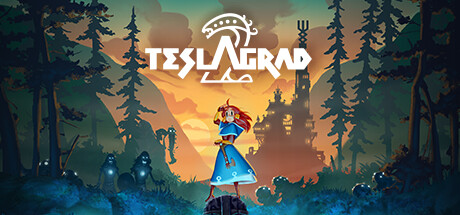
- Graphics highly praised and impressive
- Controls smooth, gameplay enjoyable
- Soundtrack excellent, art style praised
- Frustrating boss fights common complaint
- Game too short, lacks polish
- Bugs and technical issues frequent
Emotions
Archetypes
What players like:
Common complaints:
Gameplay feedback:
Performance notes:
Recommendations:
Other player notes:
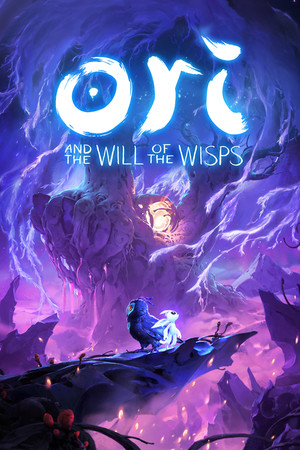
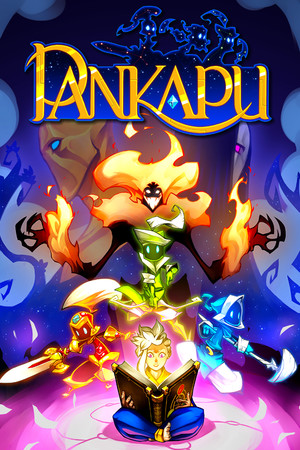
Similar games
Blend with other games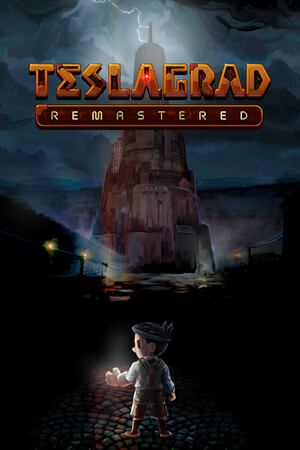





Review evidence
Why players say this
Review evidence
Why players say this
Steam review verdict
Impressive graphics, smooth controls, and an excellent soundtrack shine, but frustrating boss fights, a short runtime, and frequent bugs hold it back.
What players like
Graphics are highly praised: Many reviewers highlight the beautiful graphics, detailed visuals, and improved art style, often calling them amazing, great, or stunning. This is the most common positive aspect across clusters.
Art style impressive: The hand-drawn art style and mix of 3D and hand-drawn elements are highlighted as amazing, gorgeous, and stunning, adding to the game's visual appeal.
Soundtrack and music excellent: Multiple comments praise the music and soundtrack, describing it as spectacular, amazing, and atmospheric. Reviewers enjoy the audio experience alongside the visuals.
Controls are smooth and precise: Reviewers appreciate the fluid, responsive controls that make movement feel precise and easy to handle, especially during platforming and boss fights.
Fun and enjoyable gameplay: Several reviewers state the game is fun, enjoyable, and has good pacing, with a good level of difficulty. This contributes to an overall positive gameplay experience.
Common complaints
Frustrating boss fights: Boss battles are widely criticized as frustrating, annoying, and unclear, with poor telegraphing of weak points and little margin for error. Some are also noted as overly simple or anticlimactic, creating inconsistent difficulty.
Game is too short: Multiple reviewers report the game can be completed in about 3 hours, making it feel too short to justify its price. This is a common complaint across several clusters.
Game lacks polish: The game is considered less polished than its predecessor, with reports of bugs, softlocks, and technical issues. This creates a rough, unfinished feel that diminishes the experience.
Bugs and technical issues: Several players encountered various bugs, frame drops, and softlock issues that disrupted gameplay. These technical problems further reduce the game's polish and enjoyability.
Unskippable boss cutscenes: Players are forced to watch long, unskippable cutscenes during boss fights, especially the final boss, which repeats on every retry. This combined with no checkpoints makes retries tedious and frustrating.
Gameplay and performance
Puzzle platformer with metroidvania elements: Players frequently describe the game as a blend of puzzle-solving, platforming, and metroidvania exploration. This combination appears to be a core identity of the game.
Magnetism-based mechanics and puzzles: A significant number of reviews highlight magnetism as a key gameplay mechanic, with puzzles and platforming designed around magnetic polarity and kinetic energy. This is a distinctive feature that shapes the player experience.
Boss fights with multiple phases: Boss battles are structured with multiple phases, increasing difficulty and requiring players to learn patterns. They are a memorable part of the game.
Emphasizes platforming over puzzles: Some feedback indicates the game focuses more heavily on platforming challenges than on puzzle-solving, with fast-paced movement and precision required. This contrasts with expectations from a puzzle platformer.
Collectibles include cards and scrolls: Players mention collecting hidden cards and lore scrolls throughout the game, often tied to achievements and secrets. This adds replay value for completionists.
Frequent frame drops and stutters: The game experiences frequent frame rate drops and stutters, particularly when transitioning between areas, rooms, or scenes. This occurs on both PC and Steam Deck.
Multiple bugs and glitches: Players report the game suffers from various bugs, glitches, and general instability. Specific issues include objects disappearing, softlocks, falling through textures, and corrupted save files.
Steam Deck compatibility issues: The default Steam Deck settings break the map and cause crashes during cut scenes and freezes, though using Proton Experimental or an OLED model can improve performance.
Poor optimization reported: Players describe the game as poorly optimized, with occasional performance problems, lag spikes, and stutters, though specifics vary by hardware and settings.
Vsync causes lag spikes: Enabling VSync results in lag spikes and FPS drops, which can be resolved by toggling VSync off and on to restore 60 fps performance.
Recommendations
Recommended for genre fans: The game is recommended for fans of action puzzles, kaizo platformers, and the genre in general, as it offers a solid platforming experience. Some reviewers consider it a must-play for enthusiasts.
Recommended for Metroidvania fans: Many reviewers recommend the game to fans of Metroidvanias, 2D platformers, and puzzle platformers, especially those who appreciate exploration and unique mechanics. The game's art and thoughtful design are highlighted as key strengths.
Recommended for Teslagrad fans: Reviewers strongly recommend the game to fans of the first Teslagrad and its universe, suggesting it as a must-play for those who enjoyed the predecessor. Some note that playing the first game first is beneficial but not mandatory.
Not recommended by some: Several reviewers do not recommend the game, citing many irritating moments, lack of quality, or better alternatives in the genre. One explicitly advises nobody to play it, while others note it is not suitable for those who dislike frustration.
Visual style praised: Reviewers recommend the game for its breathtaking art and hand-drawn visual style, making it appealing to players who appreciate aesthetic quality. The Viking-Tesla blend is noted as intriguing.
Buying context
Community fair range: $5.00 - $10.00.
Game completion: 10.0h.
Story completion: 4.0h.
Endgame: 2.5h.
Early gameplay is widely criticized as tedious, repetitive, and frustrating, but enjoyment improves once movement skills and options are unlocked, making traversal smoother and more satisfying.
Friction: boring repetition; unfair deaths; tedious navigation and backtracking; repetitive music and areas; simplistic boss fights; poor map design.
Unlock drivers: all skills unlocked (flash, magnet, bounce, slide); new movement options for backtracking.
Player profiles
Teslagrad Devotees: Plays through the sequel with series knowledge, expecting a similar but evolved experience. Motivation: Continuing the saga and revisiting the Teslagrad universe. Stance: buy.
Completionist Explorers: Systematically explores every area, collects all cards, solves extra puzzles, aims for alternate endings. Motivation: Full completion and uncovering every secret the game offers. Stance: buy.
Movement Enthusiasts: Focuses on mastering movement abilities, explores for the flow of traversal, appreciates art and puzzle integration. Motivation: Experiencing fluid movement and elegant platforming mechanics. Stance: buy.
Platform notes
Steam Deck: The game offers strong visuals, good controls, and battery life on Steam Deck, but faces notable friction: the map cannot be opened with default Proton settings, requiring Proton Experimental. Occasional crashes and frame drops during map transitions further detract from a seamless experience. The lack of official verification leads some users to recommend waiting.
Linux and Proton: The game is generally playable on Linux/Proton, particularly on Steam Deck/SteamOS. The primary friction point is a game-breaking bug where the map fails to open under default Proton settings; switching to Proton Experimental reliably fixes this and allows the entire game to be completed without further issues. While some users report crashes and caution against unverified status, the majority of evidence shows the game runs well and performs flawlessly after applying this singular tweak.
Other review notes
Sequel improves on predecessor: The game is consistently described as a sequel to Teslagrad that refines and improves upon the original's mechanics and presentation. Reviewers note it is more fluid, fast-paced, and less janky than the first game.
Short campaign length: Multiple reviewers highlight the game's short length, with playtimes ranging from 2.4 to 3 hours for the main story and up to 10 hours for full completion. Some expressed a desire for a longer experience.
Refined compared to original: As a successor, the game is more polished and refined than the original Teslagrad, with smoother mechanics and a better overall feel.
Different but similar to first game: While sharing design foundations with the first game, the sequel introduces enough changes to feel distinct, though some feel it's too similar to the original.
Easier than original: The game is often compared to the first Teslagrad, with many noting it is easier and has lower difficulty. This change is seen as either an enhancement or a slight drawback depending on the reviewer.