- Improved graphics over original
- Faithful remake preserves original feel
- Highly enjoyable gameplay experience
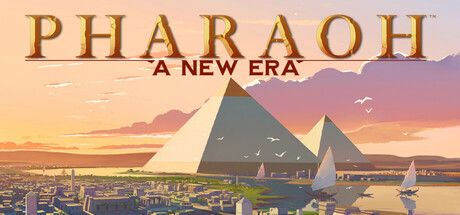
- Classic Egyptian city builder remake
- Persistent bugs frustrate players
- Original combat system missing
Emotions
Archetypes
Hardware
What players like:
Common complaints:
Gameplay feedback:
Performance notes:
Recommendations:
Other player notes:
Similar games
Blend with other games





Review evidence
Why players say this
Review evidence
Why players say this
Steam review verdict
An improved, faithful Egyptian city-builder remake that preserves the original's enjoyable feel, though persistent bugs and the missing original combat system frustrate.
What players like
Improved Graphics Over Original: Many reviewers appreciate the updated graphics, noting they are nicer, more animated, and a clear improvement over the original version. The visual upgrade is frequently highlighted as a positive change.
Faithful Remake Preserves Original Feel: Players emphasize that the game retains the soul and nostalgia of the original, feeling just like the classic. It successfully recreates the original experience while modernizing it.
Highly Enjoyable Gameplay Experience: Players consistently describe the game as fun, addictive, and enjoyable across all aspects. The core gameplay loop is praised as engaging and worth the time spent.
Fixes Flawed Gameplay from Original: The remake addresses and fixes many painful mechanics, glitches, and annoying issues from the original game. Reviewers see it as a more polished and playable version.
Solid City Builder Classic: The game is still regarded as a great city-building simulation, charming and old-school. It stands among the best city builders ever made.
Common complaints
Persistent bugs frustrate players: Many players report the game remains heavily buggy years after release, with frequent restarts required and core functionality broken. Bugs are widespread and significantly impact playability.
Original combat system missing: Players complain that the combat system from the original game was not implemented or was changed for the worse. The lack of dynamic combat control is a common grievance.
Poor and unintuitive interface: The UI is widely criticized as inconvenient, clunky, and non-intuitive, requiring too many clicks for essential actions. It is often compared unfavorably to the original game's interface.
Minor bugs still present: A separate set of feedback notes only minor or occasional bugs that are not game-breaking, though still noticeable. These comments are less severe than reports of pervasive bugginess.
Minimap and map rotation absent: The minimap is missing or non-functional, and there is no 90-degree map rotation. These omissions hinder precise building and navigation.
Gameplay and performance
Classic Egyptian city builder remake: The game is a city-building simulation set in ancient Egypt, focused on planning cities and constructing monuments. It is a remake of the 1999 classic Pharaoh and its Cleopatra expansion.
Core city-building and management gameplay: Players build and manage cities with housing, industry, trade, and resource logistics. Gameplay includes economic micromanagement, supply chains, and mission-based objectives.
Automated and simplified combat system: Combat is resolved automatically, often as a numbers comparison in a separate window without player interaction. The battle mechanics are reworked and simplified compared to the original.
Monument construction is central: Building monuments such as large pyramids is a core activity, requiring delivery of stone blocks and significant time. Monuments are planned and constructed over multiple hours.
Isometric old-school city builder: The game is an isometric, classic-style city builder with a campaign and single missions. It retains the old-school feel of the original.
Frequent crashes and blue screens: Multiple reports describe frequent crashes, freezes, blue screens of death, and the game becoming unresponsive requiring hard restarts. Stability is a widespread concern across different hardware setups.
Game runs smoothly on some systems: Several players report smooth performance on budget notebooks, non-gaming laptops, and after updates, with no crashes on the latest Windows or via Proton on Linux. Optimization is praised by some, indicating inconsistent experiences.
Aspect ratio and resolution problems: The game only renders properly in 16:9, causing black bars, pillar/letterboxing, unexpected resolution changes, and blurry visuals on other aspect ratios like 16:10. Laptop users also face resolution compatibility issues and unreadable map displays.
Severe performance and optimization issues: Reviewers report heavy lag, low FPS even on high-end hardware, delays during gameplay, and clunky movement or building placement. Optimization is described as terrible, with the game becoming slow and unresponsive.
Bugs and script issues: Players encounter minor bugs in trade routes, scripts that bug out causing stuck invasions, and game freezes or stuck pauses that affect saves. These issues disrupt gameplay and require restarts.
Recommendations
Great for original Pharaoh fans: Reviewers frequently recommend the game to players who loved the original Pharaoh and Cleopatra. Nostalgia for the classic Sierra-era experience is a recurring reason for praise.
Strong for city-builder fans: Many reviewers recommend the game highly to anyone who enjoys city-building and resource management titles. It is repeatedly described as an accessible entry point for newcomers and a must-play for genre veterans.
Appeals to Egyptian history lovers: Multiple reviews highlight the ancient Egyptian setting and music as a major draw. Fans of history and mythology are encouraged to pick it up.
General positive recommendation: A broad set of reviews give a clear purchase recommendation without genre qualifiers, urging players to try it. Many say it will not disappoint.
Good value on discount: Several reviewers say the game is worth buying primarily on sale, though some consider it worth full price. Price sensitivity appears repeatedly in purchase recommendations.
Buying context
Community fair range: $10.00 - $20.00.
Game completion: 103.0h.
Story completion: 100.0h.
Session length: 1.5h.
Players often describe Pharaoh: A New Era as worthwhile once they get past its steep learning curve, but unclear tutorials, bugs, UI friction, and missing features delay enjoyment. Some veterans report immediate nostalgia, while others find it boring after the economy is solved.
Friction: Steep learning curve; Unclear and restrictive tutorial; Crashes, bugs, and progression blockers; UI requires many clicks and lacks shortcuts; Missing features such as max speed and map editor; Military auto-battles are dull.
Unlock drivers: Learning the game's systems makes the effort worthwhile; Hot fixes gradually improve the game; Ctrl-click building copy eases repetitive construction; Settings options make the game easier or more like the original; Employment-pool setting improves city management.
Player profiles
Nostalgic Pharaoh Veteran: Campaign-focused city-building with heavy micromanagement, direct comparison to original mechanics, and willingness to use community bugfix mods. Motivation: To relive childhood memories and replay the classic Pharaoh and Cleopatra campaign with modern graphics and quality-of-life improvements. Stance: sale.
Hardcore Strategy Veteran: Optimizes production and defense, expects map tools and manual battles, and rejects casualized auto-combat. Motivation: Meaningful strategic challenge, complex economy and micromanagement, and direct control over military conflict. Stance: no buy.
Casual Relaxed City Builder: Plays at a chill pace, lets automated systems handle combat, avoids heavy optimization, and enjoys graphics, music, and theme. Motivation: Unwinding through accessible, low-pressure city-building with simplified combat and manageable difficulty. Stance: sale.
Platform notes
The Windows 8-11GB VRAM cohort reports poor stability, with the available review citing frequent crashes and excessive RAM usage.
Windows 8-11GB VRAM: negative. Reports frequent crashes and excessive memory consumption, making the game unstable to play.
Steam Deck: The audit finds high friction overall. While several users report smooth Linux and Steam Deck performance through Proton, multiple reviews cite frequent crashes, save failures, tiny or unreadable UI, and awkward controls. These stability and usability problems place the experience in the broken range under the scoring criteria, despite positive reports from some configurations.
Linux and Proton: Linux/Proton feedback is broadly positive: users on Fedora and Ubuntu report the game launching and running well through Proton, frequently out of the box. The main Linux-specific friction is a Vulkan plus fullscreen conflict causing UI glitches or mouse capture problems, resolved with a launch option such as PROTON_USE_WINED3D=1 or by disabling Vulkan. No anti-cheat, DRM, or launcher blocker tied to Linux is reported. Overall, this is a working Proton experience that needs minor tweaks on some setups.
Extra review signals
Monetization: The reviews contain frequent 'cash grab' and 'pay-to-win' rhetoric, but the evidence is tied to upfront pricing, remaster quality, technical issues, and speculative sarcasm rather than concrete in-game monetization. Paid DLC/expansion content is mentioned as traditional add-on content and is even desired by some players. There is no direct evidence of a real-money shop, paid gacha, loot boxes, paid power, paid convenience, aggressive FOMO, or currency obfuscation in this game.
Mod reliance: The reviews show consistent recommendations to use community bug-fix patches, and one user reports repeated campaign mission restarts due to blocking bugs. There is no widespread consensus that the game crashes on startup or is completely unplayable without mods. The evidence therefore supports a buggy but playable state.
External guides: The reviews primarily complain about poor in-game instruction: the encyclopedia lacks search and categorization, complex mechanics require external research, and mission clarity often depends on walkthroughs. Technical and UI issues such as alt-tab crashes and interface problems are present but secondary. No evidence of farming/loot-table dependency or inventory/crafting management appears.
Other review notes
HD remake of Pharaoh: Reviewers widely identify the game as a remake or remaster of the classic Pharaoh (and its Cleopatra expansion). Many note it stays close to the original while updating presentation.
Faithful to the classic original: Many reviewers describe the remake as staying true to the original's look, feel, and core experience. It is seen as preserving what made the classic enjoyable rather than reimagining it.
Nostalgia for longtime fans: Several reviewers connect the game to childhood memories and their personal gaming history. It is framed as a homage that appeals strongly to old-school and nostalgic players.
Part of Sierra city-builder lineage: Reviewers place the game in the Sierra city-building and strategy series tradition. It is described as a remake of a classic management and city-builder title.
Mixed comparison to original Pharaoh: Opinions split on how the remake stacks up against the original Pharaoh and Pharaoh + Cleopatra. Some call it better or an upgrade, while others call it a close but inferior copy.