- Highly rewarding difficulty curve enhances gameplay
- Deep wand and spell customization options available
- High replayability with long-term engagement potential
- Lack of guidance hinders early progression significantly
- Repetitive early-game loops frustrate players
- Technical instability disrupts overall experience
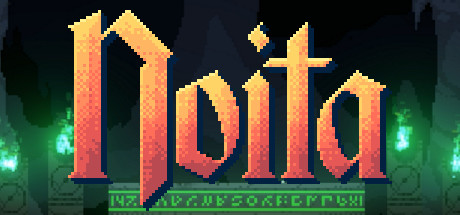
Emotions
What players like:
Common complaints:
Gameplay feedback:
Performance notes:
Recommendations:
Other player notes:
Similar games
Blend with other games




Review evidence
Why players say this
Review evidence
Why players say this
What players like
Highly rewarding difficulty curve: Players consistently praise the game's challenging but fair difficulty, which creates a steep yet gratifying learning curve. The punishing gameplay is balanced by a strong sense of accomplishment upon mastery.
High replayability and longevity: With procedural generation, daily runs, community challenges, and endless spell/wand combinations, the game offers near-infinite replay value. Many players report hundreds of hours of engagement.
Deep wand and spell customization: The wand-building and spell-crafting systems are highlighted as major strengths, offering unparalleled depth and creativity. Players enjoy experimenting with countless combinations to create unique builds.
Unique roguelike charm: The game’s roguelike structure, permadeath, and knowledge-based progression are praised for creating a fresh and engaging experience. Weak early-game enemies add tension and unpredictability.
Appealing pixel art and style: The pixel-art graphics, particle effects, and nostalgic aesthetic are frequently highlighted as visually appealing. The art style complements the chaotic and immersive gameplay.
Common complaints
Lack of guidance hinders progression: The game provides little to no hand-holding, tutorials, or in-game guidance, forcing players to rely on external resources (wikis, guides) to progress. This alienates casual players and those who prefer self-discovery.
Repetitive early-game loops: The early game is criticized for feeling repetitive and unrewarding, with players dying repeatedly to the same challenges. This discourages new players before they reach more engaging content.
Wand mechanics are overwhelming: Wand crafting and editing are poorly explained, with limited in-game tools and high complexity. Players struggle with RNG-based wand generation, self-destructive builds, and lack of mid-game customization.
Technical instability disrupts gameplay: Frequent crashes, glitches, and performance issues (e.g., enemies reviving, getting stuck) frustrate players, especially during long runs or when using mods.
Gameplay and performance
Brutal Difficulty & Progression: The game features a notoriously high difficulty curve, often compared to Dark Souls, with permadeath, scarce health, and punishing mechanics. Players must adapt to unpredictable challenges and steep learning curves, particularly in early biomes.
Roguelike Permadeath Structure: Core roguelike mechanics include permadeath, randomized runs, and no progress retention between attempts (except for unlocks or knowledge-based progression). This forces players to learn from mistakes and adapt strategies.
Physics-Based Pixel Simulation: Every pixel in the game world is physically simulated, enabling dynamic interactions with liquids, gases, fire, and explosions. This creates emergent gameplay scenarios, such as environmental hazards or creative problem-solving.
Exploration & Hidden Secrets: The game emphasizes discovery, with cryptic puzzles, hidden lore, Easter eggs, and secret bosses. Many mechanics and spells are intentionally obscure, rewarding players who experiment or seek community knowledge.
Emergent Gameplay & Exploits: Complex interactions between spells, physics, and world rules allow for creative or exploitative strategies. Players can 'break' the game through emergent synergies or unintended mechanics.
Generally well-optimized: Many players praise the game's optimization, noting smooth performance on modern rigs and quick load times, especially post-beta improvements.
Mixed PC performance requirements: The game runs well on low-end hardware but also has reports of requiring a fast PC for optimal performance, indicating inconsistent optimization.
Frame drops in complex areas: Players notice occasional frame dips, particularly in deep biomes or during flashy spell effects, which can impact immersion and gameplay.
Performance issues with high entity count: Players report performance drops when dealing with a high number of entities, which can hinder gameplay in complex scenarios.
Linux compatibility noted: The game runs well on Linux distributions like Fedora 42 with Proton, indicating good cross-platform support for some configurations.
Recommendations
Highly recommended for challenge seekers: The game is frequently recommended for players who enjoy high difficulty, deep mechanics, and unique challenges. Many reviewers emphasize its addictive and rewarding nature despite frustrations.
Encourages experimentation and discovery: Players are advised to experiment with mechanics, explore independently, and avoid spoilers initially. The game rewards curiosity and self-directed learning.
Not for casual or impatient players: Reviewers explicitly warn that the game is unsuitable for casual gamers, those who dislike difficulty, or players lacking patience. Some suggest it may even frustrate experienced players.
Mods improve accessibility: Reviewers recommend using mods to adjust difficulty, ease repetition, or tailor the experience for casual players. Mods are often suggested to enhance replayability.
Worth the price despite flaws: Many reviewers state the game is worth its price, especially on sale, despite its flaws or technical issues. Some describe it as a 'must-try' or 'masterpiece.'
Other review notes
Unique and memorable gameplay identity: The phrase 'Have fun getting Noita'd' reflects the game's distinct and unforgettable player experiences, often tied to its challenging and unpredictable mechanics. This has become a cultural marker for the game.
Allegorical and metaphorical design: Players frequently highlight the game's deep symbolic and abstract design, which sets it apart from conventional gameplay mechanics. This creative approach contributes to its unique identity and narrative depth.
Fourth-wall breaking mechanics: The game encourages unconventional actions and rewards players for thinking outside the box, including mechanics that break the fourth wall. This adds a layer of creativity and surprise to gameplay.
Unique creature interactions: Players appreciate specific mechanics like using Pheromones to befriend Hamish creatures (purple entities in the first level) for rewards like gold. This adds depth to exploration and strategy.
Wand-crafting compared to PoE: Players draw parallels between Noita's wand-crafting system and Path of Exile's skill tree, praising its depth and customization. This comparison highlights the game's strategic complexity.