- Unmatched gameplay depth and complexity
- Hybrid city-builder and logistics simulator
- Highly customizable difficulty and mechanics
- Steep learning curve for beginners
- Unintuitive and outdated UI/UX
- Performance and stability issues
Emotions
What players like:
Common complaints:
Gameplay feedback:
Performance notes:
Recommendations:
Other player notes:
Similar games
Blend with other games






Review evidence
Why players say this
Review evidence
Why players say this
What players like
Unmatched gameplay depth and complexity: The game is praised for its highly detailed, complex, and engaging gameplay mechanics, offering more depth than competitors like *Cities: Skylines* or *Anno*. Players highlight its granular control, realistic logistics, and immersive systems, which provide long-term engagement and replayability.
Hybrid city-builder and logistics simulator: The game uniquely blends city-building with logistics and production chain management, akin to *Factorio* or *Transport Tycoon*. This hybrid approach appeals to players seeking deep micromanagement and strategic planning in a single experience.
Realistic mode enhances challenge and immersion: The realistic mode is a standout feature, adding significant depth, challenge, and replayability. Players appreciate its punishing yet rewarding gameplay, which simulates urban planning, resource management, and economic systems with unparalleled detail.
Highly customizable difficulty and mechanics: Players can adjust difficulty settings, toggle complex systems (e.g., sewage, heating), and tailor gameplay to their preferences. This flexibility makes the game accessible to both casual and hardcore players while maintaining depth.
Engaging tutorials and rewarding learning curve: The game provides high-quality tutorials and a campaign that eases players into its complexity. While the learning curve is steep, players find it rewarding and enjoyable, with mechanics that encourage mastery over time.
Common complaints
Steep learning curve for beginners: The game is frequently described as overwhelming and unintuitive for new players, with a steep learning curve, poor tutorial design, and reliance on external guides. This creates a high entry barrier for casual or inexperienced players.
Janky and unpolished mechanics: The game suffers from clunky, unintuitive, or outright broken mechanics (e.g., road placement, building connections, logistics). These issues contribute to frustration and a steep learning curve, especially in realistic mode.
Unintuitive and outdated UI/UX: The user interface is described as cluttered, inefficient, and outdated, with poor information presentation, repetitive actions, and scaling issues. This exacerbates the game's complexity and frustrates players.
Performance and stability issues: The game suffers from poor optimization, frequent crashes, and save file corruption, particularly on larger maps or older systems. These technical issues disrupt gameplay and reduce accessibility.
Frustrating road and infrastructure systems: Road and infrastructure placement is cumbersome, restrictive, and prone to bugs (e.g., snapping issues, lack of templates, imprecise controls). This makes city-building tedious and unintuitive, especially for new players.
Gameplay and performance
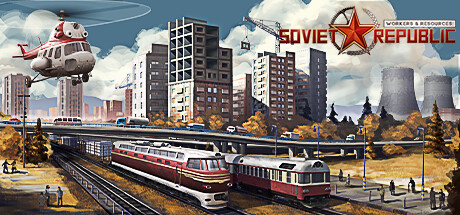
Soviet-themed planned economy: The game is set in a Soviet-era environment with a planned economy, where players manage state-controlled industries, worker-owned production, and resource allocation without privatization. The theme influences mechanics like citizen loyalty and economic simulation.
Infrastructure and utility management: Players must plan and maintain critical infrastructure, including roads, railways, power grids, water/sewage systems, and heating networks. Underground utilities and traffic management add depth to the simulation.
Complex logistics and supply chains: The game emphasizes intricate logistics, including production chains (e.g., ore to cars, crops to food), transport networks (roads, rails, pipelines), and resource distribution. Players must optimize supply chains to sustain cities and industries.
Economic and industrial simulation: The game features a deep economic system with 24/7 simulation, including trade, import/export, and self-sufficiency mechanics. Players must balance production, labor, and resource allocation in a planned economy framework.
Citizen and workforce management: Players must address citizen needs (food, housing, healthcare) and workforce logistics, including commutes, job assignments, and public transport. Citizen happiness and loyalty are tied to infrastructure and resource availability.
Frequent crashes during gameplay: Players report frequent crashes during critical actions (e.g., road construction, train collisions) and after prolonged play sessions. Crashes also occur during map loading or when starting new games, disrupting core gameplay.
Save file corruption and instability: Instances of save file corruption and game freezes compound the instability, making long-term progression unreliable. These issues are reported across multiple clusters, suggesting systemic problems.
Mixed hardware optimization feedback: While some players note the game runs well on low-end hardware or with moderate demands, others highlight contradictory performance issues (e.g., FPS drops, stuttering). This suggests inconsistent optimization across different setups.
Input and UI-related bugs: Critical UI and input issues include disappearing elements, non-functional mouse input, and resolution detection problems. These bugs directly impair usability and gameplay experience.
Visual and physics glitches: Players encounter visual anomalies like city flooding, missing cursors, and outdated graphics. These glitches, while not always game-breaking, detract from immersion and polish.
Recommendations
Deep realism and challenge: The game is highly recommended for players who enjoy punishing difficulty, deep mechanics, and realistic simulations. It appeals to fans of complex logistics, strategic planning, and nation-building challenges, offering a steep learning curve and meaningful decision-making.
Niche appeal for hardcore fans: The game is best suited for hardcore simulation enthusiasts, fans of classic city builders (e.g., SimCity, Transport Tycoon), and players who prefer deep micromanagement over casual gameplay. It is not recommended for those seeking simplicity or multiplayer-focused experiences.
Not for casual players: The game’s complexity, lack of intuitiveness, and punishing difficulty make it unsuitable for casual or impatient players. It requires a significant time investment to master, and those unwilling to engage deeply may find it frustrating.
Adjustable difficulty settings: Players are advised to customize difficulty settings to match their skill level, starting with easier modes before progressing to realistic mode. This flexibility helps manage the game’s inherent complexity and unbalanced mechanics in harder modes.
Economic and logistics focus: The game excels in deep economic simulations, supply chain management, and infrastructure planning. Fans of games like Factorio or Transport Fever will appreciate its emphasis on logistics and resource production.
Other review notes
Add zoom functionality for placement: Players frequently request the ability to zoom in or out while placing objects to improve precision and usability. This feature would enhance the building and editing experience.
Remove station limits for transport routes: Players want the ability to create unlimited railway and bus stations to allow for more complex and expansive transit networks. This would provide greater creative freedom.
Mods integrated into vanilla game: The community appreciates that popular mods are occasionally incorporated into the base game over time. This demonstrates developer responsiveness to player-created content.
Steam Workshop and moderation praised: Players highlight the positive role of Steam Workshop and its moderators in fostering a healthy modding community and curating high-quality content.
DLCs are optional and minor: Players note that DLC content is non-essential, often serving as minor extras or a way to support developers. This suggests satisfaction with the base game’s completeness.