- Relaxing city building experience
- Good for automation and logistics fans
- Beautiful and pleasing art style
- Road system is broken
- Logistics and transport flawed
- Progression is too slow
Emotions
Archetypes
What players like:
Common complaints:
Gameplay feedback:
Performance notes:
Recommendations:
Other player notes:
- -
No data available
Similar games
Blend with other games









Review evidence
Why players say this
Review evidence
Why players say this
Steam review verdict
Relaxing city building with beautiful art and automation appeal, but flawed roads, transport logistics, and slow progression hold it back.
What players like
Relaxing city building experience: Players consistently describe the game as a relaxing, chill city builder that scratches the city-building itch. The combination of charming design, minimalistic style, and laid-back pace makes it a great game to unwind with.
Good for automation and logistics fans: Players compare the game favorably to titles like Factorio and shapez.io, noting its balance of tech direction and resource management. It is especially recommended for logistics lovers and those new to automation games.
Beautiful and pleasing art style: Players consistently compliment the game's visual style, describing it as beautiful, fresh, and pleasant to look at. The minimalistic and clean art style is a key part of the game's appeal.
Addictive and engaging gameplay: Many players find the game surprisingly addictive and fun, often losing track of time while playing. The addictive charm hooks players and keeps them engaged for hours.
Simple yet deep design: Players appreciate the balance between simplicity and depth, with easy-to-learn mechanics that still offer rewarding optimization challenges. The minimalist design is both aesthetically pleasing and functional.
Common complaints
Road system is broken: The road system is widely criticized as illogical, unintuitive, and plagued with bugs such as visual glitches after bulldozing, inability to cross or build overpasses, and restrictive length limits. These issues make road planning and traffic management frustrating.
Logistics and transport flawed: The logistics system is described as messy and inefficient, with trains, boats, and helicopters only able to carry one resource at a time. Resources frequently get stuck on roads, breaking supply chains and causing congestion.
Road system is unintuitive: The road system is described as illogical and inefficient, with restrictive length limits and an inability to create overpasses or connect highways directly to buildings. This forces players into awkward layouts and constant micro-management.
Progression is too slow: Players consistently report that even at maximum 3x speed, the game's progression feels extremely slow and tedious. This pacing issue makes waiting for population growth and resource accumulation a major frustration.
Logistics system is messy: The logistics network is criticized for being ugly and poorly designed, with trains and ships limited to single-resource transport. This leads to inefficient supply chains and frequent resource blockages.
Gameplay and performance
Minimalist city builder with logistics: The game is repeatedly described as a minimalist city builder focused on logistics, production chains, and resource management, similar to original SimCity or Shapez but with a city-building twist.
Logistics system with trains and ships: The logistics system is road-based but also includes trains, shipping, and helicopters for transporting goods.
Relaxed and casual automation puzzle: The game is described as a relaxing, calming puzzle-like automation game with a casual focus.
Road length limitations: Roads and highways have minimum length requirements, which restricts layout options and can be frustrating.
Transport infrastructure essential: Highways and trains are considered essential for efficient logistics, and managing road connections and traffic is a core mechanic.
Optimization praised and mixed: Multiple users report that the game runs very well, with smooth performance even on lower-end hardware, but there are isolated complaints about performance lacking or crashes.
Time acceleration too slow: The maximum 3x time acceleration is criticized as being too slow, with one user even finding 3x speed insufficient.
Recommendations
Great for logistics fans: Many reviewers highlight the game's strength in logistics management, comparing it favorably to similar titles like Anno or shapez. It appeals strongly to optimization and automation enthusiasts.
Good for genre fans: Numerous positive reviews recommend the game to anyone who enjoys city-building or automation genres, calling it highly enjoyable for dedicated genre fans.
Game-breaking bugs persist: Multiple players report game-breaking bugs that block progress, and some feel development has been abandoned or ignored. These issues make the game unplayable for many.
Relaxing and casual gameplay: Several players describe the game as relaxing, suitable for casual play after work, or for chilling while watching something else. It is seen as a slow-paced experience.
Overall positive experience: A handful of reviewers give a straightforward high recommendation, enjoying the game thoroughly without major reservations.
Buying context
Community fair range: $3.00 - $8.00.
Game completion: 180.0h.
Session length: 4.0h.
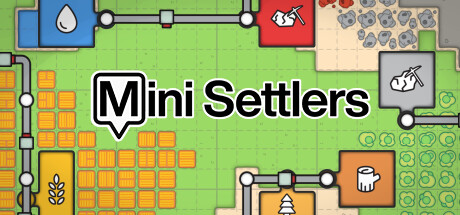
Mini Settlers has a high initial barrier due to a confusing, mandatory and untimed tutorial that can take an hour or more, causing many players to quit before experiencing the satisfying optimization loop that emerges afterwards for those who persist.
Friction: mandatory and lengthy tutorial that cannot be skipped or saved; inability to move or undo buildings and roads, only delete and rebuild; small map sizes forcing demolition of existing infrastructure to progress; repetitive campaign levels that reset progression to zero; confusing logistics and slow progression with long idle watching; forced tutorial replay on every new run.
Unlock drivers: completing the tutorial and understanding the logistics system; ability to skip or opt out of the tutorial (not yet implemented at time of reviews); patches that adjusted tutorial population requirements; copy function to reduce repetitive building.
Player profiles
Casual Chiller: Takes it slow, builds without pressure, enjoys watching the settlement run, often plays while listening to podcasts or music. Motivation: Relaxation and low-stress puzzle solving without failure pressure. Stance: buy.
Optimization Puzzle Solver: Plans layouts meticulously, grids buildings, analyzes bottlenecks, experiments with recipes to optimize resource flow. Motivation: Solving complex logistics puzzles and achieving maximum efficiency under spatial constraints. Stance: buy.
Disappointed Perfectionist: Wants tight control over road layout and building placement, dislikes waiting for unlocks, expects flexible design tools and rewarding progression. Motivation: Seeks a polished, deep, and fair city-building experience without artificial grind or design limitations. Stance: no buy.