- Exceptional modding support enhances gameplay
- High replayability and engaging logistics focus
- Historically accurate vehicle details included
- Clunky and unintuitive UI frustrates players
- Performance drops in large transport networks
- Heavy reliance on mods for full experience

Emotions
What players like:
Common complaints:
Gameplay feedback:
Performance notes:
Recommendations:
Other player notes:
Similar games
Blend with other games







Review evidence
Why players say this
Review evidence
Why players say this
What players like
Exceptional modding support: The game features a highly active and vibrant modding community with thousands of high-quality mods available. Mods enhance gameplay, add customization options, and significantly improve replayability, often addressing minor flaws in the base game.
High replayability and engagement: The game offers endless replayability through procedural map generation, mods, and sandbox modes. Players report hundreds of hours of engaging gameplay with no signs of boredom.
Enjoyable campaign mode: The campaign is entertaining, educational, and serves as a well-structured tutorial. It introduces gameplay mechanics gradually and includes historical scenarios, adding depth and replayability.
Historically accurate vehicle details: The game features highly detailed and historically accurate vehicle models, including functional parts like valve gear motion and doors. This attention to detail enhances immersion for enthusiasts.
Unique transport-focused city building: Unlike traditional city-building games, this title focuses on transport networks, allowing players to indirectly influence city growth. It combines elements of *Railroad Tycoon* and *Cities: Skylines* with improved graphics and mechanics.
Common complaints
Poor campaign and tutorial design: The campaign and tutorial are frequently criticized for being unclear, frustrating, and lacking proper guidance. Players report confusion, repetitive tasks, and insufficient instructions, leading to a steep learning curve and low motivation.
Clunky and unintuitive UI: The user interface is frequently described as cumbersome, cluttered, and unintuitive. Players struggle with excessive menu navigation, poor snapping mechanics, and limited station/vehicle selection tools.
Unrealistic and buggy mechanics: Gameplay mechanics are criticized for being unrealistic, inconsistent, and buggy. Players highlight issues with train routing, AI behavior, and time simulation, which detract from immersion and playability.
Performance and optimization issues: The game suffers from performance problems, including FPS drops, lag, and crashes, especially on large maps or with many mods. Optimization issues are a recurring complaint, even on high-end hardware.
Heavy reliance on mods: The base game is often described as lacking in content and functionality, with players relying heavily on mods for essential features, vehicle variety, and improved gameplay. However, mods can introduce instability and crashes.
Gameplay and performance
Core logistics and transport focus: The game revolves around building and managing logistics networks, including transporting goods, passengers, and resources across multiple modes (rail, road, air, sea). Players optimize supply chains and infrastructure for efficiency and profit.
City and economy growth: City development and economic systems are tied to transport efficiency. Players influence city growth by optimizing resource distribution, passenger routes, and infrastructure, creating a dynamic simulation.
Campaign mode as tutorial: The campaign mode introduces gameplay mechanics step-by-step, teaching players through missions and scenarios. It serves as an optional tutorial for learning logistics, transport systems, and economic management.
Railway and road construction: Players focus on constructing and optimizing railway and road networks, including stations, signals, and junctions. Infrastructure development is central to connecting cities and industries.
Passenger and freight transport: Players manage both passenger and cargo transport systems, including intercity routes, public transport networks, and freight logistics. Balancing demand and efficiency is key to success.
Performance drops in large networks: Players frequently report FPS drops, lag, and response delays in large-scale networks, especially with high vehicle counts, mods, or complex city layouts. This issue is more pronounced on less powerful hardware.
Optimization varies by hardware: While some players experience buttery-smooth performance on modest or older hardware, others report inconsistent optimization, including CPU underutilization, thermal throttling, or memory leaks during long sessions.
Late-game performance degradation: Performance issues, including lag and slowdowns, become more noticeable in the late game, particularly with large populations, high vehicle counts, or complex networks. This is exacerbated by hardware limitations.
Mods cause crashes and instability: Using multiple mods or performance-enhancing mods (e.g., shaders) often leads to crashes, lag, or general instability. Some players report crashes even without mods, indicating broader compatibility issues.
Optimization needed for complex networks: Players highlight the need for better optimization to handle complex networks, large populations, and late-game scenarios without significant performance drops or crashes.
Recommendations
Strong recommendation despite flaws: The game is widely recommended for its replayability, mod support, and strengths in strategy and logistics, even though it has notable flaws like UI issues and optimization challenges. Many reviewers suggest buying it on sale to offset these drawbacks.
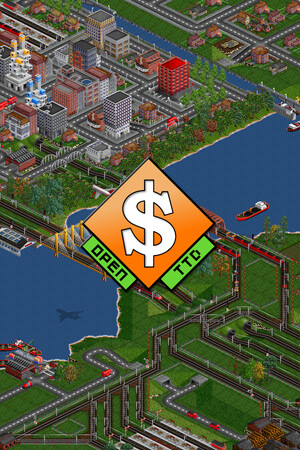
Ideal for logistics and transport fans: The game is highly recommended for enthusiasts of transport simulations, logistics, and city-building games like *OpenTTD*, *Factorio*, or *Cities: Skylines*. It is praised as one of the best modern transport tycoon games available.
Quality-of-life improvements needed: Reviewers frequently mention the need for quality-of-life improvements, such as better UI, chain signals, blueprint systems, and smoother early-game mechanics like maintenance costs.
Not recommended for casual play: The game demands patience and long-term engagement, making it less suitable for casual players or those seeking a quick, low-effort experience.
Anticipation for future improvements: Many reviewers express excitement for the next installment, suggesting improvements like day-night cycles, better resource management, and enhanced mechanics to address current shortcomings.
Other review notes
Frequent developer updates: Players appreciate that the developers actively update the game based on community feedback, improving gameplay and addressing issues promptly. This responsiveness fosters a positive relationship between the developers and the player base.
Geographical inconsistency in vehicle placement: Players have noted that Russian, Soviet, and Russian Federation vehicles are incorrectly placed in the 'Asia' category, which is geographically inaccurate. This misclassification has caused confusion and frustration among players.
Eye strain during gameplay: Some players report experiencing eye strain while playing the game, which may be due to visual effects, brightness settings, or prolonged screen time. This issue impacts the overall comfort and accessibility of the game.
Demand for MacOS support: A portion of the player base has requested a MacOS version of the game, highlighting the need for broader platform compatibility. This would expand the game's accessibility to users on different operating systems.