- Exceptional combat mechanics with high mastery rewards
- Iconic soundtrack and rich storytelling enhance immersion
- High replayability with expansive content and secrets
- Refined movement and tactical enemy design
- Excessive enemy difficulty frustrates some players
- Technical issues and UI problems disrupt gameplay
Emotions
What players like:
Common complaints:
Gameplay feedback:
Performance notes:
Recommendations:
Other player notes:
Similar games
Blend with other games


Review evidence
Why players say this
Review evidence
Why players say this
What players like
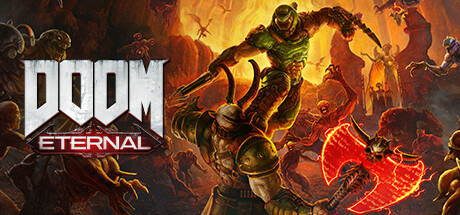
Exceptional Combat Mechanics: DOOM Eternal's combat is widely praised for its depth, fluidity, and strategic complexity. Players highlight the satisfying 'chess-like' dynamics, weapon variety, and resource management, which create an engaging and rewarding experience once mastered.
Significant Improvement Over Predecessor: The game builds successfully on DOOM 2016's foundation, offering faster gameplay, improved mobility, better secrets, and more challenging combat. Players appreciate the evolution of mechanics and the refined balance compared to the previous installment.
Iconic and Immersive Soundtrack: Mick Gordon's heavy metal soundtrack is frequently highlighted as one of the best in gaming, amplifying the adrenaline-fueled combat and enhancing immersion. The music is praised for its high production value and ability to energize gameplay.
High Replayability and Content: The game offers extensive replayability through collectibles, mods, master levels, DLCs, and high-difficulty challenges. Players appreciate the variety of content, including horde mode, secrets, and customization options like weapon mods and skins.
Refined Movement and Mobility: Improved mobility mechanics such as double jumps, dashes, wall climbing, and the meathook on the Super Shotgun are praised for adding depth and fluidity to gameplay. These tools encourage constant motion and strategic positioning during combat.
Common complaints
Overly complex and forced mechanics: The game introduces unnecessary mechanics like platforming, weapon mods, and strict ammo management, deviating from DOOM 2016’s simplicity. Players find these mechanics frustrating and disruptive to the fast-paced combat rhythm.
Excessive enemy difficulty and spawns: Players frequently criticize the overwhelming number of enemies, especially in DLC levels, and the high difficulty even on lower settings. Marauders and other bullet-spongy enemies disrupt gameplay flow and require strict resource management.
Repetitive and restrictive gameplay: The game’s cycle of killing, platforming, and puzzle-solving becomes repetitive, especially in the latter half. Level design is criticized for being restrictive and confusing, with excessive backtracking.
Weakened DOOM identity: The game is perceived as losing the brutal, immersive atmosphere of DOOM 2016. Players feel the protagonist is less powerful, and the game leans into flashy but hollow mechanics rather than 'rip-and-tear' combat.
Frustrating puzzles and navigation: Puzzles and time-based challenges shift focus away from combat and are often confusing or poorly designed. Navigation is cumbersome, with unclear directions and misleading level design.
Gameplay and performance
Difficulty scales with mastery: Higher difficulties (e.g., Ultra-Nightmare) demand near-perfect execution, with enemy resistance and resource scarcity scaling accordingly. The game rewards skill progression with a high-octane power fantasy.
Weapon customization and variety: Weapons have unique mods and ammo types, encouraging strategic swapping (e.g., sticky bombs, precision bolts). Some weapons are situational, limiting playthrough variety but adding depth to combat loops.
Boss fights with unique mechanics: Bosses like the Marauder require specific tactics (e.g., exploiting weak points, managing shield phases). These encounters are designed to test mastery of the game’s systems.
DLC expands content and difficulty: DLCs introduce new enemies, mechanics (e.g., ghost mechanics), and Master Levels with Ultra-Violence difficulty. These additions extend the game’s lifespan and challenge.
Glory kills and melee tools: Glory kills replenish health and serve as a core mechanic, while tools like the chainsaw and Crucible Blade offer instant kills or ammo replenishment. These mechanics reinforce the game’s brutal, arcade-like combat.
Strong PC optimization overall: The game is frequently praised for its smooth performance on PC, including lower-end specs, though some AMD GPU users report unoptimized performance. This suggests broad but not universal optimization success.
Crashes disrupt gameplay: Players report crashes during critical moments, such as login or endboss fights, indicating stability issues that severely impact playability. This is a high-priority concern for technical reliability.
Proton/DRM performance issues: The game stops working on Proton after a launcher addition, and DRM may degrade performance on marginal specs. These issues affect Linux users and those with weaker hardware.
Recommendations
Highly recommended for action FPS fans: The game is frequently recommended for players who enjoy fast-paced, challenging action and the FPS genre. It is praised for its depth, replayability, and ability to deliver an 'ultimate FPS badass fantasy.'
Not for casual or solo players: The game is explicitly warned against for casual players or those seeking a solo FPS experience. It demands effort, learning mechanics, and adapting to its difficulty curve.
DLCs and campaign worth playing: The main campaign and DLCs (especially Ancient Gods 1) are highly recommended, even at full price. Some players suggest replaying the campaign to achieve 100% completion.
Adjust difficulty for best experience: Players recommend starting on 'Hurt Me Plenty' difficulty to fully engage with the gameplay without excessive frustration. Grenade splitting and kill-charge are also suggested to ease combat pressure.
Battlemode less favored than campaign: Players consistently recommend the campaign over Battlemode, indicating the latter may not meet expectations or deliver the same level of enjoyment.
Other review notes
Excited for future installments: Players frequently compare the game to the upcoming 'Doom Dark Age' and express enthusiasm for future releases in the franchise. This indicates strong anticipation and brand loyalty.
Forced account creation criticized: Many players dislike the mandatory Bethesda account creation, viewing it as an unnecessary barrier to gameplay. This has sparked frustration among the community.
Workaround for online requirement: Some players discovered a workaround (unplugging the internet cable) to bypass the online requirement, highlighting dissatisfaction with the enforced connectivity.
Soundtrack absence on Spotify: Fans note the absence of Mick Gordon’s soundtrack on Spotify, expressing disappointment over the lack of accessibility to the music outside the game.
Praise for My Little Pony DLC: The My Little Pony skin DLC is widely praised as a worthwhile purchase, with players appreciating its uniqueness and value.