- Excellent fast-paced FPS combat
- Outstanding Mick Gordon soundtrack
- Stunning graphics widely praised
- Mediocre empty multiplayer mode
- Confusing map navigation issues
- Bugs and softlocks reported
Emotions
Archetypes
Hardware
What players like:
Common complaints:
Gameplay feedback:
Performance notes:
Recommendations:
Other player notes:
Similar games
Blend with other games





Review evidence
Why players say this
Review evidence
Why players say this
Steam review verdict
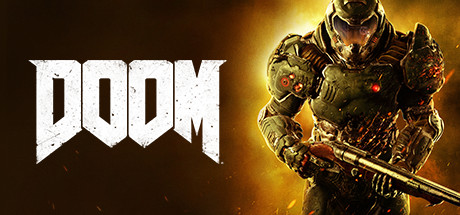
Fast-paced FPS combat, Mick Gordon's outstanding soundtrack, and stunning graphics shine, but mediocre empty multiplayer, confusing maps, bugs, and softlocks hold it back.
What players like
Excellent FPS gameplay: The gameplay is widely praised as excellent, fun, and addictive. Many consider it one of the best first-person shooters ever made.
Outstanding Mick Gordon soundtrack: Mick Gordon's heavy metal soundtrack is consistently highlighted as a masterpiece and one of the greatest in gaming history. It is praised for perfectly complementing the intense combat.
Fast, brutal combat: Combat is described as fast, frenetic, aggressive, and satisfying, with every weapon feeling powerful. The relentless pace and brutality are major highlights.
Stunning graphics praised: Players widely praise the game's graphics, noting they still look excellent even after 10 years. Visuals are described as beautiful, spectacular, and well-optimized.
Great weapon variety: The game offers a large arsenal of unique weapons, each with distinct characteristics and use cases. Unlocking and using all weapons is highly satisfying.
Common complaints
Mediocre empty multiplayer: Many reviewers describe multiplayer as generic, tacked on, and barely populated. Matchmaking wait times are long, and some beginner lobbies can take five minutes or more without finding a match.
Confusing map navigation: Reviewers frequently call the map confusing, maze-like, and easy to get lost in. The minimap is poor or absent, forcing constant reopening and making some levels frustrating to navigate.
Slow compared to Doom Eternal: The pacing feels noticeably slower than Doom Eternal and older Doom titles. Some reviewers consider this entry the weakest of the modern Doom games.
Bugs and softlocks: The game is reported to be full of bugs that prevent progression. Some softlocks persist even after reloading checkpoints or restarting the game.
Repetitive gameplay and levels: Combat scenarios and level designs feel repetitive, making the game monotonous on replay. Several reviewers note that the first few levels become annoying on repeat playthroughs.
Gameplay and performance
Fast-paced FPS combat: The game is defined by its fast-paced first-person shooter combat that rewards constant movement and aggression. Players must stay on the move while fighting large hordes of demons in arena-style encounters.
Killing demons core gameplay: The core gameplay revolves around killing demons using an arsenal of weapons and brutal glory kill executions. Players fight through demon infestation, ripping and tearing through hordes of enemies.
Diverse weapon arsenal: Players have access to a wide variety of weapons including the shotgun, plasma rifle, rocket launcher, BFG, super shotgun, and Gauss Cannon. Each weapon has distinct characteristics and clear use cases in combat.
Campaign and multiplayer modes: The game features both a single-player campaign with linear missions and an online multiplayer mode with XP progression. Multiplayer achievements are also available.
Weapon modification and upgrades: A weapon modification system allows players to upgrade weapons with alternate fire modes and swappable abilities. Additional upgrade systems exist for runes, armor, and suit progression.
Excellent overall PC performance: Many players report the game runs smoothly on a wide range of hardware, often at high or ultra settings. Performance is frequently described as optimized, stable, and visually excellent even on modest systems.
Good optimization on low-end hardware: The game is praised for running well on lower-end or older hardware, often exceeding expectations. Many users can achieve playable framerates on entry-level PCs or laptops.
High frame rates achievable: Many players can reach high frame rates, often exceeding 100 FPS or even 200 FPS on capable hardware. The game supports unlocked framerates and performs well on high-end systems.
Crashes and stability issues: A notable number of users experience crashes, lock-ups, or launch problems. These range from random crashes during gameplay to startup failures, sometimes requiring specific fixes.
Stuttering and frame drops: Some users encounter stuttering, frame pacing issues, or sudden FPS drops. These problems can occur during gameplay, cutscenes, or when certain settings are enabled.
Recommendations
Essential for FPS fans: Many reviewers strongly recommend this game to anyone who enjoys first-person shooters. It is described as a must-play for FPS enthusiasts.
Worth buying on sale: Several reviewers suggest waiting for a discount before purchasing. It is considered a good deal at a lower price, especially for newcomers to the series.
Perfect score recommendation: Several reviewers give this game a 10/10 rating and strongly recommend it. The perfect score reflects a high level of satisfaction.
Great for action fans: Reviewers highly recommend this game to fans of action and dynamic shooters. It appeals to a broad audience who enjoys quality action games.
Highly recommended overall: Many reviewers give this game a strong recommendation. It is praised as a masterpiece worth buying and playing.
Buying context
Community fair range: $15.00 - $20.00.
Game completion: 39.5h.
Story completion: 12.0h.
Session length: 1.5h.
Endgame: 10.0h.
DOOM is often reported as slow or tutorial-like at first, then clicking after roughly 1-2 hours when full combat opens up; some players enjoy it immediately, while others find the late game repetitive.
Reported time to anchor: 1h 30m.
Player profiles
Campaign-First Slayer: Campaign-only; masters movement, weapons, glory kills, and secrets while ignoring or lightly touching PvP. Motivation: Pure single-player power fantasy and fast arena combat without competitive pressure. Stance: buy.
Achievement Completionist: 100% runs with guide-assisted collectible, rune, weapon mastery, challenge, and multiplayer achievement cleanup. Motivation: Completing all achievements, collectibles, and mastery challenges. Stance: buy.
Old-School DOOM Veteran: Aggressive high-difficulty movement shooter; constant glory kills, secret hunting, and classic-DOOM-style weapon swapping. Motivation: Seeing classic DOOM's speed and violence revived for modern hardware. Stance: buy.
Platform notes
Across the largest Windows hardware cohorts, most players report strong FPS and solid optimization, but a notable minority on mid/high-VRAM systems report stuttering, crashes, or severe frame drops.
Windows <8GB VRAM / <16GB RAM: positive. Most reports describe smooth play at high settings and 100+ FPS, with isolated reports of freezes, crashes, or mod-related instability.
Windows <8GB VRAM / 16-31GB RAM: positive. Players mostly report stable 60+ FPS and strong optimization even on modest hardware, though one report mentions crashes, corrupted saves, and freezing.
Windows 12-15GB VRAM: mixed. Many reports praise excellent optimization and high frame rates, but a substantial share describe severe stuttering, crashes on Vulkan/OpenGL, and drops to 10-30 FPS.
Steam Deck: The Steam Deck experience is mixed but heavily documented. Many users report excellent performance, stable 60 fps, Vulkan success, and good gyro support, and no user is required to toggle Proton Experimental or navigate an external launcher. However, high-severity reports of reproducible crashes, checkpoint and save failures, input lock, screen tearing, battery drain, and occasional launch problems are present. Under the supplied criteria, frequent or progression-blocking crashes place the experience in the Broken band, though at its lower end.
Linux and Proton: The Linux/Proton consensus is largely positive: users report strong Proton performance, better optimization than Windows, and smooth Steam Deck/SteamOS play. Linux-specific negatives are limited to SteamOS screen tearing on Vulkan, a reproducible crash when minimizing under Linux Proton, minor Proton oddness, and a few environment-specific tweaks such as NTSYNC and a non-blocking CachyOS error. There is no evidence of broad launch failure, anti-cheat blocking, or a need for Proton Experimental/GE. Overall, the game runs well on Linux with minor tweaks or quirks.
Extra review signals
Monetization: The reviewed title (DOOM 2016) is a single-player, one-time-purchase AAA game. Reviews contain explicit negations confirming the absence of microtransactions, pay-to-win, and content locking in the core experience. The only monetization-related complaints concern a paid multiplayer Season Pass and its DLC-gated weapons/demons, which are traditional DLC/expansion content rather than an in-game cash shop, loot box, or currency-obfuscation scheme. Under the scoring overrides, traditional DLC and base-price complaints cannot push the score above 20, and multiple direct negated mentions serve as evidence against predatory monetization.
External guides: The reviews show two dominant complaint clusters: guide dependency for secrets, puzzles, and hidden map levers, plus map navigation and alt-tab or technical bugs. There is no evidence of farming, drop-rate, loot-table, inventory, crafting, or blueprint data needs, so Tier 1 and Tier 2 do not trigger. Because Tier 3 hidden-secret and guide-dependency evidence is present, the strict priority algorithm sets the score to 50, even though Tier 4 issues are frequent.
Other review notes
Frequent DOOM Eternal Comparison: Many reviewers compare this game extensively to DOOM Eternal, often debating which is better and how the pacing and mechanics differ. The comparison dominates purchase decisions and perceived value across numerous clusters.
DOOM Franchise Revival: Reviewers frequently note that this game revived the DOOM saga and served as a modern reboot of the original titles. It is seen as a return to the essence of classic shooters while modernizing the formula.
Mick Gordon Soundtrack Praised: The soundtrack composed by Mick Gordon is repeatedly highlighted as a standout feature, with dynamic reactions to player actions and a defining metal sound. It is considered one of the best in gaming and essential to the Doom experience.
Visuals Hold Up Well: Despite being released in 2016, the graphics are often praised as beautiful and still impressive years later. A significant graphical leap from Doom 3 is also noted.
Compared to Classic DOOM: The game is often compared to the original DOOM titles in terms of difficulty and spirit. Some consider it the true Doom experience outside the classics.