- Excellent Lovecraftian atmosphere
- Satisfying detective gameplay
- Engaging and interesting story
- Combat is clunky and unresponsive
- Remaster has major technical issues
- Gameplay is repetitive and boring
Emotions
Archetypes
Hardware
What players like:
Common complaints:
Gameplay feedback:
Performance notes:
Recommendations:
Other player notes:
Similar games
Blend with other games 85%Cthulhu: The Cosmic Abyss
 85%Hermitage: Strange Case Files
 84%Call of Cthulhu®
 83%Alone in the Dark
 82%The Horror at Highrook
 82%Ghostwire: Tokyo
 82%Between Horizons – A Sci-Fi Detective Adventure
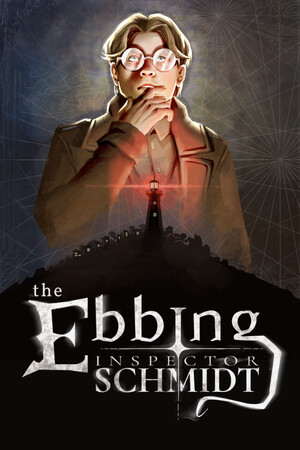 81%Inspector Schmidt - The Ebbing
 81%Layers of Fear 2 (2019)
 81%Deadly Premonition 2: A Blessing in Disguise
 81%Midnight Special
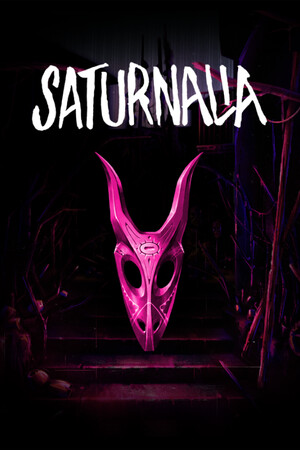 81%Saturnalia
Review evidence
Why players say this
Review evidence
Why players say this
Steam review verdict
An atmospheric Lovecraftian detective story with engaging gameplay is marred by clunky combat, repetitive tasks, and major remaster technical issues.
What players like
Excellent Lovecraftian atmosphere: The Lovecraftian atmosphere, lore, and references are consistently praised, with many players highlighting the thick, oppressive atmosphere and authentic portrayal of cosmic horror. This is the most frequently mentioned positive aspect.
Satisfying detective gameplay: The game is praised as a detective investigation game with a Lovecraftian twist, featuring satisfying detective and puzzle mechanics. The combination of detective gameplay and horror is a key selling point.
Engaging and interesting story: The main story is described as interesting, engaging, and well-told, with both narrative and environmental storytelling receiving high marks. Players find the story compelling despite some noting it is not entirely unique.
Good side quests and cases: Side quests and side cases are generally well-received, with many being memorable and having their own stories. Some specific quests, like the Throgmorton quest, are highlighted as particularly good.
Solid and functional gameplay: The gameplay is considered functional and solid, with the game being good overall despite minor bugs. Players find it enjoyable and addictive.
Common complaints
Combat is clunky and unresponsive: Players consistently report that the combat system is clunky, janky, and unresponsive, with poor hit feedback and awkward controls. This is the most frequent complaint and significantly harms the core gameplay experience.
Gameplay is repetitive and boring: Gameplay is described as repetitive, monotonous, and boring, with players feeling the game is padded with busywork and becomes a drag over time. The lack of variety in quests and scenarios leads to tedium.
Remaster has major technical issues: The remaster suffers from poor optimization, low frame rates, stuttering, and broken frame generation features, making it technically flawed. This severely affects playability.
Open world feels empty: The open world is described as empty, lifeless, and lacking meaningful content, with few activities and repetitive environments. The large city feels soulless and does not benefit the game.
Choices and endings disappoint: Player choices have no real impact on the ending, and the endings themselves are disappointing and anti-climactic. This invalidates the illusion of choice and leaves players dissatisfied.
Gameplay and performance
Detective investigation core gameplay: The game is primarily a detective investigation experience with open-world exploration, clue gathering, and case solving.
Open world exploration mechanics: The game features an open world city with canals, boat navigation, and fast travel for exploration.
Lovecraftian cosmic horror theme: The game is set in a Lovecraftian universe with cosmic horror and psychological horror elements, creating a dark atmosphere.
Evidence linking and deduction: Investigation involves hunting for clues, linking evidence, and forming theories to solve mysteries.
Mind Palace clue system: Players use a Mind Palace mechanic to organize, sort, and connect clues for solving cases.
Severe optimization problems: The game suffers from severe optimization issues, resulting in low FPS, stuttering, and poor performance on high-end hardware, including RTX 4080 Super and 5070 Ti.
Frequent crashing issues: The game frequently crashes to desktop, especially on startup, during fast travel, in menus, or when using Reflex mode, requiring graphics adjustments to mitigate.
Constant stuttering and drops: Players experience constant stuttering, FPS drops, and micro-freezes typical of unoptimized Unreal Engine games, affecting gameplay fluidity.
Broken frame generation: Frame generation, including DLSS FG and Nvidia FG, is reported as broken or not working, leading to poor performance even on high-end hardware.
Non-toggleable motion blur: Motion blur is reported as horrific and cannot be disabled, lacking an option in settings, which frustrates players and impacts visual clarity.
Recommendations
Ideal for Lovecraft fans: A large group of reviewers strongly recommends the game to fans of Lovecraftian horror, cosmic horror, and the Cthulhu Mythos, citing its authentic atmosphere and story.
Lovecraft setting is key: A significant cluster of reviewers recommend the game specifically for its Lovecraftian setting, themes, and atmosphere, often forgiving other flaws.
Buy only on sale: Multiple reviewers advise purchasing the game only at a significant discount, with some specifying 75-90% off or a price around 40-55 yuan, as it is not worth the full price.
Great for detective game fans: Several reviewers recommend the game to fans of detective games, psychological horror, and cosmic weirdness, comparing it to Sherlock Holmes or Poirot mysteries.
Full price not worth: Multiple reviewers explicitly state the game is not recommended at full price but is acceptable at a discount, with some citing 75% off.
Buying context
Community fair range: $5.00 - $15.00.
Game completion: 37.0h.
Story completion: 21.0h.
The Sinking City offers an immediate hook with its atmospheric Lovecraftian setting and investigative gameplay, but this fun quickly erodes into repetitive chores, clunky combat, and tedious traversal, resulting in a declining experience that many players find boring after the first few hours.
Friction: unclear combat mechanics; tedious crafting system; unresponsive traversal controls; repetitive open world design; lack of proper tutorial; mechanical repetitiveness.
Unlock drivers: melee skill upgrades; archive investigation depth.
Player profiles
Lovecraft Enthusiast: exploration-focused, reading notes and following story. Motivation: immersion in cosmic horror and narrative. Stance: sale.
Old School Detective: methodical investigation, turning off guidance. Motivation: challenging deduction and autonomy. Stance: buy.
Completionist Achiever: systematic, saving often, pursuing all branches. Motivation: achievements and replay value. Stance: sale.
Platform notes
Performance on Windows is mixed across VRAM tiers: 12-15GB VRAM shows mostly good results with some driver issues; 8-11GB VRAM has clear stability and optimization problems; under 8GB VRAM is unplayable.
Windows 12-15GB VRAM: positive. Most users report smooth performance and good visuals; one black screen issue linked to a specific driver version.
Windows 8-11GB VRAM: negative. Multiple reports of poor optimization, inconsistent framerate, and graphical issues despite matching recommended specs.
Windows <8GB VRAM: negative. Only one report: refunded due to unplayable performance on 8GB VRAM hardware.
Steam Deck: The game runs reasonably well on Steam Deck according to several users, but there are recurring complaints about stiff controls, UI design, and confusion over which version (Steam vs Origin) is complete. Some technical issues like display problems and gamepad control sluggishness may also affect the Deck experience.
Linux and Proton: Linux/Proton compatibility is strong for this game. Users report flawless performance using ProtonGE and note impressive stability for a UE5 title. No significant tweaks or issues are mentioned beyond using ProtonGE, which is a standard tool.
Extra review signals
Monetization: User feedback focuses on DLC completeness and pricing of editions, with no evidence of microtransactions, pay-to-win, or aggressive monetization. The game follows a traditional one-time purchase model with optional DLC.
External guides: The primary complaints revolve around navigation difficulties due to the game's lack of handholding, forcing players to search for locations externally, and some users needing help with story context and quests.
Other review notes
Save file incompatibility: Save files from the original version cannot be transferred to the remastered version, forcing players to start a new game. This disrupts player progression and can be frustrating for those who invested time in the original.
Long-term game tracking: Some players have been following the game since 2019 when it was removed from availability. This indicates a dedicated but niche user base that values the game's history and re-release.