- Fun, engaging, and highly replayable experience.
- Meaningful choices provide deep character progression.
- Unique blend of Cthulhu and TRPG elements.
- Inadequate save system and numerous bugs.
- Poor translation quality and inconsistencies.
- Inconsistent difficulty and weak writing.
What players like:
Common complaints:
Gameplay feedback:
Performance notes:
Recommendations:
Other player notes:
Similar games
Blend with other games 86%Cthulhu Mythos ADV The Isle Of Ubohoth
 83%Look Outside
 83%SKALD: Against the Black Priory
 83%The Horror at Highrook
 83%Sucker for Love: First Date
 82%Hermitage: Strange Case Files
 81%Dreams in the Witch House
 81%The Sinking City Remastered
 81%Yog-Sothoth’s Yard
 81%Roots Devour
 81%WORLD OF HORROR
 80%Do No Harm
Review evidence
Why players say this
Review evidence
Why players say this
What players like
Fun, engaging, and replayable: The game is consistently praised for being fun, enjoyable, and engaging, with many reviewers highlighting its addictive nature and satisfying gameplay loop. Modules are well-designed and replayable, with interesting stories, multiple endings, and a sense of progression. Many reviewers express strong positive sentiment and recommend the game.
Meaningful choices, deep progression: Meaningful choices impact the story, items, and gameplay, creating a personalized experience. The game rewards exploration and experimentation, with multiple endings and character progression systems that enhance replayability. Players enjoy developing unique investigators and uncovering hidden details.
Cthulhu and TRPG blend: The game successfully incorporates elements of the Cthulhu Mythos and tabletop RPGs, appealing to fans of both genres. It captures the atmosphere of Lovecraftian horror and provides a unique take on the setting. Some reviewers note that prior knowledge of Cthulhu is not required to enjoy the game.
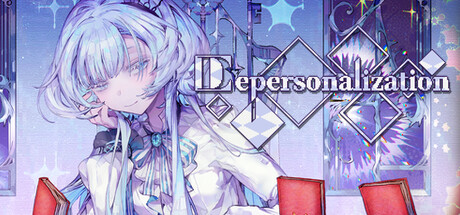
Charming and appealing art: The game's art style, particularly its pixel graphics and character designs, is widely praised for being charming, visually appealing, and well-executed. The art enhances the game's atmosphere and overall appeal. Some reviewers specifically mention the moe art style and anime-style elements.
Dedicated and responsive developers: The development team is praised for being dedicated, responsive, and actively updating the game. They are attentive to bug issues and translations, and they listen to player feedback. This commitment enhances the overall quality and enjoyment of the game.
Common complaints
Inadequate save system and bugs: The game's save system is flawed, with issues such as autosave overwrites, lack of manual save options, save failures, and loss of progress due to crashes. This leads to frustration, especially in a game that encourages multiple playthroughs to explore different endings. The lack of quick save/load functionality and the inability to manage save files in-game further exacerbate these problems.
Poor translation quality and consistency: The game suffers from significant translation issues across multiple languages, including English, Japanese, Korean, and Russian. These issues range from machine translation errors and untranslated text to grammatical errors and awkward phrasing, hindering story comprehension and immersion. The developers acknowledge these issues and are reportedly working on improvements, but the current state detracts significantly from the player experience.
Inconsistent and frustrating difficulty: The game's difficulty is inconsistent and often frustrating, with unbalanced combat encounters and a reliance on luck. Boss battles can be particularly challenging, sometimes resulting in one-shot kills. The game's mechanics can feel punishing rather than rewarding, leading to a tedious and unenjoyable experience.
Weak and confusing writing: Several reviewers criticize the game's writing quality, describing the plot as weak, nonsensical, and poorly paced. Dialogue is often unnatural, lengthy, and difficult to follow, with some reviewers comparing it unfavorably to low-quality web novels. The narrative can be confusing and disjointed, making it difficult for players to become invested in the story.
Lacks tabletop RPG freedom/atmosphere: Many reviewers feel the game fails to capture the essence of a true tabletop RPG experience, particularly Call of Cthulhu. It is criticized for being too linear, lacking player freedom and meaningful choices, and overemphasizing combat. Some also feel that the game's Cthulhu theme is undermined by anime-style elements and a generic plot.
Gameplay and performance
Streamlined Call of Cthulhu adaptation: The game adapts the Call of Cthulhu tabletop RPG ruleset, simplifying it for video game format. Key mechanics like dice rolls, skill checks, and sanity are present, but with adjustments to streamline gameplay and reduce player frustration. This makes it accessible to newcomers while retaining the essence of the original TRPG.
Modular, branching story structure: The game is structured around self-contained story modules, each offering unique narratives and multiple endings. These modules can be replayed, and some progress carries over between them, adding replayability and a sense of long-term character development. The game also supports user-created modules, expanding the available content.
Meaningful character creation system: Character creation is a significant element, influencing gameplay through stats, traits, and flaws. These attributes affect available actions and dialogue options, creating a personalized experience. However, some reviews suggest that character creation is combat-focused, potentially unbalancing other roles.
More like CRPG than TRPG: Many reviewers compare the game to other genres, particularly CRPGs and JRPGs, noting that it feels more like these than a true tabletop RPG simulation. This suggests that while it incorporates TRPG elements, it leans towards a more traditional video game experience.
Mystery-solving and investigation focus: The game involves solving mysteries by gathering clues and making choices in different timelines. Players create investigators and explore scenarios, often encountering Lovecraftian creatures. The gameplay emphasizes reading, investigation, and understanding the clues to reach the correct ending.
Good optimization, smooth performance: The game is generally well-optimized and runs smoothly on a variety of hardware, including lower-end PCs. Some players specifically noted good performance on the ROG Ally and older GPUs.
Linux/Steam Deck loading issue: Some Linux/Steam Deck users have reported an infinite loading screen issue when using non-experimental Proton versions. This issue may be specific to these platforms.
Large save file sizes: Save file sizes are exceptionally large, reaching several gigabytes. This could be a concern for players with limited storage space or those who frequently back up their saves.
SSD improves loading times: Moving the game to an SSD can resolve loading issues. This suggests that the game benefits from faster storage speeds.
Laggy creation mode: The game's creation mode suffers from lag. This impacts the user experience when creating content.
Recommendations
High hopes for future content: Many reviewers express optimism about the game's future, citing active development, planned updates, and the potential for user-generated content. They anticipate new modules, story expansions, and features like multiplayer. Continuous support and content are expected to improve the overall experience.
Good entry point for TRPGs: The game is frequently recommended as a good entry point for players new to tabletop RPGs, especially those interested in the Cthulhu mythos. It's also suggested for experienced TRPG players seeking a solo experience. However, some warn that it may not fully replicate the traditional tabletop experience.
Good value for the price: Many reviewers find the game enjoyable and recommend it, often citing its reasonable price and the amount of content offered. Some suggest purchasing it on sale. The game is considered a good value for the money.
Generally fun and interesting game: Some reviews express general positive sentiment, calling the game fun, interesting, and worth playing. They hope for increased visibility and success for the developers. However, these points often lack specific details about gameplay or mechanics.
Numerous bugs and issues: Several reviewers express strong negative sentiment, citing bugs, translation issues, and design choices that led to frustration. Some are refunding the game or recommending against purchase in its current state. This may indicate a review bombing trend due to technical issues.
Other review notes
Lovecraftian setting, adapted elements: The game is inspired by the Call of Cthulhu tabletop RPG and incorporates Lovecraftian elements. However, some reviewers note that certain mythos entities are personified in ways that deviate from their original counterparts. The game also features gender-swapped Lovecraft characters.
Long-term development and support: The developers are committed to long-term development with ongoing updates and future DLC. Official Japanese language support is planned, and the game already includes built-in Chinese language support. Weekly work reports are provided on Discord, indicating continuous development efforts.
Initial Chinese language barrier: The game is developed in China, and some players have encountered a Chinese language barrier upon initial launch. While user-created patches exist to address this, they may be incomplete. Additionally, a significant portion of the content available on the Steam Workshop is currently in Chinese.
Need for market research, staffing: Reviewers suggest that the developers should collect and analyze data to better understand their target audience and market size. They also recommend hiring more people to increase productivity and address the game's shortcomings and content gaps. The developers should consider feedback from negative reviews.
Anime-styled pixel art aesthetic: The game features an anime-styled pixel art style. Some reviewers appreciate the "waifuization" (娘化) of characters, finding it a suitable approach given the limitations of the pixel art style for depicting monsters. The art style was the first thing that caught the attention of some reviewers.