- Engaging core gameplay, but confusing and repetitive
- Numerous bugs and technical issues reported
- Poorly implemented, unrewarding endings
- Rich Lovecraftian atmosphere
- Flawed medicine and dosage systems
- Complex medical diagnosis gameplay
Emotions
What players like:
Common complaints:
Gameplay feedback:
Performance notes:
Recommendations:
Other player notes:
Similar games
Blend with other games 84%Dreams in the Witch House
 84%Sanatorium - A Mental Asylum Simulator
 83%Static Dread: The Lighthouse
 82%Cthulhu: The Cosmic Abyss
 82%No, I'm not a Human
 82%The Horror at Highrook
 82%Sucker for Love: First Date
 81%Pathologic 2
 81%The Sinking City Remastered
 81%SCP-479: Shadows of the Mind
 81%Sucker for Love: Crush Landing
 81%Berry Bury Berry
Review evidence
Why players say this
Review evidence
Why players say this
What players like
Engaging and Fun Core Gameplay: Players consistently find the game highly enjoyable, addictive, and entertaining, praising its core gameplay loop, challenging yet satisfying mechanics, and overall design. The game offers good replay value and a rewarding experience once its systems are understood.
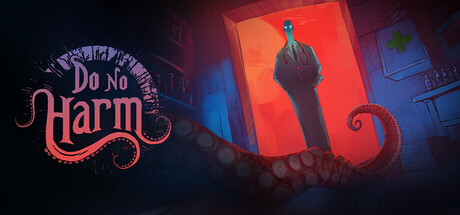
Rich Lovecraftian Atmosphere: The game masterfully blends Lovecraftian horror with its medical simulation, creating a dark, eerie, and immersive atmosphere. This theme is a major draw for fans of cosmic horror and adds significant depth to the experience.
Distinctive Art Style and Aesthetics: The game's art style, visuals, and overall aesthetic are widely appreciated for being beautiful, unique, and fitting the game's theme. This contributes significantly to the game's atmosphere and player immersion.
Accessible and Understandable Mechanics: While initially challenging, players find that the game's mechanics become clear and manageable through reading the in-game book, experimentation, and repeated play. The learning curve is seen as intentional and rewarding, not unfair.
Intriguing Concept and Premise: The game's core idea, concept, and premise are consistently highlighted as interesting, unique, and creative. This strong foundational concept draws players in and provides a fresh experience.
Common complaints
Confusing, Repetitive, and Unfinished Gameplay: Players consistently report that the core gameplay loop is confusing, repetitive, and feels unfinished. Mechanics are poorly explained, leading to constant guesswork and frustration, making the game feel like an early access title rather than a full release. This significantly impacts engagement and replayability.
Numerous Bugs and Technical Issues: The game is plagued with various bugs, including game-breaking ones that prevent progression, cause crashes, or lead to soft locks. These technical issues severely detract from the player experience and contribute to a sense of an unpolished product.
Poorly Implemented and Unrewarding Endings: Players are disappointed with the game's endings, describing them as abrupt, anticlimactic, and lacking in animation or voice acting. The illusion of choice is often broken, and the effort required for multiple playthroughs is not justified by the minor variations in outcomes.
Flawed Medicine and Dosage Systems: The mechanics for medicine management, dosage calculation, and mixing are widely criticized for being confusing, poorly explained, and often contradictory. Players struggle with limited resources, arbitrary dosage requirements, and a lack of clear feedback, leading to frustration and wasted supplies.
Weak and Inconsistent Narrative: The story is perceived as underdeveloped, inconsistent, and slow-paced, failing to engage players. Many plotlines lack conclusion, and the narrative often 'tells instead of shows,' leading to a lack of depth and intrigue.
Gameplay and performance
Complex Medical Diagnosis Gameplay: The core gameplay revolves around diagnosing patients with various ailments, often based on vague symptoms, and then deducing the correct medicine and dosage. This involves using tools like a magnifying glass and stethoscope, consulting a medical book, and utilizing a 'Humor Wheel' to determine precise treatments based on ancient Greek medical theory. Players must manage medicine stock and observe patient reactions to administered doses.
Lovecraftian Horror & Sanity Management: The game is deeply rooted in Lovecraftian themes, featuring Cthulhu mythos elements, strange anomalies, and a descent into madness. Players must manage their sanity by observing environmental anomalies and consuming laudanum to ward off hallucinations and maintain mental health.
Multiple Endings & Moral Choices: The game features a significant number of alternate endings (advertised as 10-16), influenced by player choices, moral decisions, sanity levels, and interactions with NPCs. This encourages multiple playthroughs to explore different story paths and outcomes, though some endings are variations of others.
Resource Management & Ethical Dilemmas: Players operate a clinic, managing resources like medicine and lamp oil, and making critical decisions about patient care. This includes choosing whether to fully heal patients, cut costs, or even sacrifice patients, leading to moral choices that impact the game's progression and endings.
Deductive Puzzle & Learning Curve: The game is primarily a deductive puzzle, requiring players to analyze clues, understand mechanics, and make logical inferences. It has a steep learning curve, with new mechanics introduced gradually, and rewards players who pay attention to detail and experiment with treatments.
Performance and Optimization Issues: Players report general bugginess, stuttering, and frame skipping, especially in fullscreen mode, indicating a need for better optimization. While major game-breaking bugs are fixed, memory leaks and inconsistent performance, particularly with specific lighting effects, remain concerns.
Steam Deck Compatibility: The game is reported to run well and be playable on the Steam Deck, though some users noted the need for FPS limitations for optimal performance.
Low PC Requirements: The game does not require a high-end PC to run, making it accessible to a broader range of players.
Addressed Sanity Mechanics: Issues related to the game's sanity mechanics have been resolved through recent updates, improving the player experience in this area.
Recommendations
Mixed Recommendation Status: Player sentiment regarding recommendation is highly divided. Many players express hesitation or outright refusal to recommend the game in its current state, often citing issues or specific caveats. However, a significant portion still recommends it, especially to niche audiences or with the expectation of future improvements.
Potential for Future Improvement: A substantial number of players express hope for future updates and bug fixes, indicating that the game has potential but is currently held back by various issues. Many are willing to revisit or recommend the game once improvements are made.
Strong Niche Appeal: The game strongly appeals to fans of Lovecraftian settings, eldritch horror, and specific genres like medical simulators or puzzle games. Players who enjoy complex systems, moral dilemmas, and decision-making challenges are more likely to recommend it.
Chill Mode Recommended: Players specifically recommend starting the game in 'Chill Mode' or playing casually, suggesting it offers a more accessible or enjoyable experience, especially for new players or completionists.
Recommend on Sale: Several players suggest that the game is worth purchasing, but primarily when it is on sale or at a significant discount. This indicates a perceived value issue at full price.
Other review notes
Developer Responsiveness and Updates: The development team is praised for being invested, offering regular updates, and actively fixing bugs. Players are hopeful for continued polish, reworks, and future content additions.
Playthrough Length and Pacing: Players have mixed feelings about the game's length, with some finding the 7-9 hour playthroughs for 30 days too long and suggesting a shorter duration. Others express a desire to continue playing despite challenges.
Desire for Achievements: Many players express a strong desire for Steam achievements, viewing them as an incentive to play and complete the game. The recent implementation of an achievement feature is noted, but more are wanted.
Unclear Mechanics and Hints: Some players find the game's mechanics and hints vague, requiring significant effort to understand. While some enjoy this challenge, others desire clearer guidance, suggesting it's not for players who prefer hand-holding.
Subtle Storytelling and Lore: The game offers subtle storytelling that draws players in, especially towards the end. However, it might be overwhelming for those unfamiliar with its references, suggesting lore knowledge enhances enjoyment.