- Excellent Soundtrack and Audio
- High-Quality Puzzle Design
- Graphics Hold Up Well
- Next Generation Content crashes
- Problematic camera control
- General buggy and glitchy game

Emotions
Archetypes
Hardware
What players like:
Common complaints:
Gameplay feedback:
Performance notes:
Recommendations:
Other player notes:
Similar games
Blend with other games 87%Tomb Raider Game of the Year
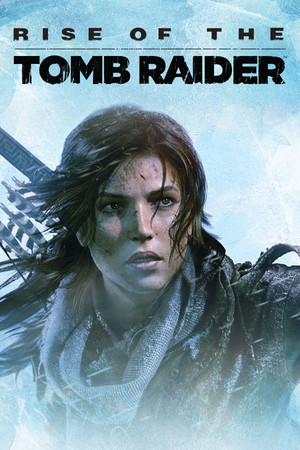 85%Rise of the Tomb Raider™
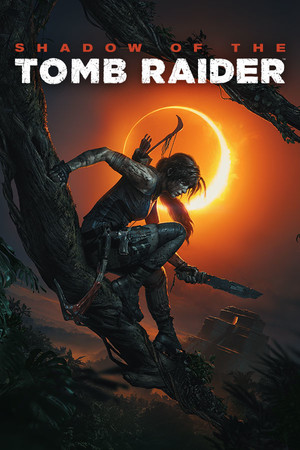 84%Shadow of the Tomb Raider: Definitive Edition
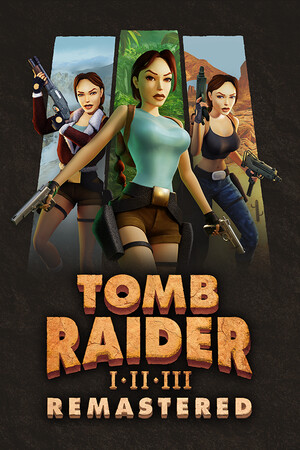 81%Tomb Raider I-III Remastered Starring Lara Croft
 80%Echoes of the End
 79%Resonance: A Plague Tale Legacy
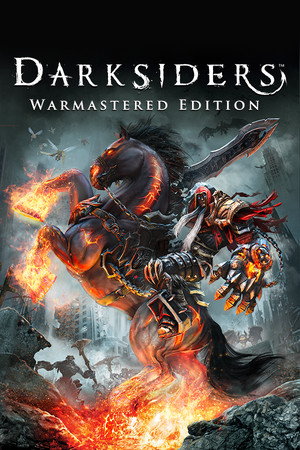 79%Darksiders Warmastered Edition
 78%Blood Omen 2: Legacy of Kain
 78%Beyond Good and Evil™
 78%Blades of Time
 78%Legacy of Kain: Defiance Remastered
 78%Tomba! 2: The Evil Swine Return Special Edition
Review evidence
Why players say this
Review evidence
Why players say this
Steam review verdict
Excellent soundtrack, clever puzzles, and graphics that still hold up are undermined by crashes in Next Generation Content, awkward camera controls, and frequent bugs and glitches.
What players like
Fun and Enjoyable Gameplay: Most reviewers report having a great time playing, finding the gameplay fun and engaging from start to finish. The overall experience is described as enjoyable and replayable.
Excellent Soundtrack and Audio: The game's soundtrack and sound effects are widely praised as phenomenal and atmospheric, enhancing both scenes and combat. Many consider it among the best in the Tomb Raider series.
High-Quality Puzzle Design: Players frequently highlight the puzzles as fun, rewarding, and well-designed, with interesting mechanics that encourage ingenuity. Even when easy, they remain satisfying and entertaining.
Graphics Hold Up Well: The graphics are considered impressive for the era, especially the next-gen versions, and many note they still look good today. While not cutting-edge, they are beautiful and pleasant.
Best in Tomb Raider Series: A significant number of players regard this as the best or one of the best entries in the Tomb Raider franchise, marking a step-up from previous titles. It is often called a classic and a favorite.
Common complaints
Next Generation Content crashes: Many players report that enabling the 'Next Generation Content' option causes frequent crashes, often starting around the fourth level or during specific missions like Kazakhstan. Disabling this setting is a common workaround to avoid crashes and continue playing.
Problematic camera control: The camera is widely criticized for being uncooperative, poorly positioned, and generally annoying, especially during combat and platforming sections. Players frequently mention that the camera requires constant fiddling and hinders enjoyment.
General buggy and glitchy game: The game is plagued by widespread bugs and glitches that can make it almost unplayable, frustrating players and ruining an otherwise good experience. Many describe the game as super glitchy, with basic mechanics becoming frustrating.
Frustrating boss fights: Boss fights are often described as repetitive, frustrating, and poorly designed with unclear mechanics. Many players find them to be the worst part of the game, with the final boss being particularly disappointing.
Janky and buggy controls: Controls are frequently called clunky, unresponsive, and buggy, leading to a frustrating experience. Mouse and keyboard controls during fights are specifically noted as problematic.
Gameplay and performance
Dual pistols and grenades combat: Players frequently highlight the dual pistols as the primary weapon, complemented by grenades and optionally one additional weapon from a limited slot. Combat can also incorporate enemy weapons, bullet time, and environmental interactions. Cluster 1, Cluster 7, and Cluster 15 together show that this weapon system and its associated auto-aim mechanics are a prominent and appreciated feature.
Parkour and platforming mechanics: The game features extensive platforming with precise jumps, ledge grabbing, and parkour-like traversal that some compare to Assassin's Creed. Climbing and hanging from ledges are common actions, and the movement system includes jumps, climbs, and a grappling hook. Cluster 10 and Cluster 14 capture the platforming and parkour aspects, while Cluster 16 and Cluster 22 detail the ledge-grabbing and climbing mechanics.
Tomb Raider action-adventure identity: A significant portion of positive feedback identifies the title as a mainline Tomb Raider game featuring Lara Croft and the classic tomb raiding formula. It is consistently categorized as a third-person action-adventure platformer with exploration, puzzles, and combat, matching the series' established genre. Cluster 5 and Cluster 3 both reinforce this core identity, making it one of the most frequent and defining observations.
Puzzle-solving is a core mechanic: Numerous reviews emphasize puzzle-solving as a central component, often described as challenging and requiring thought to reach new areas. Puzzles are mentioned alongside platforming, combat, and exploration across many clusters, indicating they are a key part of the overall gameplay loop. Cluster 2 and Cluster 20 both underline the importance and difficulty of these puzzles.
Exploration across diverse locations: Players note that the game includes exploration of varied areas, though some describe it as linear with collectibles. Exploration is often paired with puzzles and combat as a core activity. Cluster 6 and Cluster 15 both highlight exploration and traversal as notable elements.
Next Generation Content causes crashes: The 'Next Generation Content' setting triggers frequent crashes and graphical bugs across multiple levels. Many players report issues starting from the fourth level onward, and disabling the setting resolves the crashes.
General game crashes on PC: Players experience constant crashes to desktop, even on high-end hardware, with some unable to launch the game at all. Crashes occur frequently in the middle of missions and on modern systems.
Crashes specific to Kazakhstan level: The Kazakhstan level is particularly prone to crashing, especially when the next-generation graphics setting is enabled. This issue is consistently reported by multiple players.
PC version has numerous bugs: The PC version suffers from many known technical bugs, including crashes and other issues that hinder gameplay. The Steam version is specifically noted for these problems.
Bad porting quality: The port is considered very buggy and poorly done, leading to a subpar experience on PC. This is a common complaint among players.
Recommendations
General recommendation: Many reviewers strongly recommend playing this game at least once. It is considered worth playing and highly recommended by a broad audience.
Must-play for Tomb Raider fans: Fans of the Tomb Raider franchise consider this game one of the best in the series. It is highly recommended for Lara Croft enthusiasts and action-adventure fans.
Great for newcomers to series: Recommended for players new to Tomb Raider or those who have only played recent entries. It serves as a good entry point and helps understand classic Lara's appeal.
Buy only on sale: Many recommend purchasing the game only when discounted. The full price is not considered worth it today, but at a low price it's a steal.
Avoid Next Generation Content: Several reviewers warn against using the 'Next Generation Content' option. It is not worth enabling and can cause crashes, so it's better to turn off next-gen visuals.
Buying context
Community fair range: $1.50 - $3.50.
Game completion: 8.0h.
Story completion: 8.0h.
Tomb Raider: Legend is reported as enjoyable from the start, with strong pacing, fluid movement, and a fun grappling hook. A minority cite bugs, unclear objectives, and repetitive combat as friction, but no consistent later turning point is described.
Friction: Technical bugs and annoyance in this version; Unclear combat and objectives; Restrictive or poorly explained controls and camera; Repetitive combat sections; Keyboard/mouse tutorial prompts when using a controller; Linear level design with limited exploration for some players.
Unlock drivers: Installing recommended mods such as the TR7 menu hook before starting; Removing keyboard mappings and using controller mappings to fix tutorial text; Puzzle solutions eventually clicking after brief trial and error.
Player profiles
Nostalgic Returning Fan: Replaying a known favorite casually to relive memories and revisit favorite characters and music. Motivation: Reconnecting with a beloved childhood or first-franchise experience. Stance: buy.
Classic-Era Purist: Methodical, puzzle-focused exploration with critical comparison against earlier franchise entries. Motivation: Seeking or preserving the classic puzzle-driven exploration style of early Tomb Raider. Stance: sale.
Reboot-Era Newcomer: Straightforward action-adventure with light puzzle solving, comparable to the survivor trilogy. Motivation: Exploring the franchise's back catalog using familiar modern action-adventure mechanics. Stance: buy.
Platform notes
Across the three Windows VRAM cohorts, the game generally runs acceptably on lower-VRAM and 8-11GB setups, while the 12-15GB cohort reports more frequent crashes and instability.
Windows <8GB VRAM: positive. Most users report the game running well even on low-end and integrated graphics, with crashes largely limited to the final levels and fixable via a fan patch.
Windows 12-15GB VRAM: mixed. Feedback is split, as both recommending and non-recommending users describe crashes, bugs, and occasional instability.
Windows 8-11GB VRAM: positive. Users report the game working acceptably, though some note controller setup problems and crashes when the Next Generation Content mode is enabled.
Steam Deck: The game runs out-of-the-box on Steam Deck without requiring Proton tweaks, and performs well at 60fps with minor cutscene frame pacing issues. Controller support is functional but has sketchy moments and missing button prompts. Stability issues like crashes are reported on PC/Linux but not consistently on Steam Deck. Overall, a seamless experience with only minor friction.
Linux and Proton: Linux/Proton feedback is overwhelmingly positive. Users report that the game runs out of the box, does not require forcing a Proton version, performs well on Linux Mint, and is stable on Steam Deck at 60fps. The only Linux-adjacent caveat is imperfect cutscene frame pacing on Deck, which is minor and not a compatibility failure. Generic PC crashes or control complaints were not tied to Linux and were excluded.
Extra review signals
External guides: The audit of user reviews reveals two main themes: frequent game crashes and bugs (especially ALT-TAB and graphics-related), and a need for external guides to find hidden items and solve riddles. Under the strict scoring hierarchy, the presence of Tier 3 instructional data dependency (hidden secrets, riddles) determines the primary classification. The final score is 50, indicating a moderate Wiki Tax where players rely on external data to learn systems and find content, despite significant Tier 4 bug complaints.
Other review notes
Game is short: Many reviewers note the game is short, around 6-7 hours, and can be beaten quickly in one or two sittings. This is one of the most frequent observations.
Aged well over time: Despite being from 2006, many feel the game has aged well and remains playable and visually good. It has held up over the years.
First Crystal Dynamics Tomb Raider: Several reviewers point out this is the first Tomb Raider game developed by Crystal Dynamics after Core Design. It marks a new direction for the franchise.
Part of Legend trilogy: The game is recognized as the first entry in the Legend trilogy, also known as the LAU trilogy. Many reviewers mention its place in the series.
Compared favorably to Anniversary: Some reviewers compare this game to Anniversary, noting that its puzzles are easier and less frustrating. Others say it is less atmospheric and more linear.