- Faithful restoration of classic Tomb Raider games
- Seamlessly switch between modern and original graphics
- Choose between classic 'tank' or modern controls
- Challenging gameplay with rewarding exploration
- Includes achievements and extra content
- Clunky controls and inconsistent lighting remain
Emotions
What players like:
Common complaints:
Gameplay feedback:
Performance notes:
Recommendations:
Other player notes:
Similar games
Blend with other games 78%Shadow of the Tomb Raider: Definitive Edition
 78%Legacy of Kain: Defiance Remastered
 76%Legacy of Kain™ Soul Reaver 1&2 Remastered
 76%Tomb Raider Game of the Year
 75%Rise of the Tomb Raider™
 74%Crash Bandicoot™ N. Sane Trilogy
 73%Yooka-Replaylee
 73%Dino Crisis 2
 73%Onimusha 2: Samurai's Destiny
 73%Resident Evil (1996)
 73%Resident Evil 3 Nemesis (1999)
 73%Syberia - Remastered
Review evidence
Why players say this
Review evidence
Why players say this
What players like
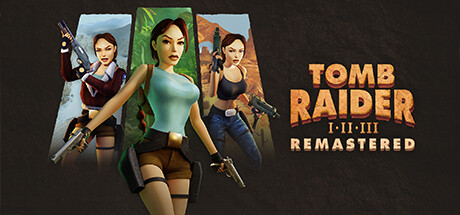
Faithful, loving restoration of classics: The Tomb Raider I-III Remastered collection is praised as a faithful and loving restoration of the original trilogy. Reviewers appreciate that the remasters capture the essence of the classic games while enhancing them for modern systems. Many call it the definitive way to experience Lara Croft's early adventures.
Seamlessly switch graphics: The ability to seamlessly switch between the remastered and original graphics is a standout feature. This allows players to appreciate the visual enhancements while also evoking nostalgia for the classic look. It also helps with navigation and spotting secrets.
Modern and classic control options: The remaster introduces modern control schemes as an alternative to the original tank controls. This caters to both veteran players who prefer the classic experience and newcomers who may find tank controls difficult to master. The modern controls are considered a welcome addition, though some still prefer the originals.
Challenging, rewarding gameplay: The game retains the challenging gameplay of the originals, with a focus on exploration, puzzles, and precise platforming. Overcoming these challenges provides a sense of accomplishment and makes the game engaging. The mix of gameplay elements is still captivating.
Achievements and extra content: The inclusion of achievements and extra content, such as DLC levels and New Game+, adds replay value and provides new challenges for players. The achievements are well-designed and encourage exploration and experimentation.
Common complaints
Clunky, imprecise control schemes: Both modern and tank controls are criticized. Modern controls are clunky, unresponsive, and poorly implemented, leading to frustration in platforming and combat. Tank controls feel outdated and difficult for new players, hindering movement and camera control. Many reviewers recommend sticking to the original control scheme.
Inconsistent, overly dark lighting: The remastered graphics, particularly the lighting, are frequently criticized for being too dark, inconsistent, and obscuring important details. This makes navigation and puzzle-solving difficult, forcing players to switch to the original graphics for better visibility. The lack of brightness settings exacerbates this issue.
Lazy, minimal remaster effort: The remaster is seen as a minimal effort, primarily a graphical update with AI-upscaled textures that are sometimes poorly implemented. Reviewers feel it doesn't address core gameplay issues, bugs, or add significant enhancements, making it feel like a cash grab and not worth the price. The cutscenes also suffer from poor AI upscaling.
Brutally difficult, unforgiving gameplay: The game is considered brutally difficult, requiring precise movements and pixel-perfect jumps. The level design relies on trial-and-error, leading to frequent deaths and save-scumming. Tomb Raider 3 is specifically called out for unfair difficulty and confusing level design.
Missing key modern features: The game lacks modern features like autosaving and level select, which were present in some original versions. The manual save system is cumbersome and prone to errors, potentially leading to loss of progress or soft-locking the game. The menu navigation is also outdated and inconvenient.
Gameplay and performance
Tank controls versus modern controls: The game offers both original "tank controls" and a modern control scheme, and players can switch between them. Tank controls are integral to the game's feel, while modern controls offer a more accessible experience. Some reviewers recommend tank controls for the complete experience.
Grid-based level design: The game features grid-based level design with precise jumps and spatial puzzles. The levels are designed around the classic control scheme, requiring players to calculate jumps and solve puzzles to progress. The original Tomb Raider trilogy emphasizes a sense of isolation in tombs and figuring out how to progress while being on alert for enemies.
Switchable graphics: The remaster allows players to switch between the old and new graphics modes to compare textures. Pressing F1 toggles between original and remake graphics. This feature allows players to appreciate the updated visuals while still having the option to experience the game in its original form.
Lack of hand-holding: The game does not provide much guidance, requiring players to figure things out independently through exploration and trial and error. There is no map or objective arrow, encouraging players to explore and solve puzzles without explicit instructions. This can be overwhelming for some players, but rewarding for those who enjoy a challenge.
TR2 action focus: Tomb Raider 2 has an over reliance on action and more humanoid enemies. TR2 has very few explorations, but a lot of battles. In Tomb Raider 2, there are more human enemies.
Excellent and smooth performance: The remaster generally exhibits excellent performance, achieving high and stable frame rates (60-120fps) on various devices like PC and Steam Deck. Players report smooth gameplay, optimized power consumption, and good image quality, contributing to an enhanced experience.
Original graphics have low FPS: The original graphics mode is often locked at lower frame rates (20-30fps), leading to a less smooth experience compared to the remastered visuals. This discrepancy in performance can be jarring for players switching between the two modes.
Minor graphical issues remain: While the remaster improves textures and lighting, some players have noticed minor graphical issues. These include slight stuttering due to rendering and overly dark areas with HD textures, which can detract from the visual experience.
Improved controls and responsiveness: Players report improvements to keyboard controls and the absence of controller lag. These enhancements contribute to a more responsive and enjoyable control experience.
Occasional environment bugs: Some players have encountered environment bugs, such as disappearing textures and doors closing unexpectedly. These glitches can disrupt gameplay and immersion.
Recommendations
Highly recommended for all players: The remasters are highly recommended for both nostalgic fans and newcomers, offering a definitive way to experience the classic Tomb Raider trilogy. Reviewers praise the collection's faithfulness to the originals, enhanced graphics, and inclusion of expansion content, making it a worthwhile purchase, especially for those interested in adventure, puzzles, and a challenging retro experience.
Eagerly awaiting future remasters: Reviewers express excitement and anticipation for potential remasters of Tomb Raider IV-VI, indicating a strong desire to see the entire classic series updated. This suggests a positive reception to the current remasters and a hope for continued support of the franchise.
Outdated mechanics may deter newcomers: Some reviews caution that the game's 90s design, including tank controls and challenging gameplay, may not appeal to modern players. These reviewers suggest that the remasters are best suited for nostalgic fans or those willing to adapt to an outdated play style, and recommend that new players proceed with caution.
Consider purchasing on sale: Several reviewers suggest waiting for a sale before purchasing the game, indicating that while the remasters are enjoyable, the full price may not be justified. This recommendation implies that the game is worth playing, but the value proposition is better at a discounted price.
Other review notes
Classic "tank" controls divisive: The original "tank controls" are a key element of the classic Tomb Raider experience, and opinions vary on whether they are a gift or a curse. Some players find modern controls unnatural and recommend trying the original controls first, while others may find them daunting.
Includes expansions and bonus levels: The collection includes the first three Tomb Raider games along with their respective expansion levels, providing a substantial amount of content. These expansions were previously unavailable on console versions, adding value for players who missed them originally.
Significant playtime and achievements: The game offers a substantial amount of content, with each game taking around 30 hours to complete, resulting in a 70-100+ hour adventure overall. Some players are buying the game specifically to unlock the large number of achievements, which they find challenging and interesting.
Switchable graphics: new vs. original: Players can switch between the updated graphics and the original pixelated graphics, allowing them to experience the game in its original form or with a modern visual presentation. The new graphics run at 60FPS, while the old graphics run at 30FPS.
Missing basic quality-of-life features: The game lacks some basic quality-of-life features, such as brightness settings and an in-game option to quit. Additionally, there is no level select feature, requiring players to rely on manual saves at the beginning of each level.