- Stunning beautiful graphics and visuals
- Engaging cooperative gameplay with friends
- Fun and clever puzzles with multiple solutions
- Magical and soothing soundtrack
- Severe online multiplayer connectivity issues
- Unimpressive and clichéd story
Emotions
Archetypes
Hardware
What players like:
Common complaints:
Gameplay feedback:
Performance notes:
Recommendations:
Other player notes:
Similar games
Blend with other games








Review evidence
Why players say this
Review evidence
Why players say this
Steam review verdict
Stunning visuals, clever co-op puzzles, and a soothing soundtrack shine, but severe online connectivity issues and a cliched story drag the experience down.
What players like
Beautiful graphics and visuals: Graphics are widely praised as beautiful, with many noting the stunning backgrounds and screenshot-worthy frames. The visual presentation is considered a major highlight.
Engaging cooperative gameplay: Reviewers consistently praise the co-op experience as fun and satisfying, especially with two or three players. Online co-op is reported to work smoothly, and couch co-op creates memorable moments.
Fun and clever puzzles: The puzzles are frequently described as fun, interesting, and clever, with a difficulty that feels just right. Many reviewers highlight the satisfying brain-teasing challenges.
Suitable for friends: Reviewers frequently mention that the game is best played with friends, whether online or locally. It is enjoyable in company.
Enjoyable and smooth gameplay: Gameplay is generally described as fun, engaging, and fluid. Reviewers find it pleasant and well-executed.
Common complaints
Severe Online Multiplayer Connectivity Issues: Online multiplayer frequently disconnects, is laggy, and often fails to connect, making the game nearly unplayable for many. Problems persist even with accelerators, and some sessions drop within minutes.
Unimpressive Clichéd Story: The story is widely described as clichéd, shallow, and forgettable, with few twists or memorable moments. It fails to engage players and does not live up to the narratives of earlier Trine games.
Difficult Final Boss Fight: The final boss is extremely challenging, often requiring multiple attempts and causing frustration. Some compare its difficulty to souls-like games, which feels out of place given the rest of the game.
Limited Enemy Variety: The game offers few enemy types, leading to repetitive combat encounters. This lack of variety makes certain sections, like the purple cloud rounds, boring after a while.
Gameplay and performance
Strong Co-op Support: Many reviews highlight that the game supports both online and local co-op, often for up to three or four players. It is frequently described as being designed with cooperative play in mind.
Puzzle-Solving Core Gameplay: A large number of feedback entries state that puzzle-solving is a central mechanic. The puzzles are often described as brain-teasing and varying in difficulty.
2D Puzzle Platformer Genre: Reviews commonly categorize the game as a 2D or 2.5D puzzle-platformer with side-scrolling elements. It blends platforming with puzzle solving.
Three Character Classes: The game features three distinct classes: warrior, mage, and archer (or thief/ranger). Each class has unique roles and abilities.
Character Switching Mechanic: Players can switch between three different characters, both in single-player and co-op. This mechanic is central to puzzle-solving and gameplay.
Frequent Online Disconnections: Players frequently experience disconnections during online play, co-op, and multiplayer sessions. This is the most common complaint across many clusters.
Multiplayer Connection Instability and Lag: Online multiplayer suffers from unstable connections, severe lag, and high latency. This makes competitive or cooperative play frustrating.
Poor Server Performance: Server performance is frequently criticized as poor, unreliable, and occasionally unstable. This leads to laggy online play and drops.
Game Crashes and Errors: The game crashes frequently, including during launch, cutscenes, tutorials, and when joining multiplayer. Various errors prevent gameplay.
Performance Fluctuations and Optimization: While some find the game well-optimized with low requirements, others report frame drops, choppy framerates, and high hardware usage. Lowering settings can help.
Recommendations
Best Played With Friends: The overwhelming majority of positive feedback emphasizes that the game shines brightest when played with friends in co-op. Reviewers consistently recommend gathering a group to enjoy the experience fully.
Good For Family And Children: The game is recommended for family play, including with children, and is suitable for adults and kids alike. This suggests broad age appeal.
Great For Couples And Partners: Reviewers frequently highlight the game as ideal for romantic partners or spouses, noting it works well for two players, including casual or less experienced ones.
General Positive Recommendations: Many reviewers simply recommend the game with high praise, using terms like highly recommended, 10/10, and cannot recommend enough. These endorsements span various player types.
Local Multiplayer Praised: Local multiplayer and couch co-op are highlighted as strong points, with recommendations for playing locally with friends.
Buying context
Community fair range: $5.00 - $15.00.
Game completion: 14.0h.
Story completion: 10.0h.
Session length: 0.7h.
Endgame: 4.5h.
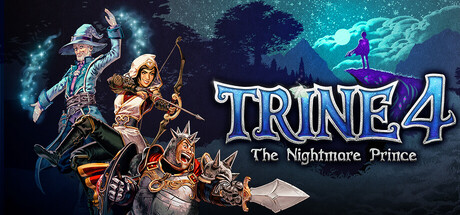
Players most often report Trine 4 is fun from the start, especially in local co-op with friends or family, thanks to creative physics puzzles and a charming atmosphere. The main caveats are unstable online co-op, occasional progress loss, repetitive combat or arenas, and a less compelling solo experience.
Friction: Unstable online co-op connections; Online co-op save or progress loss; Steam interface invite bug can reset progress; Solo play can feel too easy or casual for adults; Repetitive combat and arena encounters; Lack of enemy variety.
Player profiles
Co-op Socializer: Plays local or online co-op with up to three others, communicates to solve puzzles, helps or trolls teammates, and prefers a simple, relaxed session. Motivation: Shared fun, laughter, and teamwork with friends, partner, or family. Stance: buy.
Trine Series Veteran: Plays through the campaign with prior series knowledge, often solo or with a small group, and critically evaluates puzzle design, difficulty, and replayability against earlier entries. Motivation: Nostalgia, seeing the series return to its roots, and comparing refined mechanics to earlier Trine games. Stance: buy.
Solo Puzzle Purist: Plays the campaign solo, explores levels for hidden gems and treasures, and focuses on puzzle solving rather than multiplayer coordination. Motivation: Enjoying creative physics puzzles, beautiful visuals, and a relaxed solo adventure at one's own pace. Stance: buy.
Platform notes
Across the provided Windows cohorts, the lower-VRAM group reports severe multiplayer connection and stability problems, while the 8-11GB VRAM cohort reports smooth performance.
Windows <8GB VRAM: negative. Users report frequent multiplayer connection and invite failures, crashes, and poor optimization, with all included reviews not recommending the game.
Windows 8-11GB VRAM: positive. The included review reports smooth gameplay and sufficient content on this hardware.
Steam Deck: The audited Steam Deck experience is mixed. Core controller support is largely functional and even praised for making physics-based tasks intuitive, and the title carries a Deck Verified label. However, the dominant and most impactful theme is online co-op instability: users report crashes occurring roughly every 50-60 minutes, crashes repeated during the tutorial, and errors when joining lobbies. Additional friction includes frame drops in certain chapters and a controller-detection conflict that appears in Desktop Mode when using an external pad. No Proton Experimental toggling or launcher navigation issues were reported, but the frequency of crashes pushes the experience into the broken band.
Extra review signals
External guides: The audit finds no evidence of Tier 1 farming or drop-rate dependency and no Tier 2 inventory, crafting, or valuation dependency. The primary external-data issue is Tier 3 instructional reliance: players search for guides to discover hidden secrets and solve difficult hidden content. Positive reviews note guide-free completion and enjoyable co-op, and one review mentions low-severity external VPN setup friction. Under the strict priority rules, the presence of hidden-secret and guide-reliance complaints triggers Tier 3, The Student.
Other review notes
Series entry and comparisons: Many players frame the game as part of the Trine series, frequently comparing it to Trine 1, 2, and 3. The fourth installment is often described as a return to form after the controversial third game.
Return to 2.5D roots: After the 3D experiment of Trine 3, this game returns to the classic 2.5D perspective and 2D puzzle platforming. This shift is widely welcomed.
DLC adds extra content: Players mention that DLC is available and includes additional levels, a boss fight, and roughly six more levels. Some note that the DLC was completed and adds to the overall experience.
Achievement completion and time: Several reviewers discuss completing all achievements, with playtimes around 10 to 14 hours. Achievements are seen as a completion goal.
Nostalgia for Trine 2: Some reviewers feel the game fails to capture the magic of Trine 2, which they remember fondly. Trine 2 is often cited as peak.