- Beautiful and vibrant graphics
- Fun and enjoyable gameplay
- Excellent soundtrack and sound design
- Unfinished story ends abruptly
- 3D perspective causes problems
- Game is extremely short
Emotions
Archetypes
What players like:
Common complaints:
Gameplay feedback:
Performance notes:
Recommendations:
Other player notes:
Similar games
Blend with other games



Review evidence
Why players say this
Review evidence
Why players say this
Steam review verdict
Beautiful vibrant visuals, fun gameplay, and excellent audio are undermined by an abruptly unfinished story, troublesome 3D perspective, and an extremely short length.
What players like
Beautiful and vibrant graphics: Many reviewers highlight the visuals as beautiful, vibrant, and a standout feature. The graphics are frequently described as some of the best in the series.
Fun and enjoyable gameplay: Players consistently describe the game as fun, enjoyable, and good for passing the time. The core gameplay is praised for its charm and overall appeal.
Excellent soundtrack and sound design: The soundtrack and atmospheric sound design are highly praised for being immersive and high quality. Music is noted as a major strength of the game.
Engaging and well-designed puzzles: Puzzles are considered fun, interesting, and well thought out, adding significant value to the gameplay experience. The 3D transition further enhances puzzle design.
Fun multiplayer experience: Playing with friends or a partner is enjoyable, and the multiplayer mode offers silly fun despite some jankiness. The game supports both solo and cooperative play.
Common complaints
Unfinished story ends abruptly: Many players report that the story ends abruptly, often on a cliffhanger with no resolution, leaving the narrative incomplete and mid-sentence.
3D perspective causes problems: The 3D perspective leads to depth perception issues, awkward camera angles, and frequent falls. Players find it hard to judge where to jump.
Game is extremely short: The game is criticized for being very short, with common playtimes around 5-7 hours and far fewer levels than previous titles. Some note it is only half the length of earlier games.
3D transition unsuccessful: The move from 2D to 3D is widely considered a failure, ruining what made the series great. The 3D implementation is poorly done and loses the fun of platforming.
Game is very buggy: The game is frequently described as a buggy mess with numerous programming errors, poor optimization, and a feel of a beta test. Co-op mode is particularly plagued by bugs.
Gameplay and performance
Transition to 3D gameplay: The game has shifted from 2D or 2.5D to full 3D gameplay, featuring 3D movement, perspective, and environments. This is a major change from its predecessors.
Three-player co-op support: The game supports co-op play for up to three players, both online and locally. This is a key feature for multiplayer experiences.
Puzzle-solving core mechanic: Puzzles are a central gameplay element, often integrated with the 3D space and physics. They are mostly straightforward but essential to progression.
Absence of skill tree: Unlike previous games, there is no skill tree, leveling system, or character upgrades. Progression and additional abilities have been removed.
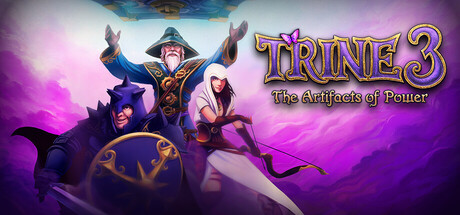
Three distinct playable characters: Players control three protagonists, each with unique abilities such as box creation, and can switch between them to overcome obstacles. The characters are a thief, warrior, and wizard.
Severe multiplayer connectivity problems: Numerous connection problems, constant disconnects in co-op, and servers dropping during online play make multiplayer nearly unplayable. The netcode is also criticized as bad.
Poor performance and optimization: The game runs terribly and performance is well below expectations. Poor optimization is a common complaint.
Persistent crash issues: Minidump crashes continue to occur, and crashes can corrupt game files, requiring verification. This makes the game unstable and frustrating.
Linux build broken: The Linux build is completely broken, and running the Windows version via Proton causes graphical bugs with character portraits and texts.
No technical issues encountered: Some players experienced no bugs and found the game ran well with good optimization.
Recommendations
Skip Trine 3, play others: Many reviewers recommend skipping Trine 3 and playing Trine 1, 2, 4, or 5 instead. The third installment is widely considered inferior and not worth playing when better entries exist.
Great co-op with friends: Reviewers frequently praise the co-op experience, especially local multiplayer with two to three friends. The chaotic fun with friends is a key selling point.
Only worth at steep discount: Multiple reviewers say the game is only worth buying on sale, in a bundle, or at a steep discount. It is not considered worth full price.
Not recommended for general players: Several reviewers explicitly do not recommend the game, describing it as unfinished or not earning a positive rating. General players are advised to avoid it.
Mixed positive recommendations: Despite criticism, some reviewers give positive recommendations, calling it a good game worth trying. It is recommended for those who enjoy puzzles and casual platformers.
Buying context
Community fair range: $5.00 - $10.00.
Game completion: 6.0h.
Story completion: 5.0h.
Early co-op bugs, poor cameras, and awkward 3D design create friction, but players who get past the first half hour and play with friends often find it acceptable or fun.
Friction: Severe co-op bugs, including invisible characters and broken cameras; Unstable online servers and multiplayer glitches; Poor controls and physics; Awkward 3D depth design that punishes exploration; Removed skill tree and weak progression; Boring combat and limited character skill variety.
Unlock drivers: Getting past the first half hour and becoming familiar with the game's limitations; Playing in co-op with friends; Finding the multiplayer jank funny rather than frustrating.
Player profiles
Co-op Social Player: Plays local or online co-op with two or three people, often in couch sessions, and treats jank as part of the shared fun. Motivation: Sharing a colorful, often chaotic platforming adventure with friends or a partner. Stance: sale.
Veteran Franchise Critic: Plays across the Trine series, compares mechanics and level design to earlier games, and values polished 2D puzzles over experimental 3D structure. Motivation: Holding each new entry to the series' established puzzle-platforming standards and story continuity. Stance: no buy.
Solo Completionist: Plays alone, finishes all achievements in one or few runs, and compares completion time against other Trine content. Motivation: Clearing achievements and judging a short, casual platformer by how efficiently it can be 100% completed. Stance: sale.
Platform notes
Steam Deck: The reviews indicate the game is not seamless on Steam Deck: the native Linux build is broken and users must fall back to Proton, where it runs mostly okay but with graphical glitches. Controller support is a major friction point because some commands do not work on a gamepad and reviewers prefer keyboard and mouse. General optimization and error reports add further instability, so the experience is playable only with tinkering rather than out of the box.
Linux and Proton: Linux users report that the native build is completely broken, but the game is mostly playable through Proton with some graphical bugs and a recommendation to use the Windows version for multiplayer compatibility. The evidence indicates workaround-dependent but functional Linux compatibility rather than a total failure.
Other review notes
Worse than previous Trine games: Many reviewers compare this entry unfavorably to Trine 1, 2, 4, and 5, calling it inferior or horrible. It is often seen as a step down from earlier titles.
Incomplete due to budget issues: The studio reportedly ran out of money, resulting in an unfinished game. The story and content are incomplete, with less than half the intended game made.
Easier and fewer puzzles: Compared to Trine 1 and 2, the puzzles are simpler and less complex. Reviewers note a lack of challenge and reduced puzzle variety.
Unresolved cliffhanger ending: The game ends on a cliffhanger that is not resolved in Trine 4 or Trine 5. The story is left abandoned and will not be concluded.
Recommended earlier Trine games instead: Reviewers often recommend Trine 1, 2, or 4 over this entry, especially for fans of the 2D platformer style. The side-scrolling gameplay of earlier titles is preferred.