- Excellent graphics and sound design
- Engaging wordless storytelling
- Oppressive and immersive atmosphere
- Controls are clunky and unresponsive
- Numerous bugs hinder progress
- Game is too short

Emotions
Archetypes
Hardware
What players like:
Common complaints:
Gameplay feedback:
Performance notes:
Recommendations:
Other player notes:
Similar games
Blend with other games
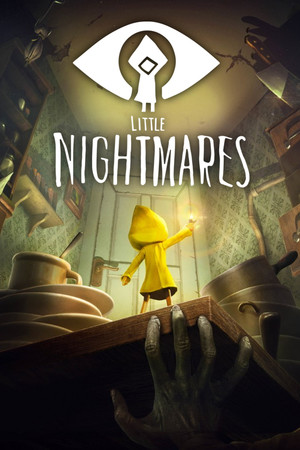





Review evidence
Why players say this
Review evidence
Why players say this
Steam review verdict
We need to produce a single sentence under 200 characters that balances positives and negatives. Positives: excellent graphics/sound, engaging wordless storytelling, oppressive/immersive atmosphere. Negatives: clunky controls, bugs, too short. Combine into one flowing sentence. Avoid any markdown etc. Output plain English only. Possible: "Despite excellent graphics and engaging wordless storytelling with an oppressive atmosphere, clunky controls and numerous bugs mar the experience, and the game is too short." Check length: 149 chars. Good.Despite excellent graphics and engaging wordless storytelling with an oppressive atmosphere, clunky controls and numerous bugs mar the experience, and the game is too short.
What players like
Excellent graphics and sound design: Reviewers praise the combination of beautiful visuals, detailed lighting, and high-quality audio and music, which together enhance the game's immersive experience.
Improvement over the first game: Players consistently note that the sequel improves upon the first game in story length, difficulty, open world design, atmosphere, and overall content, making it a worthy continuation.
Ending is impactful and memorable: Many players describe the ending as shocking, deeply touching, and thought-provoking, with lasting impact and subtle hints throughout the story.
Engaging story without dialogue: Multiple players note that the story is conveyed entirely through environmental storytelling and atmosphere, without any spoken or written dialogue, yet remains fully comprehensible and deep.
Oppressive and immersive atmosphere: The atmosphere is described as dark, tense, creepy, and highly immersive, creating a constant sense of dread that captivates players.
Common complaints
Controls are clunky and unresponsive: Many players report that controls on both keyboard/mouse and gamepad feel awkward, clumsy, sticky, and unresponsive, especially during quick movements and combat. This is the most frequent complaint.
Controls are worse than predecessor: Some players note that controls feel worse than the first game, which already had poor controls.
Numerous bugs hinder progress: Players report many bugs, some game-breaking, that block progression, require reloading, or force restarts. The Enhanced Edition is noted as particularly buggy and unoptimized.
Flashlight controls are problematic: The flashlight mechanic, particularly aiming with the right stick or mouse, is widely criticized as terrible, difficult, and not working properly, especially in the hospital section.
Game is too short: Multiple players note the game's short length, around 5-7 hours, which they feel is not justified by the price.
Gameplay and performance
Horror puzzle platformer: The game is a third-person horror puzzle-platformer with an AI companion. It blends puzzle-solving, platforming, and stealth with a dark atmospheric setting.
Stealth and chase sequences: Gameplay emphasizes stealth, hiding, and running from enemies, with light combat and chase sequences. Players must evade threats using strategy and environment.
AI companion cooperation: Players cooperate with an AI companion named Six, who helps solve puzzles, move objects, and distract enemies. The dynamic between Mono and Six is a core gameplay element.
Wordless visual storytelling: The story is told entirely without dialogue, relying on visual cues, environmental details, and gameplay. This wordless approach enhances the atmospheric and psychological horror experience.
Psychological horror atmosphere: The game delivers a dark psychological horror experience with tension-driven chases, eerie environments, and a haunting aesthetic. Atmosphere is central to the experience.
Good performance on low-end hardware: The game runs smoothly and is well-optimized even on very old hardware and low-end integrated graphics such as UHD Graphics. Clusters 1, 2, and 11 specifically highlight this strength.
Excellent optimization praised: Multiple reviews mention perfect graphics and optimization, good optimization overall, no freezes, and improved loading times. Clusters 9, 12, 13, and 18 indicate high praise for the game's technical performance.
Frequent stuttering and frame drops: Players report constant stuttering, frame drops to 4 FPS on loading screens, and 2-3 second stuttering when entering new areas. Clusters 8, 15, 16, and 20 describe these ongoing performance issues.
Low frame rates for some: Some users experience only 15-25 FPS with occasional 30 FPS at best, indicating performance struggles on certain configurations. Clusters 3 and 4 (PC version buggy) are referenced here.
Fatal crashes on PC: There are reports of fatal crashes including EXCEPTION_ACCESS_VIOLATION on PC, pointing to stability problems that hinder gameplay. Clusters 10 and 17 provide specific examples.
Recommendations
Strong general recommendation: Several reviewers give the game a perfect or near-perfect score and recommend it to everyone. They consider it a must-play experience regardless of genre preference.
Buy only on sale: A large number of reviews advise waiting for a discount before purchasing. The game is seen as worth playing only at a reduced price, not full price.
Highly recommended for first-game fans: Many reviewers emphasize the sequel is a must-play for those who enjoyed the first game. The experience builds on the original, offering more of what made it great.
Atmospheric puzzle game fans: Reviewers specifically recommend the game to fans of atmospheric, story-driven puzzle games, especially those with horror elements. The atmosphere is a key selling point.
Not recommended due to difficulty: Some players find the game too difficult and frustrating, leading to negative recommendations. This is a common complaint among those who did not enjoy it.
Buying context
Community fair range: $7.00 - $20.00.
Game completion: 5.5h.
Story completion: 5.0h.
Endgame: 2.5h.
Little Nightmares II often starts with frustrating clunky controls, bugs, and boring early sections, but becomes more engaging and addictive once players reach the Pale City or get past the school, offering a gripping atmosphere and pacing.
Friction: clunky/unresponsive controls; bugs that break progression; tedious trial-and-error gameplay; repetitive puzzles and mechanics; poor 3D perspective and camera; lack of clear hints or tutorial.
Unlock drivers: getting past the boring early areas; adjusting to the controls; reaching more interesting locations like the Pale City; understanding the puzzle logic.
Player profiles
Atmosphere-Driven Explorer: Slow, deliberate exploration of environments; attentive to narrative cues and visual storytelling. Motivation: To experience a rich, atmospheric story with unique visuals and emotional depth. Stance: buy.
Franchise Loyalist: Plays similarly to the first game, seeking connections and references; often completes the series. Motivation: Continuation of the franchise, lore expansion, and seeing improvements over the first game. Stance: buy.
Flaw-Tolerating Adventurer: Cautious, retry-heavy, may use guides or mods to bypass bugs. Motivation: The compelling atmosphere and story outweigh frustration; they enjoy overcoming challenge despite flaws. Stance: sale.
Platform notes
The game performs well across most hardware configurations, with high frame rates reported on low-to-mid VRAM setups. However, some users on high-end VRAM systems note occasional stuttering or the need for DLSS.
Windows <8GB VRAM / <16GB RAM: positive. Low-VRAM systems report high frame rates (350-450fps) and smooth gameplay, with only minor bugs.
Windows <8GB VRAM / 16-31GB RAM: positive. Laptop-grade hardware runs the game at 30-40fps, described as well-optimized for office laptops.
Windows 12-15GB VRAM: positive. Mid-range VRAM systems run smoothly at 90fps or higher at 1440p with headroom for higher settings.
Steam Deck: Little Nightmares II is praised for its haunting atmosphere and artistic design, but technical issues significantly hamper the experience. The most prevalent problems are imprecise and sluggish controls (especially with keyboard/mouse and the flashlight mechanic), performance drops and stuttering on Steam Deck, occasional crashes and progress-losing bugs, lack of control customization, and trial-and-error sections that feel unfair due to control limitations. While the game is playable on Steam Deck with some tinkering, it often falls short of a smooth experience.
Linux and Proton: Little Nightmares 2 demonstrates solid Proton compatibility on desktop Linux, running out of the box with no required tweaks. On Steam Deck, the game is generally playable and many users finish it, but a significant minority report performance problems such as stuttering and frame drops, particularly during loading and scene changes. These issues do not block gameplay entirely and are inconsistent, so the overall Linux/Proton experience is positive with minor caveats.
Extra review signals
Monetization: Little Nightmares 2 is a single-player game with no microtransactions. Player complaints focus on the base game's price relative to length and a short, overpriced DLC. These are traditional content purchases, not predatory monetization. The game offers a complete package without a season pass or in-game purchases, and some players positively note that all achievements can be unlocked without buying DLC.
External guides: The overwhelming majority of feedback highlights that Little Nightmares 2 suffers from insufficient in-game guidance, obscure puzzle design, and hidden collectibles that are nearly impossible to find without external help. Combined with occasional bugs and strict mechanics, players frequently resort to walkthroughs and guides, indicating a strong dependency on external instructional data.
Other review notes
Lost motivation after completion: One player who pre-ordered the third part and completed all achievements twice reported losing motivation to finish the game, resorting to watching a Let's Play instead.