- Engaging and layered storytelling experience
- Atmosphere and world-building highly praised
- Memorable soundtrack and humor elements
- Poor combat and stealth mechanics
- Dated graphics and animations persist
- Excessive backtracking and fetch quests
Emotions
What players like:
Common complaints:
Gameplay feedback:
Performance notes:
Recommendations:
Other player notes:
Similar games
Blend with other games


Review evidence
Why players say this
Review evidence
Why players say this
What players like
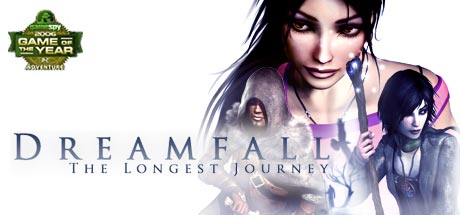
Engaging and layered storytelling: The narrative is frequently described as intense, well-paced, and emotionally textured, with multiple character perspectives (Zoe, April, Kian) enriching the experience. Themes of dualism, self-discovery, and moral responsibility add depth to the plot.
Atmosphere and world-building praised: Players consistently highlight the game's immersive atmosphere, rich world-building, and dual-world contrast (Stark and Arcadia). The visual and sonic design, along with expressive voice acting, creates a strong sense of immersion and nostalgia.
Dynamic gameplay variety: The game blends genres (e.g., sci-fi, fantasy) and mechanics (stealth, combat, puzzles) to keep the experience fresh. Varied locations and pacing prevent monotony.
Memorable soundtrack and humor: The soundtrack (e.g., Magnet's melancholic music) and humorous moments (e.g., Crow the talking bird) are frequently cited as highlights, enhancing emotional resonance and replayability.
Technical stability and modern support: The game runs smoothly with few bugs, supports high resolutions (including 4K), and offers controller compatibility. Features like unlimited saves and intuitive controls improve accessibility.
Common complaints
Poor combat and stealth mechanics: Combat and stealth sections are described as clunky, poorly implemented, and out of place in an adventure game. Players found them frustrating, unnecessary, and often broken due to camera or control issues.
Dated graphics and animations: The game’s visuals are criticized for being outdated, with low-poly models, rough textures, and stiff or lifeless animations. Facial animations and character models were particularly noted as immersion-breaking.
Excessive backtracking and fetch quests: Gameplay is dominated by repetitive backtracking and fetch quests, which players found tedious and meaningless. The lack of minimaps or clear objectives exacerbated the frustration.
Simplistic and sparse puzzles: Puzzles are described as overly easy, poorly designed, or too few in number. Many puzzles are solved through dialogue or fetch quests, reducing challenge and engagement.
Frustrating camera and movement: Camera controls are uncomfortable, inverted, or disorienting, particularly in indoor areas. Movement is slow and imprecise, contributing to motion sickness for some players.
Gameplay and performance
Shift from point-and-click to 3D adventure: The game abandons traditional point-and-click mechanics in favor of a third-person 3D adventure format, incorporating direct movement controls (WSAD/arrow keys) and a more immersive perspective.
Simplified puzzles and interactions: Puzzles are logical, intuitive, and often minimal in complexity, designed to avoid frustration. Environmental interactions and dialogue-based challenges replace traditional item-hunting or complex problem-solving.
Narrative-driven adventure focus: The game prioritizes storytelling, emotional depth, and character-driven narratives over exploration or complex gameplay mechanics. Players experience a cinematic, dialogue-heavy journey with multiple protagonists and intertwining storylines.
Multiple playable characters: The game features three distinct protagonists with separate but intertwining storylines, offering varied perspectives and dynamic narrative progression. Character switching is a core mechanic.
Heavy reliance on cutscenes: Gameplay is frequently interrupted or replaced by cutscenes and cinematic sequences, emphasizing the game's interactive movie-like experience with limited player agency.
Persistent audio distortion: Audio issues, including distortion and interference, are widely reported. Some problems stem from outdated sound card support or lack of modern optimizations like VSYNC for dialogue alignment.
Poor Windows compatibility: The game exhibits bugs on older (Windows 7/8) and newer (Windows 10) systems, including control implementation issues and audio glitches requiring workarounds like alt+tab.
Game-breaking Chapter 5 bugs: Multiple players report critical bugs in Chapter 5, including door mechanics and progression-blocking issues. These significantly disrupt the gameplay experience and may prevent completion.
Frequent and disruptive loading: Players experience excessive loading screens due to hardware limitations, memory constraints, and segmented level design. This creates a fragmented and frustrating experience.
Workarounds for technical issues: Players must use manual fixes (e.g., alt+tab during cutscenes, enabling VSYNC) to mitigate bugs, indicating poor optimization and lack of polish in core systems.
Recommendations
Series context required: Many reviewers emphasize the importance of playing the first game in the trilogy ('The Longest Journey') for full context, lore understanding, and nostalgic value. Some recommend playing the full trilogy for a complete experience.
Prequel to Dreamfall Chapters: The game is often recommended as a precursor to 'Dreamfall Chapters' to continue or complete the story. It is seen as a bridge between the first and third installments of the series.
Narrative-driven game appeal: The game is highly recommended for players who prioritize storytelling, emotional depth, and philosophical themes over gameplay mechanics. It is particularly suited for fans of adventure and narrative-driven experiences.
Mixed purchase recommendations: While some reviewers highly recommend the game for its story and emotional depth, others advise against purchasing it due to flaws in storytelling or gameplay, suggesting it may only be worth it at a discounted price.
Adventure genre suitability: The game is praised as a must-play for fans of adventure games, particularly those who enjoy immersive storytelling, problem-solving, and atmospheric experiences.
Other review notes
Dual-world narrative setting: The game's universe spans two distinct worlds—Arcadia (magical) and Stark (technological)—which explore socio-political themes and self-destructive tendencies. This dual-world structure was a key highlight for players.
Decade-long cliffhanger resolution: Players criticized the 10-year wait for a narrative resolution after the first game's ending, noting the shift away from classic point-and-click mechanics during this period. The delayed conclusion was a significant point of discussion.
Narrative vs. puzzle trade-offs: Players compared the sequel to the first game, noting improvements in narrative depth but a decline in puzzle quality. This trade-off was a common point of critique.
Debate over game vs. comic format: Some players argued that the game's narrative and presentation would have been better suited for a comic or animation rather than an interactive game, questioning its gameplay value.
Era-specific design comparisons: The game's design choices were frequently compared to other titles from the Xbox/Xbox 360 era, reflecting its place in gaming history.