- Masterful emotional storytelling captivates players
- Immersive gameplay with stunning visuals
- Strong sibling bond enhances narrative depth
- Repetitive and punishing gameplay frustrates
- Poor enemy and AI design disappoints
- Technical and optimization issues persist
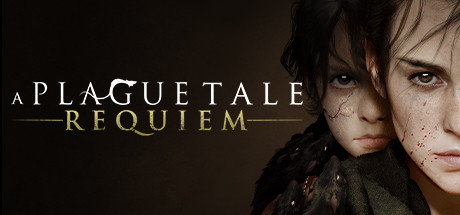
Emotions
What players like:
Common complaints:
Gameplay feedback:
Performance notes:
Recommendations:
Other player notes:
Similar games
Blend with other games 87%A Plague Tale: Innocence
 81%Eriksholm: The Stolen Dream
 81%Dishonored 2
 81%METAL GEAR SOLID 2: Sons of Liberty - Master Collection Version
 81%Alpha Protocol™
 81%Little Nightmares II
 80%Intravenous 2
 80%Dreamfall: The Longest Journey
 80%Resonance: A Plague Tale Legacy
 80%Beyond Good and Evil™
 80%Assassin's Creed Mirage
 79%The Talos Principle 2
Review evidence
Why players say this
Review evidence
Why players say this
What players like
Masterful Emotional Storytelling: The game's narrative is praised for its deep emotional impact, character development, and tragic themes, often compared to masterpieces like *The Last of Us*. Players highlight its heartbreaking yet beautiful execution.
Immersive Gameplay and Mechanics: Gameplay is tightly integrated with the narrative, offering a mix of stealth, combat, and puzzles. Players appreciate the fluidity, variety, and emotional weight of mechanics like rat swarms and alchemy.
Stunning Visuals and Art Direction: The game features breathtaking graphics, detailed environments, and a unique art style that contrasts beauty with horror. Improvements over the first game are frequently noted.
Strong Sibling Bond (Amicia & Hugo): The relationship between Amicia and Hugo is central to the story, praised for its authenticity, emotional depth, and character development. Amicia is highlighted as a standout protagonist.
Improved Sequel with Expanded Content: The sequel builds on the first game with refined mechanics, larger environments, and more gameplay variety (e.g., crossbows, open-world elements). Players note it surpasses its predecessor in depth and scale.
Common complaints
Repetitive and punishing gameplay: Players frequently criticize the gameplay loop as repetitive, overly reliant on stealth, and punishing due to checkpoint restarts, enemy spawning mechanics, and lack of combat flexibility. The 'hide, assassinate, solve puzzles' cycle is cited as monotonous and frustrating.
Poor enemy and AI design: Enemies are criticized for unrealistic tracking, 'sixth sense' mechanics, and inconsistent behavior, making stealth sections frustrating. AI issues extend to allies and puzzle interactions, breaking immersion.
Pacing and length issues: The game is described as artificially stretched, with slow pacing, overly long chapters, and excessive dialogue. Players feel the runtime is padded with unnecessary content, leading to tedium.
Clunky controls and camera: Controls are stiff and unresponsive, particularly in fast-paced moments, while the camera is criticized as the worst in third-person games, causing disorientation and immersion-breaking issues.
Limited exploration and freedom: The game is overly linear, with invisible walls, scripted sequences, and empty open areas that waste design effort. Players feel restricted in movement and strategy choices.
Gameplay and performance
Stealth as core gameplay: The game heavily emphasizes stealth mechanics, including hiding, evasion, and puzzle-solving, often combined with combat options. Players frequently highlight stealth as the primary or defining gameplay element, with expanded tools and tactical flexibility compared to the first game.
Narrative-driven linear experience: The game features a story-focused, linear progression with unskippable cutscenes and emotional depth, often centered on sibling relationships. Players describe it as immersive but slow-paced, with limited open-world exploration or player choice.
Expanded tools and combat options: The game introduces new tools (e.g., crossbow, sling, alchemy) and refined combat mechanics, offering varied approaches to stealth, puzzles, and combat. Players appreciate the tactical depth but mention occasional balance issues, especially in stealth-focused scenarios.
Rats as dynamic puzzle mechanics: Rats serve as a unique core mechanic, used for puzzles (e.g., light-based navigation) and environmental interactions. Players highlight the creativity of rat swarms as both threats and solutions, though some note an imbalance between rat-focused and human-focused gameplay.
Crossbow and weapon mechanics: The crossbow is a primary weapon with upgradeable abilities, used for combat, puzzles, and bolt recovery. Players note its strategic value but also mention balance issues with consumables like knives or alchemical mixtures.
Severe performance instability: Frequent FPS drops, micro-stuttering, and crashes occur across PC and consoles, even on high-end hardware. Issues are particularly noticeable in open areas or graphically demanding scenes, often requiring settings adjustments to mitigate.
Hardware requirements mismatch: The game demands high-end hardware for smooth performance, yet struggles to maintain stability even on top-tier systems. Mid-range configurations may require significant settings adjustments to run adequately.
DLSS and ray tracing issues: DLSS causes stuttering, blurriness, and crashes, while ray tracing introduces erratic frametimes and stability problems. Disabling these features often improves performance but reduces visual fidelity.
Optimization inconsistencies: While some players report smooth performance on mid-range or high-end systems, others experience severe instability. Optimization varies significantly across hardware configurations, with occasional praise for handling complex scenes (e.g., rat swarms).
Shader and loading issues: Lack of shader precompilation causes stuttering, and long loading times disrupt gameplay flow. These issues are frequently cited as avoidable with better technical implementation.
Recommendations
Masterpiece narrative-driven experience: The game is widely praised for its deep, emotional storytelling, immersive world, and strong character arcs. Many reviewers consider it a must-play for fans of narrative-rich adventures, often calling it one of the greatest interactive stories ever created.
Not for fast-paced gameplay fans: The game is explicitly not recommended for players seeking deep combat mechanics, time pressure, or complex gameplay systems. It prioritizes story and atmosphere over challenge.
Best played after first game: Reviewers frequently recommend playing the first game for better story continuity and emotional impact, though some acknowledge the sequel can stand alone. This advice is especially common among fans of the series.
Buy during sales recommended: Due to its niche appeal, high system requirements, or perceived value, many suggest purchasing the game on discount rather than at full price. This is a recurring theme in cost-conscious recommendations.
Stealth and combat balance: While the game is story-driven, some players recommend adjusting playstyles (e.g., leveling Fighter skills or focusing on stealth) for better engagement. Others note the first half can be rushed for achievements.
Other review notes
Strong narrative potential: Players highlight the unforgettable story and its potential for sequels or prequels, particularly focusing on character Sophia. The narrative structure is praised for its emotional depth.
Frustrating collection mechanics: Players criticize irreversible progression and checkpoint reloads if collectibles are missed, disrupting gameplay flow. This is a recurring pain point.
Balanced game length: Players report the main story takes 10-20 hours to complete, while completionists may spend over 30 hours. This caters to both casual and dedicated players.
Controller-focused design: The game prioritizes controller support, which may disadvantage keyboard users. This could limit accessibility for some players.
Minimalist environmental storytelling: The game uses subtle environmental details and few collectibles to enhance immersion, avoiding clutter while maintaining depth.