- Fun and addictive gameplay
- Excellent parkour system
- Stunning graphics and visuals
- Mediocre and unoriginal story
- Inferior to the first game
- Persistent bugs after patches
Emotions
Archetypes
Hardware
What players like:
Common complaints:
Gameplay feedback:
Performance notes:
Recommendations:
Other player notes:
Similar games
Blend with other games








Review evidence
Why players say this
Review evidence
Why players say this
Steam review verdict
Fun, addictive gameplay, excellent parkour, and stunning visuals are held back by a mediocre, unoriginal story, persistent post-patch bugs, and a sequel that feels inferior to the first.
What players like
Fun and addictive gameplay: Many reviewers find the game good, addictive, and enjoyable, with fast-paced and engaging gameplay that brings joy.
Excellent parkour system: The parkour mechanics are widely praised for being fluid, innovative, and well-realized, with smooth animations and satisfying movement.
Stunning graphics and visuals: Reviewers consistently highlight the excellent graphics, beautiful scenery, and impressive visual details.
Clear upgrade over predecessor: The game improves upon the first in many areas, including distinct style, gameplay, graphics, and story.
Good and touching story: The story is described as nice, interesting, and touching, though some find it simple.
Common complaints
Mediocre and unoriginal story: The narrative is described as weak, repetitive, and unengaging, with forgettable characters and a lack of originality. It fails to hook players.
Inferior to the first game: Many reviewers feel the sequel is significantly worse than the original in overall quality, story, and characters. It fails to live up to the first game's standards.
Persistent bugs after years of patches: Players report that bugs and crashes remain even after many updates, including four years after release. Some bugs are game-breaking and require extensive troubleshooting.
Clunky parkour and combat: Parkour mechanics feel unresponsive and poorly implemented, while combat lacks impact and fluidity. Both are considered worse than in the first game.
Co-op and multiplayer bugs: Bugs and sync issues are especially prevalent in co-op and multiplayer modes, affecting missions, combat, and progression. These issues persist years after release.
Gameplay and performance
Parkour is core mechanic: Players frequently highlight parkour as the central gameplay element, with traversal across rooftops, climbing, and jumping. Many mention parkour challenges and skill trees.
Zombie combat and survival: Combat against zombies is a core element, often combined with parkour moves. The game blends first-person parkour with zombie survival and melee combat.
Player choices affect story: The narrative features branching decisions that impact story progression and endings. Dialogue choices and faction choices lead to different outcomes.
Co-op multiplayer mode: The game supports co-op play with friends, including a four-player co-op mode. Nightmare difficulty is available in co-op as well.
Side quests and activities: Numerous side quests and optional activities are available, many unrelated to the main story. Players appreciate that side quests are not forced and include moral choices.
Poor optimization and performance: A large number of reviews criticize the game's optimization, noting severe FPS drops, stuttering, and poor performance even on high-end hardware. Performance issues are widespread across various settings and locations.
Frequent crashes and instability: Many players report constant crashes, freezing, black screens, and even system soft locks or reboots. The game can crash repeatedly, sometimes after loading screens or during normal play, severely impacting usability.
Good performance on some setups: Despite widespread issues, some players report stable 60-90 FPS on medium or high settings, especially with DLSS or frame generation. Performance can be good if settings are adjusted correctly.
Graphics and audio glitches: Players encounter missing textures, invisible enemies during cutscenes, muted or overlapping voice lines, and music cutting out. These visual and audio bugs detract from immersion.
Inconsistent FPS and frame drops: Frame rates can drop sharply for no apparent reason, such as when exiting the metro, during daytime, or after quests, and frame dips can skip player input during parkour. Performance is inconsistent even on capable systems.
Recommendations
Buy only on sale: Multiple clusters emphasize that the game is only worth purchasing at a discount, often specifying a deep sale or a price below a certain threshold. The consensus is that full price is not justified.
Worth buying overall: Several clusters contain positive recommendations to buy the game, with reviewers stating it is worth the price and a great purchase. These are general endorsements without price conditions.
Recommended for zombie/open-world fans: The game is highly recommended for players who enjoy zombie survival, open-world exploration, and parkour mechanics. Reviewers specifically praise the movement systems and brutal combat.
Not recommended at all: Some clusters explicitly advise against buying the game under any circumstances, with strong language like 'do not buy' or 'stay away'. These are unconditional negative recommendations.
Positive but not masterpiece: Some clusters give generally positive recommendations with caveats, such as the game being good but far from its predecessor, or worth playing but not enthusiastically. These are moderate endorsements.
Buying context
Community fair range: $10.00 - $20.00.
Game completion: 86.0h.
Story completion: 20.0h.
Session length: 3.0h.
Many players enjoy the parkour and combat from the start, but the game often becomes repetitive and less fun as the story and open-world content wear on.
Friction: Slow opening; Heavy early stamina limits; Core movement skills such as Slide unlock later.
Unlock drivers: Unlocking all skills; Increasing stamina; Unlocking Slide and other movement abilities.
Player profiles
Co-op Social Player: Drop-in co-op sessions, running missions and chases together, and messing around in the open world. Motivation: Shared chaos and fun with friends in co-op. Stance: sale.
Gameplay-First Sandbox Fan: Rooftop traversal, melee-focused zombie fighting, free exploration, and optional co-op chaos. Motivation: Fast parkour and visceral zombie combat in an open-world sandbox. Stance: buy.
Dying Light 1 Veteran: Story playthroughs with constant comparison to the original game’s combat, parkour, and progression systems. Motivation: Continue the Dying Light experience and see how the sequel compares to the first game. Stance: sale.
Platform notes
Across the returned Windows cohorts, the game can deliver strong frame rates on some mid-range and high-VRAM systems, but stability and optimization problems are widespread. The high-VRAM 16-31GB RAM cohort is the most consistently negative, with crashes and launch issues outweighing positive reports.
Windows <8GB VRAM / <16GB RAM: mixed. Some low-VRAM systems report stable 50-60 FPS or better-than-expected playability, but lag, crashes, freezing, and optimization complaints are also common.
Windows 12-15GB VRAM: mixed. Several reviews report high frame rates at 1440p with ray tracing and good optimization, while others cite frame drops, texture and visual glitches, crashes, and poor stability.
Windows <8GB VRAM / 16-31GB RAM: mixed. Some systems reach good FPS at max or near-max settings, but frequent crashes, stutter, black screens, and DLSS-related problems are widely reported.
Steam Deck: Steam Deck reports are mixed but mostly confirm that Dying Light 2 is playable rather than broken. Users report working controller support, Proton/Linux compatibility, and acceptable performance around 40-45 FPS with low-to-medium settings and FSR; some achieve smoother 60 FPS with Lossless Scaling. However, the experience is not seamless: dark scenes can become effectively unreadable, and playable performance depends on custom settings and upscaling. Residual stability and co-op bugs remain but are not Steam Deck-specific in most evidence. The final friction score is 45.
Linux and Proton: The Linux and Proton feedback is mostly positive: several users report the game running perfectly, great 4K performance, or a dream-like Proton experience. There are minor caveats about only acceptable performance and unspecified issues after switching to Linux. One user reports a clear Proton boot failure after the latest update, which is a notable regression but not the dominant consensus.
Extra review signals
Monetization: The reviews provide direct evidence of post-launch real-money monetization in Dying Light 2, including a cash shop selling weapons and guns, a marketplace and bundle weapon described as pay-to-win, a battle pass, premium currency packs with leftover-point pressure, and frequent paid cosmetic or crafting DLC. Some users describe the store as optional or not pay-to-win, but multiple independent reviews explicitly identify paid power advantages. The evidence supports a predatory monetization score.
Mod reliance: Across the reviews, mods are mentioned mainly for cosmetics, sleeping-bag convenience, combat tweaks, and general quality-of-life improvements. Complaints center on story quality, NPC models, clunky combat, and missing save or New Game+ features, not on crashes or launch failures. There is no consensus that the vanilla game is unplayable without community fixes.
External guides: Across the reviews, the dominant external-data dependency is instructional: players repeatedly need guides for quest choices, missable collection items, Easter eggs, and hidden outcomes. Navigation and quest-marker failures, plus alt-tab and performance bugs, are also prominent Tier 4 issues, but they do not outrank the explicit Tier 3 evidence under the strict scoring hierarchy.
Other review notes
Unfavorable comparison to first game: Many reviewers feel the game is a step down from its predecessor, citing weaker story, music, and atmosphere. They often say it removed the best parts of the first game and does not live up to expectations.
Compared to Dying Light 1: Numerous comparisons are drawn to Dying Light 1, with opinions split: some find it smoother with a bigger world, while others see it as a downgrade. The night experience and combat are often noted as weaker than the original.
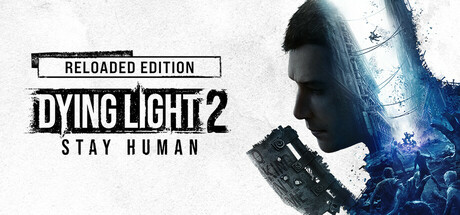
Bloody Ties DLC included: The Reloaded Edition includes the Bloody Ties expansion, which adds additional quests and enjoyable content. Reviewers note that the DLC is well-made.
Favorable comparison to first game: Some reviewers consider this game better than the first, praising improvements in optimization and gameplay. They see it as an upgrade that takes the best elements of the original and enhances them.
Game improved since launch: Despite a terrible release, the game has been improved through multiple updates over time. Reviewers feel it was unfairly treated at launch and is now in a better state.