- Graphics are stunning
- Kyle Crane's return praised
- Beast mode is satisfying
- Parkour downgraded
- Less content than predecessors
- Weak and thin story

Emotions
Archetypes
Hardware
What players like:
Common complaints:
Gameplay feedback:
Performance notes:
Recommendations:
Other player notes:
Similar games
Blend with other games 90%Dying Light 2 Stay Human: Reloaded Edition
 88%Dying Light
 81%Dead Island 2
 81%Dying Light - 10th Anniversary Bundle
 80%Dead Island: Riptide Definitive Edition
 80%Terrible Lizards
 79%Where the forest ends
 79%Dying Light: Bad Blood
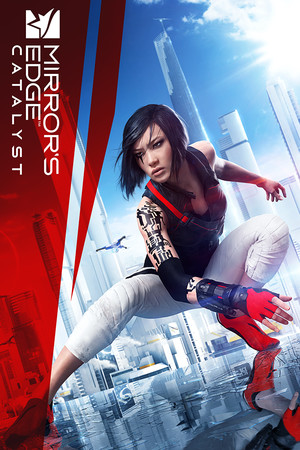 78%Mirror's Edge™ Catalyst
 77%Deadly Days: Roadtrip
 77%RoboCop: Rogue City - Unfinished Business
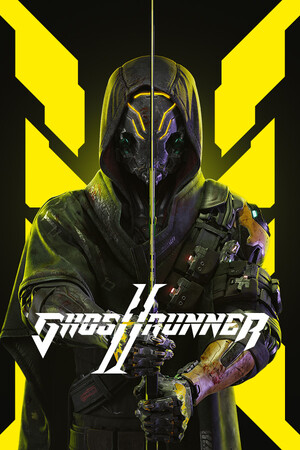 77%Ghostrunner 2
Review evidence
Why players say this
Review evidence
Why players say this
Steam review verdict
Stunning graphics, Kyle Crane's welcome return, and satisfying Beast mode can't fully offset downgraded parkour, thinner content than earlier games, and a weak story.
What players like
Graphics are stunning: The game's visuals are frequently described as beautiful, realistic, and well-detailed, even on lower settings.
Kyle Crane's return praised: Players are thrilled to see Kyle Crane return as the protagonist, often preferring him over Aiden and enjoying the nostalgia and improved vibe.
Improvement over previous games: Many reviewers feel the game improves on Dying Light 2 and even surpasses the first game in atmosphere and gameplay.
Overall game is great: General feedback describes the game as very good, cool, and a gem overall.
Beast mode is satisfying: The new Beast mode is consistently called fun, satisfying, and a great addition to gameplay.
Common complaints
Parkour downgraded: Parkour mechanics are considered worse than in previous games, feeling clunky, floaty, and less enjoyable. Many players note a lack of fluidity and fewer parkour opportunities.
Less content than predecessors: The game has noticeably less content than Dying Light 1 and 2, with a smaller world, shorter story, and fewer quests. This makes it feel like a step back for the series.
Weak and thin story: The narrative is often described as bland, predictable, and lacking depth. Players find the plot uninteresting and poorly put together.
Overpriced for content: Many players feel the game is too expensive given the amount of content it offers. The price is seen as unjustified, especially when compared to previous titles.
Feels like DLC: Many players feel the game is essentially an expansion for Dying Light 2 rather than a full sequel. It is criticized as being sold at full price despite its DLC-sized scope.
Gameplay and performance
Parkour and combat core gameplay: Players frequently mention parkour and combat as central mechanics. Clusters highlight a combination of traversal and visceral melee/firearm fights.
Beast Mode transformation mechanic: Multiple clusters describe a Beast Mode that transforms the player, grants new powers, and includes finishers. It is often cited as a key feature and power fantasy.
Main and side quests structure: The game includes a main story and various side quests that form the core progression. Side missions and story missions are frequently cited as content.
Zombie horde combat details: Feedback describes fighting large zombie hordes, with zombies able to grab, play dead, and ambush the player. Melee combat often involves dismemberment and crowd control.
Co-op multiplayer support: The game supports co-op play, often mentioned as two- or three-player cooperative multiplayer. Players highlight cooperative campaign and playing with friends.
Performance is generally good: Many reviewers report smooth performance, stable frame rates, and good optimization. Clusters consistently mention positive performance across various hardware configurations.
Occasional crashes and freezes: A recurring issue is crashes after a short play session, freezes, and game freezes during gameplay. Some crashes are linked to DX12 and specific in-game events.
FPS drops in specific scenarios: Frame rates can drop in dense areas with many zombies or particle effects, and during zone loading. Default settings may contribute to these drops.
Demanding system requirements: Some players find the game demanding, requiring a capable PC. GPU can reach full load and high RAM usage, and performance is poor on weaker hardware.
Upscaling and frame generation issues: DLSS does not raise frame rate, and frame generation may not work or becomes choppy after a while. Some users rely on FSR to improve performance.
Recommendations
Not worth full price: Many reviewers state the game is not worth its full price and only recommend purchasing it on sale or at a discount.
Wait for deep discount: Many suggest waiting for a significant sale, such as 50% off or below $20, before considering a purchase.
For Dying Light fans: The game is highly recommended specifically for fans of the Dying Light series, especially those who enjoyed the first game.
Strongly recommended overall: A significant number of reviewers strongly endorse the game, calling it a must-play and recommending it to others.
Do not buy: Some reviewers explicitly advise against purchasing the game at all, even on sale.
Buying context
Community fair range: $30.00 - $40.00.
Game completion: 35.0h.
Story completion: 18.0h.
Players often enjoy the opening hours and co-op chaos, but repetition, flat progression, and weak parkour or weapon durability erode that fun over time.
Reported time to anchor: 2h.
Friction: repetitive combat and mission design; flat progression and unrewarding rewards; weapons breaking quickly; weak or frustrating parkour; bugs and co-op desyncs; poor ammo economy and weak guns.
Unlock drivers: playing co-op with friends.
Player profiles
Nostalgic Franchise Veteran: Plays the campaign solo or in co-op, tests parkour and combat against DL1 and DL2, and explores for nostalgia and series callbacks. Motivation: Reconnect with Kyle Crane and the classic Dying Light formula while comparing it with earlier entries. Stance: sale.
Co-op Social Survivor: Runs the campaign in co-op, coordinates with teammates, and seeks emergent chaos in shared missions and open-world traversal. Motivation: Share chaotic zombie survival and parkour combat with friends or a partner. Stance: buy.
Hardcore Challenge Completionist: Plays on Brutal or nightmare-style settings, pursues 100% completion, and repeatedly runs challenge modes or New Game Plus. Motivation: Master the hardest difficulties and complete achievements, challenges, and New Game Plus progression. Stance: buy.
Platform notes
Windows performance is split: lower-VRAM systems with upscaling and 16GB+ VRAM/32GB+ RAM systems are mostly positive, while several mid-range and high-VRAM/16-31GB RAM cohorts report substantial instability or optimization problems.
Windows 12-15GB VRAM: mixed. Some users report high FPS at 4K/ultra or stable 1080p play, but others describe poor optimization, severe frame-rate swings, ray-tracing drops, and crashes.
Windows 8-11GB VRAM: mixed. Several users report smooth play with DLSS or frame generation, but others report stuttering, audio loss, crashes, and poor optimization even at low settings.
Windows <8GB VRAM / <16GB RAM: positive. Many users report playable 60-90 FPS with FSR or DLSS at 8GB VRAM, while a minority cite occasional crashes or microstutter.
Steam Deck: Steam Deck feedback is mixed but mostly playable. Users report moderate frame rates around 30-50 FPS, occasional heaviness or stutters, reliance on upscaling or TAA with visual softness, and dark night scenes that impair navigation. There are isolated reports of interruptions and unresponsive controls, but also clear praise from users who completed the game successfully on Steam Deck. No provided review shows mandatory Proton Experimental, an external launcher, or a universal failure to launch, so the experience is best classified as playable with performance and visual compromises rather than fully broken.
Linux and Proton: Linux/Proton feedback is limited but mostly positive: two users report good performance on Linux, including average hardware. The main Linux-specific concerns are unclear GPU feature support across Proton, Intel drivers, and Mesa, plus the game's D3D-only API path instead of Vulkan. There is no evidence of launch blockers, anti-cheat failures, or widespread Proton instability.
Extra review signals
Monetization: Most reviews complain that the game is short, feels like a DLC, and is overpriced at $60-$70; these are base-price/value issues, not MTX evidence. A minority directly report paid cosmetic DLC packs at high price points and a paid XP boost in a single-player bundle, plus recurring paid DLC. No review provides evidence of pay-to-win, real-money gacha, loot boxes, or currency obfuscation. The score is 55 because paid cosmetics and paid convenience fall into the aggressive band, but not casino-level exploitation.
External guides: The audit finds the dominant wiki-tax barrier is Tier 3 instructional dependency: users need guides for story objectives, puzzles, mechanics, and basic hints. There is no evidence of farming, drop-rate, loot-table, inventory, crafting, or blueprint dependency. Spatial and navigation issues plus alt-tab defects appear as secondary friction, but Tier 3 takes priority under the scoring hierarchy.
Other review notes
Compared unfavorably to predecessors: Many reviewers find the game worse than earlier Dying Light titles, often citing the first game as superior. It is frequently ranked as the weakest entry in the series.
Perceived as DLC-sized content: Many players feel the game lacks the volume and depth of a full sequel, describing it as a large DLC rather than a complete game. This is often linked to its shorter length and reduced content.
Originally intended as DLC: Reviewers repeatedly mention that the game started as DLC for Dying Light 2 and was later expanded into a standalone release. This perception influences opinions on its scope and value.
Favorable comparisons to series: Some reviewers appreciate how the game bridges the first and second installments, capturing the best parts of both. It is sometimes described as what Dying Light 2 should have been.
Short length and less content: Reviewers note that the game is shorter than previous entries and has significantly less content. Some compare its content volume unfavorably to Dying Light 2.