- Short and fun experience
- Fun and interesting gameplay
- Original dice-based combat system
- AI-generated content criticized
- Gameplay is monotonous and easy
- Extremely short playtime overall

Emotions
Archetypes
What players like:
Common complaints:
Gameplay feedback:
Performance notes:
Recommendations:
Other player notes:
Similar games
Blend with other games





Review evidence
Why players say this
Review evidence
Why players say this
Steam review verdict
A fun, short, and original dice-based combat game that is sadly held back by monotonous, easy gameplay, a very brief playtime, and criticized AI-generated content.
What players like
Short and fun experience: Many reviewers describe the game as a short, cute, and enjoyable experience. Its brevity makes it easy to finish and move on to other games.
Fun and interesting gameplay: Reviewers find the gameplay fun, decent, and interesting overall. The mechanics are engaging enough to keep players entertained.
Strong potential with more development: Several players see a good core idea but feel the game needs further development to reach its full potential. The concept is praised but considered underdeveloped.
Good free casual game: Players consider it a good quality free game that works well as a casual time-passer. It is acceptable for light, short play sessions.
Generally positive reception: Overall, players rate the game positively, calling it a good game and really great. It is well-received for what it offers.
Common complaints
AI-generated content criticized: Reviewers strongly dislike the heavy use of AI-generated assets, citing off-putting, bland, and uninspired art. Inconsistencies such as outfit changes and disappearing legs give the game a cheap feel.
Gameplay is monotonous and easy: The gameplay is described as bland, uninteresting, and not challenging. It becomes a repetitive loop of moving and attacking, causing boredom quickly.
Lack of content: Reviewers feel there is too little content and very little to do in the game. The game lacks unique fun and nothing stands out as special.
Scroll and move restrictions: Players note that only one move and one scroll can be used per turn, limiting tactical options. This restriction is a common complaint.
Upgrade system lacks clarity: There is no signifier indicating which spells can be upgraded, and only attacking spells can be upgraded. This makes the upgrade system confusing.
Gameplay and performance
Scrolls and Spells System: Players acquire, use, and upgrade various scrolls that serve as attacks and utilities. Up to four scrolls can be equipped and swapped during battles.
Turn-Based Strategy Roguelike: The game is a turn-based tactical strategy roguelike with chess-like feel. It combines roguelike elements with turn-based combat on a grid.
Dice-Based Action System: Dice determine actions such as movement and spell casting, replacing traditional mana systems. The rolled values directly influence what the player can do each turn.
Four Dice Per Turn: Players roll four dice each turn and use them for movement, attacks, or casting scrolls. This core mechanic defines the game's strategic decision-making.
Telegraphed Enemy Attacks: Enemy attacks are telegraphed in advance, often shown as red tiles a turn ahead. Players can dodge by moving out of attack ranges, adding a tactical layer.
Smooth technical performance: A reviewer reports that the game runs well. This positive technical note suggests stable performance on the player's hardware, though only a single cluster supports it.
Recommendations
Short, free, light experience: Many reviewers highlight the game as a brief, free, casual experience best suited to short sessions of roughly 15-30 minutes. It is frequently described as a low-commitment way to pass a break or spend an afternoon.
Lacks depth and content: A common criticism is that the game feels thin, with not enough content to satisfy players looking for a real game to invest time in. Several reviewers describe it as more of a demo or proof of concept than a full release.
Positive but modest ratings: Several reviewers give middling-to-good scores such as 3/5 or 4/5 while still recommending it as a small, worthwhile game. The tone is positive but tempered, framing it as a pleasant rather than exceptional experience.
Good roguelike entry point: Reviewers repeatedly call it a simple, easy-to-pick-up roguelike that works well as a stepping stone for beginners to the genre. Its accessibility and unconventional but approachable mechanics are seen as strengths for newcomers.
Worth one short playthrough: Numerous reviewers recommend trying it once for its brevity, often citing 20-30 minute or roughly one-hour runs. Completionists note about 1.5 hours to reach 100%, making it a quick single-sitting experience.
Buying context
Game completion: 0.5h.
Story completion: 0.5h.
Session length: 0.5h.
Players report immediate tactical enjoyment and a strong gameplay hook, though multi-click attacks, a verbose tutorial, and shallow combat temper the experience. No specific later event is explicitly tied to the game becoming fun.
Friction: Too many clicks per attack; Verbose tutorial; Shallow gameplay.
Unlock drivers: Removing a click per cast reduces tedium.
Player profiles
Casual Short-Session Dungeon Diver: Short chill runs, experimenting with dice-based turn combat without a long-term commitment. Motivation: Quick, low-pressure fun in a free single-player dungeon crawler. Stance: buy.
Tactical Optimization Tinkerer: Analyzes enemy movement, baits telegraphed attacks, and exploits spells or barrels for efficient clears. Motivation: Mastering and optimizing turn-based combat patterns. Stance: sale.
Content and Polish Skeptic: Tries the game, assesses scope and replay value, and scrutinizes art and presentation quality. Motivation: Finding enough content, replayability, and polish to justify the time. Stance: no buy.
Other review notes
Extremely short playtime: Players repeatedly note the game is beatable in roughly 30 to 60 minutes, with some rushing through in under an hour. A full run typically lasts around half an hour, making it one of the shortest roguelike experiences.
AI-generated assets used: The game extensively uses AI-generated artwork, including story scenes, achievements, sound effects, and BGM. Developers openly declare the AI usage, and some reviewers suggest fleshed-out versions without AI art could be worth selling.
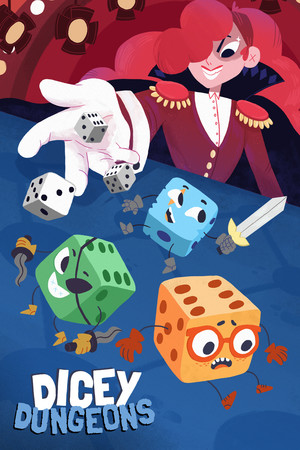
Potential for expansion: Several reviewers see commercial potential and compare it to Dicey Dungeon, Into the Breach, and Back to the Dawn, suggesting it could become a quality roguelike with hundreds of hours of play if properly developed. The ending hints at a sequel.
Free-to-play release: The game is offered at no cost and is described as a free-to-play title from Jungle Game Lab. Players acknowledge the small scope but appreciate that it is free.
Developed by trainees: The game is a student or trainee project from Krafton Jungle Game Lab, described as a small practice release and graduation-project-like work. The developer's future projects are anticipated.