- Strong gunplay and responsive movement mechanics
- Mounts significantly enhance mobility and fun
- Free-to-play with fair monetization model
- Severe performance and optimization issues
- 3v3 mode mismatched with overly large maps
- Unpolished launch with numerous bugs
Emotions
What players like:
Common complaints:
Gameplay feedback:
Performance notes:
Recommendations:
Other player notes:
Similar games
Blend with other games





Review evidence
Why players say this
Review evidence
Why players say this
What players like
Strong gunplay and movement: Players consistently praise the satisfying gunplay, smooth movement, and responsive controls. The gunfights and weapon feedback are highlighted as major strengths, contributing to an enjoyable core experience.
High potential for growth: Players note the game’s solid foundation, promising roadmap, and room for improvement (e.g., balance tweaks, matchmaking). The core mechanics and vision are seen as strong enough to support long-term development.
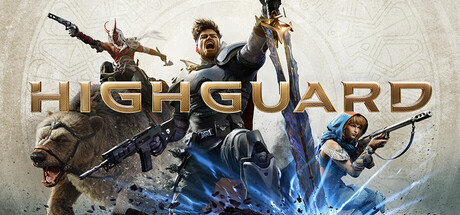
Mounts enhance mobility and fun: Mounts (horses, bears, panthers) are universally praised for their fluidity, speed, and impact on gameplay. They make large maps feel manageable and add unique combat/rotation opportunities.
Balanced and strategic 3v3 format: The 3v3 team size is lauded for fostering tight, teamwork-driven matches with constant action. The format balances accessibility and competitive depth, making it ideal for both casual and ranked play.
Free-to-play with fair monetization: The game’s free-to-play model is well-received, with no pay-to-win mechanics and cosmetic-only monetization. Players appreciate the low barrier to entry and lack of aggressive microtransactions.
Common complaints
Severe performance and optimization issues: Players report frequent crashes, freezes, low FPS (even on high-end hardware), and poor optimization. These issues significantly hinder gameplay, especially in competitive settings where performance is critical.
3v3 mode mismatched with large maps: The 3v3 team size feels too small for the game's large maps, leading to sparse action, excessive running, and a lack of tension. Players suggest larger teams (e.g., 5v5 or 6v6) would better suit the map design.
Lack of identity and originality: The game is criticized for feeling like a mix of other titles (e.g., Apex Legends, Overwatch) without a unique identity. Characters, abilities, and art design are described as bland or generic.
Unpolished and buggy launch: The game launched with numerous bugs, glitches, and unfinished systems (e.g., tutorial soft-locks, matchmaking issues). Players feel the game was released prematurely and lacks polish.
Weak core gameplay and balance issues: Gunplay, abilities, and character designs feel unbalanced, inconsistent, or underwhelming. Issues like OP shotguns, weak SMGs, and lackluster ultimates detract from the experience.
Gameplay and performance
3v3 Raid Mode Core Gameplay: The game primarily features a 3v3 raid mode with attack/defend mechanics, including phases like looting, base reinforcement, and bomb planting. This mode blends hero shooter and MOBA elements with objective-based gameplay.
Phased Match Structure: Matches are divided into distinct phases: looting, reinforcement, sword capture, and attack/defense. This structure creates dynamic pacing but may introduce downtime.
Large Maps with Mount Traversal: The game features expansive maps designed for 3v3 gameplay, with mounts (e.g., horses, bears) enabling quick traversal. However, players note the maps may feel too large for small teams.
Character Abilities and Teamwork: Characters have unique abilities (e.g., ultimates, mounts) and roles (e.g., breacher, support), emphasizing teamwork and strategy. Balance and synergy are critical for success.
Suggested Team Size Adjustments: Players frequently suggest larger team sizes (e.g., 4v4, 5v5) to better suit the map design and reduce downtime. The current 3v3 format is seen as mismatched for the game’s scale.
Poor optimization on high-end PCs: Multiple reports indicate that the game suffers from low FPS, frame drops, and instability even on high-end hardware (e.g., RTX 4090, 3090). Performance issues persist despite hardware capabilities, suggesting poor optimization.
Hardware compatibility problems: The game has strict hardware requirements (e.g., TPM 2.0, Secure Boot) and compatibility issues with peripherals like high-polling-rate mice. Some players report crashes or performance drops due to these constraints.
Blurry visuals and ghosting: Numerous reports highlight persistent blurry visuals, ghosting, and motion blur issues, regardless of graphics settings or DLSS/FSR usage. This affects visual clarity and immersion.
Performance varies by settings: While some players achieve stable FPS on high settings, others must lower resolutions, disable DLSS, or tweak settings to avoid performance issues. This inconsistency highlights optimization gaps.
Overheating and hardware strain: Some players experience overheating, PC shutdowns, or 100% GPU usage, indicating the game may push hardware beyond sustainable limits.
Recommendations
Give the game a fair chance: Many players recommend playing the game for at least an hour or multiple matches before forming an opinion. They emphasize that the game may grow on players over time, especially if they adjust settings or play with friends.
Free-to-play is low risk to try: Many players highlight that the game is free to play, making it a low-risk opportunity to form an opinion. They encourage others to try it despite negative reviews.
Adjust team sizes for better gameplay: Players frequently suggest increasing team sizes to 4v4, 5v5, or even 6v6 to improve action and balance. Some propose alternative modes like 3v3v3 or 3v3v3v3 for variety.
Add more game modes and variety: Suggestions include adding modes like Hardpoint, Deathmatch, Domination, and PvE elements. Players also want more weapons, gadgets, and movement options to enhance gameplay diversity.
Balance weapons and characters: Players request better weapon rotation, balancing, and more interesting weapon designs. They also suggest rebalancing characters and adjusting mechanics like shield gain and respawn timers.
Platform notes
Steam Deck: Highguard's launch is marred by severe technical barriers that significantly hinder user experience. The most critical issues include unplayable performance on high-end hardware, forced upscaling leading to blurry visuals, restrictive anti-cheat requirements that lock out Linux and Steam Deck users, pervasive crashes, and poor input customization. These problems create a frustrating and inaccessible experience for a large portion of the potential player base, overshadowing any positive aspects of the game's design or concept.
Extra review signals
Monetization: Highguard's monetization strategy is a mixed bag, with clear strengths and significant weaknesses. On the positive side, the game avoids pay-to-win mechanics, offering only cosmetic items for purchase and unlocking all characters from the start. However, the aggressive introduction of a day-1 battle pass and overpriced cosmetic bundles ($20+) has created a strong negative perception. Users criticize the bundling of items, forcing players to purchase entire bundles for specific cosmetics, and the excessive grind required to progress through the battle pass. The monetization feels prioritized over core gameplay, leading to accusations of the game being a 'cash grab.' While the monetization is not predatory in the traditional sense (no P2W), the execution is seen as tone-deaf and exploitative, particularly given the game's lack of content and polish at launch.
External guides: The user feedback reveals critical gaps in instructional and spatial data, with players struggling to understand core mechanics, navigate technical issues, and access lore or balance information. The absence of a wiki exacerbates these problems, forcing reliance on external resources. While economic (TIER 1) and inventory (TIER 2) dependencies are not explicitly mentioned, the feedback overwhelmingly highlights barriers related to learning systems (TIER 3) and navigation (TIER 4).
Other review notes
Gameplay inspired by MOBAs/FPS hybrids: Players frequently compare the game's map size, UI, character design, and mechanics to titles like League of Legends, Overwatch, Apex Legends, and Valorant. This suggests a hybrid design blending MOBA and FPS elements.
Proposed team size and loadout changes: Feedback suggests increasing team sizes to 6v6 or 5v5 with defined roles and limiting backpack capacity to a hotbar loadout. These changes aim to improve balance and streamline inventory management.
PvE and strategic gameplay additions: Players suggest adding PvE action, buildable traps/defenses, and neutral AI camps for currency. These features could diversify gameplay beyond PvP.
Kernel-level anticheat implementation: The game uses Easy Anti-Cheat (EAC) at the kernel level, which is noted alongside hardware specs like high-end CPUs/GPUs. This highlights a focus on security but may raise privacy concerns.
Developed by ex-Apex Legends team: The game is noted to be developed by former Apex Legends team members, which may influence its design and reception. The team size (102 developers) is also highlighted.