- Strong and engaging writing
- Beautiful and evocative art
- High replay value
- Excessive RNG dictates outcomes
- Opaque mechanics and poor feedback
- Repetitive environments and encounters
Emotions
Archetypes
What players like:
Common complaints:
Gameplay feedback:
Performance notes:
Recommendations:
Other player notes:
Similar games
Blend with other games







Review evidence
Why players say this
Review evidence
Why players say this
Steam review verdict
Strong writing and evocative art plus high replay value are undercut by outcome-defining RNG, opaque mechanics with poor feedback, and repetitive environments and encounters.
What players like
Strong and engaging writing: Reviewers consistently praise the writing as great, solid, fun, and engaging. The script and narrative are highlighted as a major strength of the game.
Beautiful and evocative art: The artwork is described as fantastic, gorgeous, beautiful, and incredibly evocative. Reviewers frequently commend the artistic designs and visual presentation.
High replay value: Players note plenty of replay potential out of the box, with many replayability options and variations of events, hells, and traits. The replay value is considered real and admirable.
Engaging and captivating gameplay: The game is described as really engaging, captivating, amazing, and worth playing. Reviewers find it a great game overall.
Choices have meaningful consequences: Decisions in the game have genuine and lasting consequences that matter. Reviewers appreciate that choices carry real weight.
Common complaints
Excessive RNG dictates outcomes: Randomness dominates nearly every system, from dice rolls to tile draws, and frequently decides success or failure regardless of preparation. Players report that even well-matched teams and good choices can be undone by chance.
Opaque mechanics and poor feedback: Players struggle to understand what tiles mean, how traits affect challenges, and why outcomes occur. The game gives little post-hoc feedback explaining results or the effect of specific choices.
Repetitive environments and encounters: Only a handful of afterlife destinations exist, so paths become memorizable and environments repeat across runs. Encounter variety is limited enough that players learn solutions quickly.
One bad encounter ends runs: A single failed encounter can abruptly terminate an entire run, wiping out an hour of progress. With no saves or reloads, failure sends players back to the beginning.
No overarching story or branching: The game lacks a connecting narrative, with runs feeling like disconnected encounters. Character dialogue and story beats repeat identically across playthroughs.
Gameplay and performance
Story-driven choice-based narrative game: The game is fundamentally a narrative experience where player choices shape the story. It is described as a choose-your-own-adventure style RPG with text-heavy storytelling.
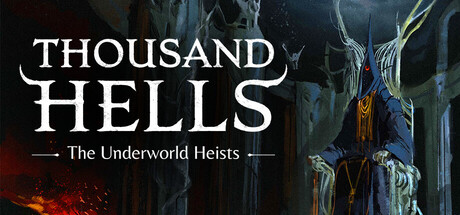
Heist-themed party-based gameplay: Players assemble a crew of four characters with different skills and attempt heists in various hells. The game blends narrative roleplay with heist decision-making and consequences.
Roguelike runs structure gameplay: The game is played in short runs lasting roughly one to one-and-a-half hours. Roguelike elements are combined with storylets and branching narrative to create replayable experiences.
Procedurally generated characters and narrative: Characters are procedurally assembled from a limited pool of names, traits, and professions. The narrative structure itself is also procedurally generated, with random actions driving story creation.
Multiple branching storylines and replayability: The game offers multiple storylines and paths that steer differently based on choices. This provides strong replay potential across repeated playthroughs.
Choppy framerate in setup: Players report unusually choppy framerate specifically during game setup screens. This impacts smoothness of navigation before gameplay begins.
Recommendations
Not for players who need to win: Multiple reviewers warn that the game is not for those who require guaranteed victory or predictable outcomes. The experience involves embracing uncertainty and losing frequently based on chance.
Fans of narrative games will enjoy: Reviewers consistently recommend the game to fans of narrative-driven experiences, interactive fiction, and story-heavy games. Comparisons are drawn to King of Dragon Pass, Six Ages, Wildermyth, and Fallen London.
Mixed reception with conditional recommendations: Many reviewers recommend the game but with significant caveats about its niche appeal and lack of guaranteed success. The game is praised for its narrative but criticized for frustrating gameplay aspects.
Poor value at full price: Several reviewers suggest waiting for a sale due to poor price-to-hours ratio or limited replay value for general gamers. Some recommend only buying on deep discount.
Gameplay problems lead to refunds: A few reviewers decided to refund the game due to insufficient feedback on correct moves and too many gameplay issues. They do not recommend keeping it.
Buying context
Community fair range: $9.99 - $14.99.
Game completion: 12.0h.
Story completion: 1.0h.
Session length: 1.3h.
Some players report that persistence through a steep learning curve is rewarded with satisfaction and room to experiment, while others find the loop repetitive, shallow, and poorly rewarded without progression.
Friction: Steep and punishing learning curve; Tedious click-through line-by-line text; Replays require clicking through long text to reach failed situations; Lack of meta progression or career mode; Choices affect only the current session; Tutorial tips obstruct the Steam Deck screen without a dedicated clear.
Unlock drivers: Experimenting and learning effective ways to play; Sticking with the steep learning curve.
Player profiles
Narrative Tabletop Roleplayer: Makes in-character choices, explores story branches, and accepts failure as part of the narrative ride. Motivation: Emergent roleplay and heist stories shaped by natural decisions. Stance: buy.
Mechanics-Focused Progression Seeker: Plans runs, reads card and challenge outcomes carefully, and expects meta-game rewards and career progression. Motivation: Clear feedback, mastery, and persistent progression between runs. Stance: no buy.
Narrative Strategy Genre Veteran: Plays for narrative events and comparisons to familiar strategy games rather than raid-and-grain loops or tactical combat. Motivation: Finding a story-event game similar to established narrative strategy titles, with lighter management or tactics. Stance: buy.
Other review notes
Unfavorable comparison to King of Dragon Pass: Frequent comparisons to King of Dragon Pass and Six Ages note less content, replay value, atmosphere, and coherence. Fans of the developer's earlier games may find this title lacking in charm and character investment.
Same developer as King of Dragon Pass: The game is made by the same team behind King of Dragon Pass and Six Ages. Reviewers frequently note this lineage, though it departs from their earlier colony-sim style.
Short runs of about an hour: Each run or story takes roughly 1 to 1.5 hours, fitting well into commute-length sessions. Full completion of all missions takes around 8 to 12 hours.
Ten adventures across four hells: The game features ten narrative scenarios and eight unique heists set across four distinct and varied hells. The content amount is smaller than expected, with fewer hells than the title suggests.
Compared favorably to tabletop RPGs: The game is likened to a GMed tabletop RPG session run by a creative GM, capturing the tension and wonder of Blades in the Dark without needing a group. It plays like a DM'd D&D run rather than a colony sim.