- Roguelike elements with depth
- Fast-paced addictive gameplay
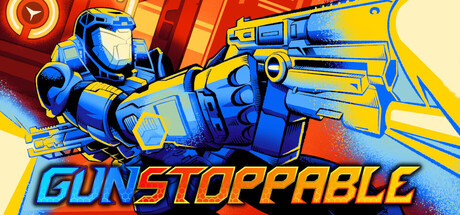
- Stylish and unique art
- Short content and low replayability
- Bugs and technical jank
- Combat and shooting underwhelming
Emotions
Archetypes
What players like:
Common complaints:
Gameplay feedback:
Performance notes:
Recommendations:
Other player notes:
Similar games
Blend with other games






Review evidence
Why players say this
Review evidence
Why players say this
Steam review verdict
Stylish unique art and fast-paced addictive roguelike depth are undermined by short content, low replayability, bugs, technical jank, and weak combat and shooting.
What players like
Roguelike elements with depth: The roguelike aspect is well-received, with many builds to experiment with and meaningful progression that adds replay value. The mix of speed and build choices is a standout feature.
Fast-paced addictive gameplay: The game's fast pace and addicting gameplay loop keep players engaged, often described as fun and adrenaline-inducing. The speed mechanic that ties movement to damage output is particularly praised.
Stylish and unique art: The art style is frequently described as fun, unique, and stylish, complementing the overall experience. It fuses well with the game's aesthetic and humor.
Fun and fluid movement: Movement mechanics like grappling, sliding, wall-running, and rail-grinding are frequently praised for feeling fast and fluid. Many compare it to Titanfall and Ultrakill, and it's a key reason players enjoy the game.
Fun and satisfying combat: Combat is often described as fun, challenging, and satisfying, with a focus on defeating enemies and feeling powerful. The fast-paced nature and enemy variety keep it engaging.
Common complaints
Short content and low replayability: The game is very short, beatable in about 3 hours, with few bosses and minimal roguelite elements that do not change runs meaningfully. Every run feels practically the same, and there is no long-term replayability without major additions.
Bugs and technical jank: Players encounter numerous bugs, including grappling hook clipping out of the map, key binding issues, and out-of-bounds clips within minutes of play. The game also feels rushed and buggy, with smaller jank throughout.
Combat and shooting underwhelming: Shooting feels underwhelming, hit impact is terrible, and bosses often feel too weak compared to normal enemies. Enemies can teleport on top of the player and perform inhuman 180-degree turns, making combat frustrating.
Graphics and art style poor: Graphics are criticized as poor, with rough pixelation, inconsistent art style, and a weird feeling. The toon shader with high-res textures makes the game look like an asset flip, and it awkwardly tries to mimic Borderlands while feeling like generic AAA slop.
Difficulty spikes are excessive: Multiple reviewers report sharp difficulty spikes, especially after the second boss and in Zone 3, where enemy density and damage increase dramatically. The curve starts very easy but becomes punishing quickly, with some players dying in a few hits by the third area.
Gameplay and performance
Roguelike shooter structure: Reviews frequently describe the game as a roguelike or roguelite shooter, often set in a sci-fi FPS context. Many mention standard roguelike mechanics and decent depth.
Advanced movement system: The game features a rich movement toolkit including grappling, sliding, wall-running, and rail-grinding. Reviews repeatedly list these options as central to the experience.
Satisfying movement core: Movement is described as a core aspect that is satisfying and dynamic, with some noting it is okay but important. It drives the gameplay and is often praised.
Movement shooter genre: The game is classified as a movement shooter, often compared to Titanfall 2 or ULTRAKILL. Fast-paced action with constant forward movement is a key descriptor.
Boss encounters: The game features bosses with weak points, including a first boss, a crab boss on the moon, and a boss named Fluffy with shifting weak-points. Bosses are described as crazy.
Strong performance across devices: Players report the game runs smoothly on a variety of hardware, including a 10-year-old PC, max FPS settings, and the Steam Deck. Performance is generally praised with no major issues mentioned.
Lightweight and easy to run: The game is noted for being easy to run and taking up very little storage space. This makes it accessible to players with limited system resources.
Smoothness improved by hotfix: A hotfix was released that improved the smoothness of the game. However, one player still reported that the game did not run smoothly on their system, indicating that performance issues may persist for some.
Out-of-bounds clip bug: A player discovered an out-of-bounds clipping bug within 10 minutes of playing. This bug can disrupt gameplay and immersion.
Recommendations
Worth checking out: Multiple clusters explicitly state the game is worth checking out or giving a shot. This broad positive sentiment appears across several independent reviews.
Recommended for fast-paced FPS: Reviewers highlight the game's appeal to fans of fast-paced FPS and frenetic shooters. This niche recommendation is consistent across multiple clusters.
Recommend with caveats: Some recommendations come with conditions, such as enjoying speedrunning, theorycrafting, or grinding. Others suggest waiting for content updates or buying at lower prices.
Recommended for Ultrakill fans: Reviewers specifically recommend the game to fans of Ultrakill. This niche appeal highlights the game's similarity to that title.
Buying context
Game completion: 3.0h.
The game's core movement and combat are widely described as addictive, supporting a fun-immediately profile. However, grappling hook bugs, opaque upgrades, repetitive dialogue, and same-area repetition create notable friction for some players.
Friction: Grappling hook texture bugs and clipping out of the map; Trashy, repetitive, and unhelpful dialogue; Opaque upgrade progression; Lack of weapon upgrades or level progression beyond the initial loop; Repetitive same areas without procedural map making; Gameplay can feel boring or bad for some players.
Unlock drivers: Meta progression and perk choices give a sense of working toward something; Bug fixes and tighter pacing/balance made encounters more engaging.
Player profiles
Fast-Paced Movement Shooter Fanatic: Plays aggressively at high speed, leaning into movement mechanics and reaction-heavy encounters. Motivation: Chasing the adrenaline of fast, fluid movement-based FPS combat and a stylish power fantasy. Stance: buy.
Roguelite Build Optimizer and Leaderboard Climber: Grinds runs methodically, experiments with weapon and perk combinations, and pushes for faster clears and higher rankings. Motivation: Mastering build synergies and climbing leaderboards through repeatable progression and optimization. Stance: buy.
Handheld Value Seeker: Plays in short portable sessions, valuing performance, small install size, and replayable run-based structure. Motivation: Getting deep, replayable roguelite content that runs well on a handheld at a low price. Stance: sale.
Other review notes
Movement shooter like Ultrakill: The game is frequently compared to ULTRAKILL for its fast pacing, slides, and overall movement-shooter feel, with some calling it a potential successor or inspired by it.
Indie game with price concerns: As an indie game, it delivers an experience comparable to big-budget titles for less money, but some find the price high for the amount of content.
Voiced story through character conversations: The narrative is delivered via conversations with several characters and is fully voiced, adding depth to the game's presentation.
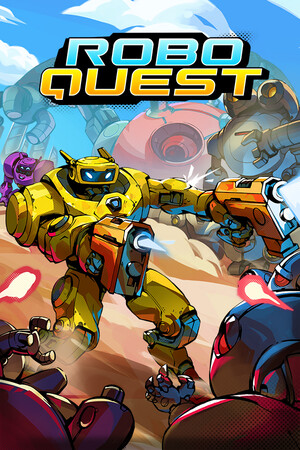
Compared to Roboquest and Titanfall: Reviewers also draw parallels to Roboquest as a similar movement shooter and to Titanfall for its movement mechanics, indicating a familiar but distinct experience.
Steam Deck compatible and demo: The game is compatible with Steam Deck and has a demo available, making it accessible for players to try before buying.