- Smooth and fun gameplay
- Melee combat excels
- Challenging but fair combat
- Stunning visuals and combat
- Combat system feels boring
- Poor performance and optimization
Emotions
Archetypes
Hardware
What players like:
Common complaints:
Gameplay feedback:
Performance notes:
Recommendations:
Other player notes:
Similar games
Blend with other games







Review evidence
Why players say this
Review evidence
Why players say this
Steam review verdict
Smooth fun gameplay, excellent melee, challenging but fair combat, and stunning visuals, though the combat system feels boring and performance is poorly optimized.
What players like
Smooth and fun gameplay: Many reviewers highlight that the game runs smoothly and is enjoyable to play. The overall feel and performance are frequently praised.
Melee combat excels: The melee combat system is widely praised for feeling good, being fun, and adding variety. It is described as fast, fluid, and energetic.
Challenging but fair combat: Combat difficulty is considered tough but fair, and the combat itself is fluid, satisfying, and solid. Many find it extremely good.
Stunning visuals and combat: The game's visuals are fantastic, and the combat feel is fluid and satisfying. Art and combat system are well made.
Incredible graphics: Graphics are consistently praised as beautiful, excellent, and among the best. Visuals are off the charts on high settings.
Common complaints
Combat system feels boring: Many players find the combat system dull, clunky, and unsatisfying, with too much repetitive combat that doesn't carry the game. Others describe it as uncomfortable, lacking depth, and a chore due to spongy enemies and poor animations.
Poor performance and optimization: The game suffers from poor optimization, with frequent frame drops, stuttering, and freezes. Performance is especially bad without upscaling technologies like DLSS or FSR, and a memory leak causes FPS to degrade over time.
Pre-load requires re-download: A common issue where pre-loading the game resulted in the files being deleted or needing to be re-downloaded after release, causing frustration and wasted time. This was described as a serious PR disaster by some.
Audio desync and stuttering: Players report significant audio desynchronization with character animations and cutscenes, as well as audio stuttering and choppiness. These issues severely break immersion.
Worse than previous games: Many compare the game unfavorably to its predecessor Control and other titles like Alan Wake 2, noting less fluid gameplay, unfamiliar controls, and worse graphics. Some feel it recycles content with only minor new additions.
Gameplay and performance
Melee-focused combat system: The game centers on melee combat rather than shooting, with hack-and-slash elements and a variety of melee weapons such as scythes and whips. This marks a shift from the previous game's third-person shooting to action melee combat.
Open world exploration: The game features an open world, often set in a city like Manhattan, divided into zones with tower mapping and secondary missions. Players can freely explore large maps with collectibles and open areas.
Boss fights and encounters: Boss fights are present, including challenging encounters with large health bars and varied shapes, sizes, and speeds. Notable bosses include The Artist and optional Resonant Entities.
Hack-and-slash gameplay: The game is a hack-and-slash style action game with a focus on fast-paced melee combat and dynamic, impactful fights. It leans heavily into the hack-and-slash genre.
Traversal abilities and movement: Traversal includes abilities like double jump, dash, double dash, rush, and float, available from the start. Movement is fluid and can involve flying around the city, with abilities tied to the character Dylan.
Generally smooth and optimized: Many players report smooth performance with no stutters or crashes, often describing it as well-optimized. This praise spans various hardware configurations and settings.
High-end hardware handles ultra settings: On top-tier GPUs like RTX 4090, 5090, and 5080, the game runs smoothly at ultra settings and high resolutions. Frame rates often exceed 100 FPS with upscaling.
Frame generation significantly boosts FPS: Users report that frame generation, especially when combined with DLSS, greatly increases frame rates. This allows high FPS even with ray tracing and high settings.
Good performance without ray tracing: Without ray tracing, the game generally runs well even on mid-range hardware, achieving stable frame rates at high settings. This makes it accessible to a wider range of systems.
Ray tracing impacts performance: Enabling ray tracing or path tracing can cause significant performance drops or even crashes. However, with upscaling and frame generation, playable performance is achievable on high-end hardware.
Recommendations
Best for Fans of Control: Many recommend the game especially to those who played and enjoyed the first Control, or are fans of the Remedy universe. Playing the original beforehand is often advised for full appreciation.
Worth Trying Despite Flaws: Many suggest giving the game a chance, even if it has issues, as it may be enjoyable for some. The overall sentiment is that it is worth trying or buying on sale.
Significant Technical Issues Cause Concern: Performance problems like stutters, hitching, audio bugs, a cursor bug, and poor Steam Deck support are frequently mentioned. Many reviewers recommend waiting for patches before buying.
Strong Recommendation from Many Reviewers: A large number of reviewers highly recommend the game, often enthusiastically. This positive consensus is one of the most frequent themes across the clusters.
Refunds and Negative Experiences: Some reviewers refunded the game or requested a refund due to disappointment. A few also returned it after limited playtime, such as reaching the first boss.
Buying context
Community fair range: $35.00 - $60.00.
Game completion: 60.0h.
Story completion: 37.0h.
Session length: 8.0h.
Control Resonant is often reported as a slow-starting game whose combat and traversal click after early upgrades and the opening chapter, though some players enjoy its movement and presentation immediately.
Reported time to anchor: 1h 30m.
Friction: Slow, unenticing first hour; Spongy, repetitive melee combat; Enemies take too long to kill; No hot-swapping weapons early; Steep learning curve in first hours; Confusing navigation and repetitive large maps.
Player profiles
Remedy Connected Universe Lore Veteran: Plays for narrative, lore, art direction, and world exploration; often finishes prior games, takes in side content, and values the weird, connected universe. Motivation: Continue the Control and Alan Wake storyline while exploring Remedy's interconnected supernatural lore. Stance: buy.
Hack-and-Slash Action RPG Build Crafter: Experiments with melee weapons and abilities, chases fluid high-octane fights, and optimizes build crafting and upgrades. Motivation: Master stylish melee combat and customize builds through weapon forms, skill trees, and playstyle choices. Stance: buy.
Curious Newcomer / Non-Fan Discount Seeker: Starts fresh, learns the mechanics on a first playthrough, and may wait for a discount if the game feels average without franchise attachment. Motivation: Try a Remedy action game without prior lore investment and see whether it works as a standalone experience. Stance: sale.
Platform notes
Across the six largest Windows hardware cohorts, the strongest consistent results come from 16GB+ VRAM with 32GB+ RAM, while most other cohorts are mixed: playable with DLSS and reduced ray tracing, but also reporting stutters, crashes, or frame-pacing issues. Lower-VRAM and 16-31GB RAM configurations are more likely to show severe instability, especially when ray tracing is enabled.
Windows 12-15GB VRAM / 16-31GB RAM: mixed. Many users report smooth high-frame-rate play with DLSS and frame generation, but crashes, open-world stutters, and poor frame pacing are also frequently reported.
Windows 8-11GB VRAM: mixed. Several users get stable 60+ FPS at 1080p or 1440p with upscaling, while others report severe drops, audio stutter, and poor ray-tracing performance at higher resolutions.
Windows 16GB+ VRAM / 32GB+ RAM: positive. High-end systems mostly report strong performance with path tracing and 4K settings, with only occasional memory leak, audio, or menu FPS caveats.
Steam Deck: The review set is dominated by desktop performance discussion with a distinct Steam Deck thread. On Deck the game does run, but only through a built-in handheld preset that caps resolution around 400p with FSR, producing roughly 40 FPS for some users while others report one-second pauses and drops to 10 FPS; Valve's own support label was withdrawn at the last minute, so no green-checkmark experience should be assumed. On desktop Linux, the picture is more favorable: multiple reviewers confirm it runs out of the box via Proton 11 on Bazzite, Nobara, CachyOS and other distros, with no Proton Experimental forcing required. Remaining friction comes from microstutter and combat-time frame drops even with DLSS/FSR enabled, forced upscaling and frame generation, an Nvidia Xid 109 driver freeze that hard-locks the game on any Proton, and black-screen launch/settings crashes reported by several Chinese-language reviewers. Overall this places the Steam Deck experience in the tinkering-required band rather than seamless or fully broken.
Linux and Proton: The review set shows strong overall Linux/Proton compatibility: multiple users report the game runs out of the box or perfectly on Bazzite, Nobara, CachyOS, and via Proton 11, on both AMD and Nvidia hardware. The main Linux-specific negatives are a repeated Nvidia Xid 109 freeze/crash with Proton, ray tracing startup/workaround issues, and minor stutter/frame pacing. Because the dominant evidence says the game is playable and often works without tweaks, the issues are not enough to classify Linux support as broken, but they do justify a minor-tweaks-to-moderate-friction score.
Other review notes
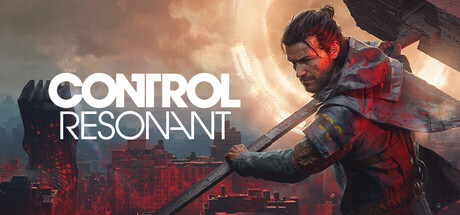
Successor to Control: Reviewers widely describe the game as a sequel to Control, though some note it is not a traditional sequel and retains its own identity. It is set seven years later and expands the world of the original.
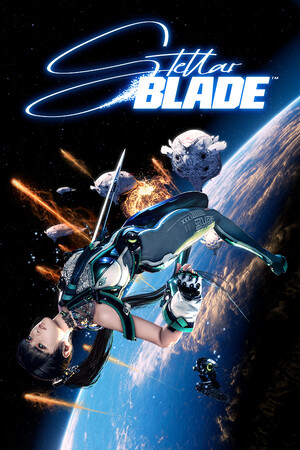
Compared to Devil May Cry: The game is frequently compared to Devil May Cry, Prototype, and Control, with some describing it as a combination of those games.
Remedy developed this game: Reviewers consistently note that Remedy is the developer behind the game, with several calling it another strong entry from the studio and describing it as part of the Remedyverse.
Frequent Alan Wake 2 comparisons: Many reviews compare the game to Alan Wake 2, particularly regarding story appeal and performance. Some regard Alan Wake 2 as their favorite game, while others compare the story to the first Alan Wake.
Excellent sequel to original: Many describe it as a great sequel that improves on the first game and is everything a sequel should be.