- Combat is highly satisfying
- Parry mechanic is excellent
- Story is good and engaging
- Enemy variety is lacking
- Gameplay becomes repetitive
- Cutscenes cannot be skipped

Emotions
Archetypes
Hardware
What players like:
Common complaints:
Gameplay feedback:
Performance notes:
Recommendations:
Other player notes:
Similar games
Blend with other games






Review evidence
Why players say this
Review evidence
Why players say this
Steam review verdict
Satisfying combat with an excellent parry mechanic and an engaging story, though limited enemy variety makes gameplay feel repetitive and unskippable cutscenes hinder pacing.
What players like
Combat is highly satisfying: Players consistently praise the combat system for being fun, responsive, and polished, with dynamic and varied mechanics. The positive feedback spans multiple clusters, indicating strong overall approval.
Overall game is enjoyable: Many reviewers find the game fun, pleasant, and visually appealing, with a good atmosphere and solid gameplay. Despite some flaws, the overall experience is positive and recommended.
Parry mechanic is excellent: The parry system is frequently highlighted as satisfying, rewarding, and well-implemented, with generous timing windows. Players enjoy the rhythmic and impactful feel of parrying, often comparing it favorably to Sekiro.
Story is good and engaging: The narrative is generally well-received, with interesting characters and an engaging plot that develops over time. Some mention a satisfying and emotional ending, adding to the story's appeal.
Music and soundtrack praised: The game's music is highlighted as excellent, atmospheric, and fitting the world well. Multiple reviewers specifically mention the soundtrack as a strong point, enhancing the overall experience.
Common complaints
Enemy variety is lacking: Multiple reviews consistently report that the game features very few distinct enemy types, with many reskins and repetitive attack patterns. This lack of variety makes combat feel monotonous and padded.
Gameplay becomes repetitive: Many players feel that combat and exploration become repetitive over time due to limited enemy variety, recycled bosses, and similar area designs. This causes some to lose interest or stop playing.
Bosses are reused excessively: Reviews highlight that many bosses are recycled throughout the game, sometimes fought three times, with minimal variation. This reduces the freshness and challenge of boss encounters.
Cutscenes cannot be skipped: A significant number of players complain that cutscenes, including long ones and those in New Game Plus, are unskippable. This forces repeated viewing and hurts replayability.
Game has polish issues: Reviews point out minor bugs, performance problems, and an overall unpolished feel, suggesting the game may have been rushed. Improvements and patches are needed to address these technical flaws.
Gameplay and performance
Parry-centric combat system: The combat heavily revolves around a parry mechanic, frequently compared to Sekiro. Players must constantly parry and deflect enemy attacks, with a large reaction window making it satisfying.
Boss fights are repetitive: Boss encounters are a major part of the game, but they suffer from repetition. Bosses are often fought multiple times, have multiple phases that repeat mechanics, and share similar rhythms and attack patterns.
Open world with exploration: The game features an open or semi-open world design with many locations to explore. Exploration includes collectibles, free movement across vertical and horizontal spaces, and hook points for traversal.
Companion dog Koo assists: A companion dog named Koo works alongside the player, providing combat support, finding valuable items and enemies, and synergizing with the player's actions. Koo's abilities include traps, healing, and taunts.
Sekiro-inspired combat design: The combat system is directly compared to Sekiro, especially the parry and posture mechanics. This is a defining feature that shapes the overall gameplay experience, though it's considered less harsh than a full Soulslike.
Poor optimization widespread: Many players report poor optimization, unstable performance, and frequent frame drops, especially on lower-end hardware. Some mention that patches have not fully resolved these issues.
High-end hardware performs well: Players with high-end systems report excellent performance, often exceeding 100 FPS at 4K or max settings. This suggests performance issues are more pronounced on mid-range or lower-end PCs.
Blurry graphics due to post-processing: Blurriness, including film grain and poor post-processing, is a common complaint. Disabling post-processing or DLSS often resolves the blur, though some find it unavoidable.
Frame generation missing at launch: Multiple players noted the absence of frame generation at launch, which could have improved performance. This feature was either added later or left out entirely.
DLSS improves performance post-patch: Recent DLSS patches have improved fluidity and resolved graphical problems, but older DLSS versions at launch caused issues like blurriness or poor visuals.
Recommendations
Buy only on sale: Many reviewers advise waiting for a discount, mentioning 20-50% off or specific price points. They feel the game is not worth its full price but becomes a good value when discounted.
Recommended for action fans: Several reviewers recommend the game especially to fans of Stellar Blade, NieR: Automata, Devil May Cry, and Bayonetta. They see it as a blend of these popular action titles.
Not worth full price: A substantial portion of feedback explicitly states the game is not worth purchasing at full price or its current price. These reviewers recommend waiting for a sale or avoiding the game at its retail cost.
Do not recommend game: Some reviewers strongly discourage buying the game at all, even on sale, calling it a waste of time and money. This suggests significant dissatisfaction with the overall experience.
Warmly recommend game: There is a positive group that recommends the game to everyone, praising its gameplay and overall quality. This stands in contrast to more cautious advice about discounts.
Buying context
Community fair range: $20.00 - $45.00.
Game completion: 36.0h.
Story completion: 22.0h.
Endgame: 7.0h.
The game starts with a slow, poorly explained, and clunky opening, but becomes engaging and fun once players grasp the mechanics, beat the tutorial boss, or reach mid-game where builds come together. Later repetition can reduce enjoyment for some, but the dominant profile is early friction resolving into fun.
Reported time to anchor: 1h.
Friction: lacking explanations for core systems; clunky/awkward first hours; slow pacing with redundant cutscenes; unclear tutorial or late explanations; camera and control issues; non-skippable cutscenes.
Player profiles
Sekiro-Style Combat Enthusiast: Aggressive, parry-focused, uses a variety of skills and quicktime abilities, plays on high difficulty. Motivation: To master parry-based combat and experience a satisfying challenge in a soulslike-like setting. Stance: buy.
Disappointed Action Veteran: Prefers mastering high-difficulty mechanics, but encounters simplistic patterns and repetitive bosses, leading to frustration. Motivation: To find a worthy challenge and depth in combat, which this game fails to deliver. Stance: no buy.
Exploration-Focused Casual: Thorough exploration, taking time to find every corner, using the dog for gathering and advice, and enjoying ranged or stealthy approaches. Motivation: To immerse themselves in a melancholic world, discover secrets, and bond with the companion Koo. Stance: buy.
Platform notes
Performance reports are mixed across the six major hardware cohorts, with both smooth high-FPS experiences and significant technical issues like stutter, crashes, and resolution limits.
Windows 12-15GB VRAM / 16-31GB RAM: mixed. Some players report high FPS and smooth gameplay, while others cite optimization problems, stutter, and frametime issues.
Windows 8-11GB VRAM: mixed. Reports are split between claims of good optimization and stable FPS and complaints about stutter, crashes, and VRAM issues.
Windows 16GB+ VRAM / 32GB+ RAM: mixed. Even on high-end systems, players experience crashes and resolution limits, but many also report no performance issues.
Steam Deck: The Steam Deck experience for this game is highly inconsistent and generally poor. While a few users report acceptable performance with heavy tweaks, many others cannot launch the game at all or face single-digit FPS, crashes, and forced upscaler resets. The game requires manual launch commands, Proton experimentation, or external upscaler injection to be playable, indicating a lack of native optimization. Stability issues further compound the frustration, making the out-of-the-box experience broken for a large portion of the Steam Deck community.
Linux and Proton: The game is functional and generally playable on Linux/Proton and SteamOS, with no DRM or anti-cheat blockers and several positive reports of smooth performance. However, achieving stable, stutter-free play commonly requires manual intervention: specific SteamOS launch commands, the optiscaler community tool for FSR injection, and often switching Proton versions (e.g., Proton GE 10-25), which can itself introduce random crashes. Standard Proton is stable but shows minor graphical quirks at certain resolutions, and occasional launch-time issues were reported. Overall, the game works on Linux but with notable tinkering and version-dependent behavior.
Extra review signals
Monetization: The user reviews contain no evidence of microtransactions, real-money currency, loot boxes, pay-to-win mechanics, or a cash shop. The game appears to be a traditional one-time purchase with additional deluxe and DLC content. Most criticism focuses on the base price being perceived as overpriced and the deluxe/DLC offering poor value, but these are pricing concerns rather than predatory monetization practices. A positive review explicitly denies a cash-grab design, reinforcing that the game is not exploiting players beyond its upfront cost.
External guides: User feedback primarily indicates a need for better in-game explanations for systems, stats, items, and tutorials. Many players find the game's lack of instruction forces them to seek external wikis or guides. Secondary issues include camera problems and alt-tab pause, but these are less central to the 'Wiki Tax' dependency.
Other review notes
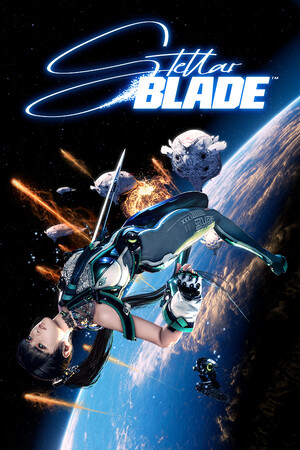
Frequent comparisons to Stellar Blade: Many reviewers compare the game to Stellar Blade, often unfavorably, citing combat quality, boss camera work, and overall polish. The game is frequently described as a low-budget version of Stellar Blade, with some suggesting buying Stellar Blade instead.
Developer is Game Freak: Reviewers frequently note that the game is developed by Game Freak, known for Pokémon, and see this as a departure from their usual work. This context influences expectations and discussions about the game's design and quality.
Comparisons to Nier and Stellar Blade: The game is often compared to Nier: Automata and Stellar Blade in terms of setting, combat, and RPG mechanics. Reviewers highlight similarities that appeal to fans of those titles, though the game is sometimes seen as falling short.
Combat compared to Sekiro: The parry-based combat system is frequently compared to Sekiro, with some praising the similarity and others noting it as lighter or less refined. This comparison is central to many combat discussions.
Music reminiscent of Nier: The soundtrack is often compared to Nier, with some saying it evokes the same atmosphere, though a few reviewers feel it fails to reach that level. Music is a notable aspect in the overall experience.