- Satisfying and Smooth Combat
- Appealing Cute Art Style
- Fun and Addictive Gameplay
- Poor Visual Clarity in Combat
- Insufficient Content Volume
- Limited Variety and Replayability
Emotions
Archetypes
Hardware
What players like:
Common complaints:
Gameplay feedback:
Performance notes:
Recommendations:
Other player notes:
Similar games
Blend with other games



Review evidence
Why players say this
Review evidence
Why players say this
Steam review verdict
Satisfying, smooth combat and a cute art style make this addictive, but weak combat clarity, scarce content, and limited variety and replayability hold it back.
What players like
Satisfying and Smooth Combat: Combat is often described as satisfying, fluid, and responsive, with good hit feedback and precise controls. The smoothness and lack of tedious clicking contribute to an enjoyable action roguelike experience.
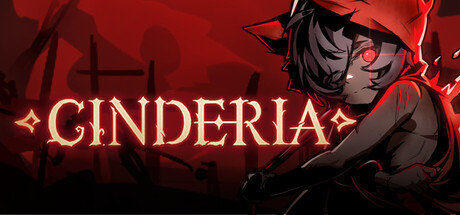
Appealing Cute Art Style: The art style is widely praised for being cute, appealing, and visually comfortable. The chibi characters and pleasant visuals contribute to the game's charm.
Fun and Addictive Gameplay: The game is frequently described as fun, addictive, and satisfying to play. Its engaging gameplay loop keeps players coming back for more.
Distinct Playable Character Styles: The game features four playable characters, each with unique action styles, skills, and mechanics, ensuring distinct gameplay experiences. This variety is frequently praised and allows players to choose a character that suits their preferred playstyle.
High Build Variety and Skills: Players appreciate the abundance of skills, passives, and items that enable diverse build compositions. The large pool of abilities and upgrades provides massive build space and replayability.
Common complaints
Poor visual clarity in combat: Enemy attack effects and projectiles often blend into the background, making them hard to see. Visual clutter and similar color schemes exacerbate the issue, especially in later boss fights.
Insufficient content volume: Many players report that the game currently has too little content, lacking volume compared to similar games. This is partly attributed to its early access status.
Limited variety and replayability: The game lacks variety in locations, rooms, and builds, leading to poor replayability. It gets boring quickly for many players.
Clunky combat feel: Combat feels stiff and unsatisfying, with melee attacks often preventing dodges. Player hit feedback is weak, so taking damage is sometimes unnoticed.
Limited boss variety: There are too few bosses, with only chapters 1 and 2 having random bosses, leading to repetitive and boring encounters. Boss count and attack patterns are severely limited.
Gameplay and performance
Action roguelite with build depth: The game is consistently described as an action roguelite or roguelike focused on skill selection, passive skills, weapons, and item synergies. Reviewers highlight deep build-making with active and passive options. This is the core genre identity and appears across many clusters.
Four distinct playable characters: Multiple clusters note that the game features four playable characters, each with unique action styles, skills, and mechanics. Some reviews mention color-coded characters (red, yellow, blue, green). This is a highly repeated and specific feature.
Roguelike genre with many builds: The game is firmly in the roguelike genre, with emphasis on many different builds and varied runs. Build variety is a common praise point. This reinforces the replayability.
Characters have unique builds and playstyles: Reviewers frequently mention that characters have distinct builds, synergies, and playstyles. The variety in character mechanics is a recurring theme across several clusters. This reinforces the replayability and depth of the roster.
Boss fights with patterns and minions: Boss encounters are a common feature, with attack patterns, multiple lives, and minion summons. Some reviews mention limited boss variants and minion spam during fights. Bosses are a significant part of the gameplay loop.
Stuttering and frame drops: Players experience stutters, frame drops, and low 1% lows, often during level transitions, boss fights, or specific characters. The game struggles to maintain consistent frame rates.
Optimization and performance issues: Many players report that the game needs optimization, with performance problems affecting high-spec and low-end systems alike. This is a widespread concern that impacts overall playability.
Game runs well on some systems: Some players report that the game runs well, including on low-end hardware, ASUS Zenbook, and Steam Deck. Performance can be good depending on the configuration.
Screen flickering and blackouts: Screen flickering occurs in certain rooms and can lead to a blank screen bug that requires quitting and reloading. Occasional blackouts also happen during scene transitions.
Freezes and crashes: The game freezes or crashes, including a spinning wheel at launch after reinstalling and during gameplay. These crashes can happen multiple times.
Recommendations
Strong Overall Recommendations: Many reviewers highly recommend the game, describing it as enjoyable, worth playing, and promising. They express strong satisfaction and encourage others to try it.
Early Access Content Concerns: Some reviewers note that the game is in early access and lacks content, leading to mixed recommendations. A few suggest waiting for more updates or full release before purchasing.
Recommended for Roguelike Fans: The game is particularly recommended for fans of roguelikes and roguelites, especially those who enjoy action-oriented or Hades-style games. It appeals to players who like build experimentation and gradual progression.
Appeal to Specific Audiences: The game is recommended for specific groups such as fans of isometric ARPGs, deckbuilding roguelikes, and those who enjoy cute characters or power fantasy. It may not be suitable for all players.
Encouragement to Try: Many reviewers encourage others to try the game, either now or in the future. They believe it is worth giving a chance.
Buying context
Community fair range: $14.99 - $19.99.
Game completion: 10.0h.
Story completion: 1.5h.
Session length: 0.7h.
Endgame: 50.0h.
Cinderia is most often described as fun and addictive from the first session, especially for roguelite fans, though a subset of players reports early meta-progression grind, progression gates, and later repetition as friction.
Friction: Meta-progression resource grind gates core power, revives, healing, and build consistency.; Early game before meta upgrades feels punishing or tedious for some players.; Repetitive dungeons, fixed boss order, and limited act or boss variety reduce sustained enjoyment.; Character and build balance is uneven, and build planning can feel unclear or RNG-dependent.; Some UI, codex information, and basic functions are placed behind meta unlocks.; Later-act performance issues, such as frame drops, add friction..
Player profiles
Roguelite Build Optimizer: Experiments heavily with characters, skills, passives, and meta upgrades; chases strong synergies and higher challenge. Motivation: Optimizing builds and synergies across characters while mastering a familiar action-roguelite loop. Stance: buy.
Cute Action CotL Convert: Plays casually or combat-first, picks approachable characters, and focuses on fun runs rather than deep optimization. Motivation: Enjoying cute, accessible action combat and a Cult of the Lamb-like experience without base micromanagement. Stance: buy.
Summoner Build Specialist: Picks gunner, druid, or turret-oriented characters; relies on pets, summons, and automated damage. Motivation: Making summoner, pet, and turret builds effective and finding the strongest minion-focused playstyle. Stance: buy.
Platform notes
Higher-memory hardware cohorts mostly report solid performance, while lower-VRAM and lower-RAM configurations show more stutters, frame drops, and occasional crashes. The strongest stability complaints come from the lowest-VRAM/RAM groups, with mid-range low-VRAM cohorts showing mixed results.
Windows <8GB VRAM / <16GB RAM: mixed. Many users recommend it and praise smooth combat, but stutters, major frame drops, and occasional crashes are also frequently reported.
Windows 8-11GB VRAM: positive. Most reports say it runs well, with minor shader stutter and FPS dips to 40-45 in effect-heavy boss fights.
Windows 12-15GB VRAM / 16-31GB RAM: mixed. Some users report fluid action and good performance, but optimization issues, stutters, black screens, and occasional freezes are also common.
Steam Deck: Steam Deck feedback is mixed but exposes serious barriers. The most frequent and impactful complaints are unreadable, non-adjustable UI text (called 'indecipherable' by one user), gamepad-driven navigation friction (stiff menus, keyboard-only skill details, unreliable aim), unstable framerates, and recurrent black screens with crashes on transitions and boss completion. Counterbalancing positive reports show the game can run well on Deck at low TDP, but the unreadable UI and stability failures cross into the Broken band of the scoring criteria.
Linux and Proton: The filtered reviews are predominantly positive about Steam Deck playability, with several users saying the game runs great or works perfectly. However, some users report performance drops on Steam Deck, including a boss AOE attack that tanks performance and builds that halve the framerate, and one user says the game can no longer be installed on Steam Deck despite remaining verified. No Proton Experimental/GE switching, launch commands, anti-cheat, DRM, or desktop Linux-specific blockers are mentioned. Overall, Linux/Proton compatibility appears mostly functional with minor to moderate Steam Deck-specific friction.
Extra review signals
External guides: The feedback is dominated by requests for in-game documentation: skill compendiums, buff and build explanations, menu encyclopedias, and clearer unlock information. Users repeatedly say they must consult external guides or wikis to understand upgrades, choose builds, and discover hidden content. Some navigation-like frustration appears, but the primary dependency is instructional data, placing the audit in Tier 3: The Student.
Other review notes
Early access game status: The game is repeatedly described as being in early access, with reviewers noting it is in active development and not yet complete. This is the most prevalent theme across all clusters.
Similarity to Cult of the Lamb: Many reviewers compare the game to Cult of the Lamb, noting similarities in aesthetics, base building, and combat, with some praising it as done right or better in certain aspects.
Anticipation for full release: Many reviewers express excitement and hope for the full release, looking forward to additional content and updates. This positive anticipation is a strong recurring theme.
Comparisons to Hades: The game is frequently compared to Hades for its gameplay, art style, and roguelite mechanics, often favorably with some saying it's better or an improved version.
Active developer improvements: Reviewers acknowledge that developers are actively updating and improving the game over time, with many updates already released. This ongoing support is frequently noted.