- Stunning visuals and art style
- Satisfying and unique combat system
- Strong roguelike genre recommendation
- Large build variety and playable characters
- Poor hit feedback and weak story
- Slow grindy early game, steep curve

Emotions
Archetypes
Hardware
What players like:
Common complaints:
Gameplay feedback:
Performance notes:
Recommendations:
Other player notes:
Similar games
Blend with other games


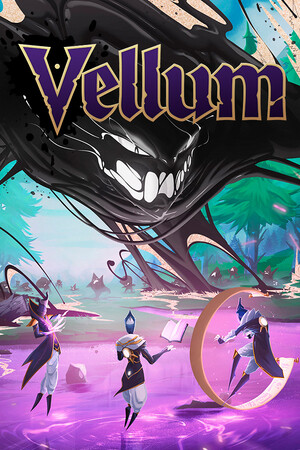
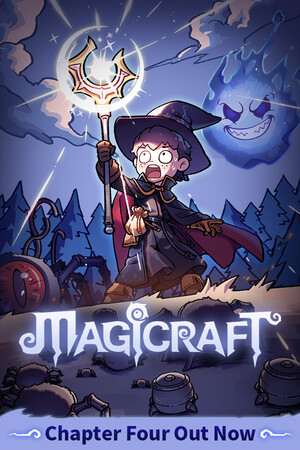


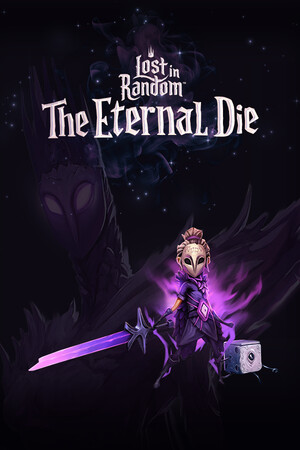


Review evidence
Why players say this
Review evidence
Why players say this
Steam review verdict
A strong roguelike pick with stunning art, unique combat, and deep build and character variety, but weak hit feedback, a thin story, and a grindy, steep early game drag it down.
What players like
Stunning visuals: The overall visuals are described as beautiful, pretty, and full of personality. The graphics are good and refined.
Satisfying combat feel: Combat is consistently praised for feeling great, smooth, and responsive. It is described as fun, frenetic, and exhilarating.
Unique combat system: The combat system has unique characteristics, with each character having a distinctive style. It is deep, customizable, and rich.
Great art style: The art style is widely praised as excellent, charming, and visually appealing. Reviewers enjoy the bright and colorful aesthetics.
Large build variety: There is a huge amount of build variety, allowing for diverse playstyles and experimentation. This adds significant replayability.
Common complaints
Poor hit feedback and impact: Many players report that hit feedback feels weak and lacks impact, describing it as hitting with plastic or powerless. This issue appears across multiple clusters.
Weak and generic story: Players find the story minimal, bland, and generic, with a forgettable big bad evil guy plot. The narrative is often cited as a weakness.
Slow and grindy early game: The early game is frequently described as a slog, slow, discouraging, and grindy. Several clusters highlight this as a common complaint.
Steep and complex learning curve: New players face a steep learning curve, especially with spells, auras, gambits, and other systems. The initial experience is complex and the UI can be overwhelming.
DLC pricing concerns: The DLC is considered expensive and provides low value for money compared to the base game. Some also find the push for DLC characters excessive.
Gameplay and performance
Roguelite genre and structure: The game is widely described as a roguelite, often with action-platformer elements and run-based progression. It features a simple core that becomes expansive as players dig deeper, with high replay value.
Co-op multiplayer support: The game supports co-op multiplayer, including local shared-screen and split-screen modes for two players. Online co-op and Steam Remote Play Together are also available.
Meta-progression system: A meta-progression system allows players to unlock passive bonuses and advance even after failure. This progression is often optional and not required to win, similar to Hades.
Character-specific builds: The game features character-specific builds and build variations. Builds involve constellations and ability choices, offering multiple build possibilities.
Side-scrolling action roguelike: The game is a side-scrolling action roguelike with pixel art. It features horizontal scrolling and action-platformer combat.
Steam Deck compatibility mixed: Some players report the game runs perfectly on Steam Deck, while others encounter loading failures. Performance and battery life are generally praised, but first boot can be slow.
Multiplayer lag and delay: Multiplayer suffers from lag even when using accelerators, and there is a noticeable delay of 0.5 seconds or more. Frame drops also occur easily in co-op connections.
Smooth on low-end hardware: The game runs very smoothly on an old PC and is considered light-weight. Performance is generally smooth across various systems.
Frequent crashes with run loss: The game crashes as often as every 10 minutes, and due to lack of crash protection, players lose their current run. This significantly impacts gameplay progress.
Performance improved after updates: Optimization issues have been addressed; the game now runs at 144fps or above, whereas previously it stuttered at 40-60fps. This improvement is noted by multiple players.
Recommendations
Strong Roguelike Genre Recommendation: Many reviewers highly recommend this game for players who enjoy roguelike or roguelite games, calling it a great entry point and one of the best in the genre. It is frequently described as a must-play for fans of action roguelikes.
Appeals to Dead Cells Fans: Reviewers often recommend the game to players who enjoyed Dead Cells, as well as similar titles such as Skul, Hades, and Wizard of Legend. It is seen as a natural fit for fans of those action roguelikes.
Worth the Price: Numerous reviews state the game is worth the money, worth the time, and worth every penny. Players consider it a solid purchase regardless of price.
Good for Platformer Fans: Players who like platformers and don't mind the repetitive nature of roguelikes are encouraged to try the game. It is described as absolutely worth trying for that audience.
Generous Content and Challenge: The game is recommended for players who enjoy dynamic, demanding roguelites that offer plenty of content. It is praised for its intense action and exploration.
Buying context
Community fair range: $10.00 - $25.00.
Game completion: 15.0h.
Story completion: 34.0h.
Session length: 1.0h.
Endgame: 50.0h.
Astral Ascent tends to click after early friction: the first few hours feel slow, underpowered, and mechanically overloaded, but learning the systems, unlocking content, and sometimes a later co-op run make it fun and addictive.
Reported time to anchor: 3h.
Player profiles
Roguelite Buildcrafting Veteran: Chains runs to refine spell, aura, and weapon builds, unlocks meta upgrades, and measures the game against genre benchmarks. Motivation: Chasing deep build synergy and long-term meta-progression that rewards replay and harder clears. Stance: buy.
Couch Co-op Companion: Plays local co-op or Steam Remote Play Together, often with one copy, and values sessions that accommodate different skill levels. Motivation: Shared couch co-op fun and bonding with a partner or friend. Stance: buy.
Casual Power-Fantasy Newcomer: Plays shorter or lower-pressure sessions, leans on meta upgrades and saves between rooms, and avoids punishing challenge. Motivation: Feeling powerful quickly through flashy combat, OP builds, and forgiving progression. Stance: buy.
Platform notes
Across the returned cohorts, Windows GPUs with 12-15GB VRAM report strong performance, 8-11GB VRAM reports instability, and 16GB+ VRAM shows mixed results.
Windows 12-15GB VRAM: positive. Reviewers report smooth action, fluid skill chaining, strong controller optimization, and consistently recommend the game.
Windows 8-11GB VRAM: negative. A non-recommended report describes repeated NVIDIA driver crashes, sometimes within 10 minutes, making boss fights unplayable.
Windows 16GB+ VRAM: mixed. One Mac M4 user reports good performance, while another Windows 11 user reports frame-rate issues when FPS exceeds 60 on a 240Hz monitor.
Steam Deck: The Steam Deck experience for this roguelite is broadly praised: most reviewers report that the native build runs smoothly and is a great handheld fit for short, one-hour runs. However, the audit surfaces meaningful friction: a one-time first-launch load that can take up to five minutes, in-game text and UI that are too small for comfortable handheld reading, co-op controller assignments that need manual reconfiguration via Remote Play Together, and some users needing to force Proton. More seriously, isolated reports describe random crashes after a major update, a failure to launch on Steam Deck, and save corruption tied to crashes. The positives outweigh the negatives overall, but the combination of small text, Proton forcing, and stability complaints keeps the experience in the 'tinkering required' range rather than a seamless green-checkmark.
Linux and Proton: The Linux and Proton evidence is overwhelmingly positive. Users report that the native Linux build works perfectly on Steam Deck, Proton also runs great, and there are no significant launch, anti-cheat, or graphical issues mentioned. The only minor caveat is a one-time longer first boot or load, after which the game runs smoothly.
Extra review signals
Monetization: The reviews show a premium roguelike with paid character and area DLC, in-game DLC prompts, and DLC pricing complaints. There is no evidence of real-money gacha, loot boxes, paid currency, battle passes, or pay-to-win. The strongest concerns are about paid DLC content and value, which the audit rules treat as traditional DLC rather than predatory MTX, capping the score at 20.
External guides: The reviews indicate a Wiki Tax driven by instructional data dependency: users feel they must read external wiki entries to understand systems such as Zodiacs. There is no evidence of farming, drop-rate, loot-table, inventory-management, crafting, navigation, or bug-related barriers. The primary complaint falls under Tier 3: The Student.
Other review notes
Frequent Dead Cells Comparisons: Many reviewers compare the game to Dead Cells, often favorably. Some consider it on par with or better than Dead Cells, while others find it less fun.
DLC and Additional Content: The game has multiple DLCs that add characters, maps, and other content. Some DLCs are sold separately, and one supports charity.
Regular Developer Updates: The developers actively and frequently update the game, providing continuous content and improvements over years.
Frequent Hades Comparisons: Reviewers often compare the game to Hades, noting similarities in structure and style, but some find differences in charm and story depth.
Substantial Content and Playtime: The game offers a high amount of content, with many players reporting over 100 hours of gameplay.