- Appealing art style and visuals
- Fun and fast-paced gameplay
- Best played with friends
- Repetitive and monotonous gameplay
- Lack of mission and enemy variety
- Overall positive performance experience
Emotions
Archetypes
Hardware
What players like:
Common complaints:
Gameplay feedback:
Performance notes:
Recommendations:
Other player notes:
Similar games
Blend with other games




Review evidence
Why players say this
Review evidence
Why players say this
Steam review verdict
An appealing art style and fun, fast-paced gameplay shine best with friends, though repetitive missions and limited enemy variety can feel monotonous, while performance remains solid overall.
What players like
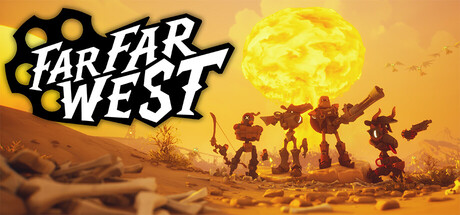
Appealing art style and visuals: The art style is frequently praised as amazing, cute, and unique, with detailed character models and a strong visual identity. Graphics are also described as colorful and pleasing.
Fun and fast-paced gameplay: Players consistently describe the game as fun, fast-paced, and enjoyable, with many highlighting its dynamic and goofy nature. It is praised for being entertaining without taking itself too seriously.
Better with friends, works solo: The game is highly enjoyable with friends but also remains fun and playable solo. Many reviewers note it accommodates both group and solo play well.
Polished early access experience: Reviewers are impressed by how complete and stable the game feels for an Early Access title, noting it runs smoothly and doesn't feel unfinished.
Strong core gameplay loop: The core gameplay loop is considered fun, addictive, and satisfying, even if somewhat repetitive. Many players find it keeps them coming back for more.
Common complaints
Repetitive and monotonous gameplay: Many players find the core gameplay loop boring and repetitive, leading to a flat experience. This is the most frequently cited issue across multiple clusters.
Lack of variety in missions and enemies: Mission objectives and map tasks are repetitive, and enemy variety is low, making each run feel similar. This lack of diversity reduces long-term engagement.
High difficulty spikes: Difficulty spikes, especially on Nightmare mode, feel brutal and poorly balanced, with stronger mobs rather than new enemy types. Some find it easy while others find it humiliating.
Limited content in early access: The early access version has less content than expected, and players feel the content is slim due to ongoing development. This contributes to a sense of shallowness.
Excessive grinding required: The game features a long and unsustainable grind that makes it feel empty and tedious. Players note it becomes too grindy over time.
Gameplay and performance
Co-op focus: The game is designed for co-op play with friends, supporting up to four players, and also offers solo and matchmaking options. This is the most frequently mentioned feature.
Spell combo system: Spells can be combined for combos, and there are elemental interactions that create new effects. This system encourages experimentation and synergy.
Nightmare difficulty: A Nightmare difficulty mode exists and is extremely punishing, featuring stronger versions of normal enemies. It is often cited as a high challenge tier.
Joker modifier system: Weapons and characters can be modified with Jokers, which act as unique modifiers. Jokers can be combined with weapons and found during runs.
Co-op PvE shooter: The core gameplay is a co-op PvE shooter with roguelite and extraction elements. Players team up for mission-based shooting action.
Positive performance overall: Many reviewers report good performance with no crashes, lag, or stutters. The game runs smoothly on various hardware, including outdated PCs and laptops.
Crashes and stability issues: Multiple clusters report frequent crashes, including persistent crashing, crashes every 20 minutes, and over 50% of runs ending in crashes. Some users experience fatal error crashes and game freezing.
Good optimization and upscaling: Optimization is considered fine or very good, and upscaling is not noticeable. The game runs nigh perfectly without requiring upscaling or frame generation on some systems.
Stuttering and optimization needs: Some users report optimization stutters in places and overall need for optimization improvement. DLSS may need to be enabled to avoid input lag.
Server and netcode instability: Problems with servers, connection timeouts, and unstable netcode cause persistent disconnection issues in multiplayer sessions. A patch intended to fix connections made the game unplayable for some.
Recommendations
Best played with friends: A large number of reviews emphasize that the game is best enjoyed with friends, family, or a team. Playing with others is consistently highlighted as the optimal experience.
Strongly recommended overall: Many reviewers highly recommend the game with no reservations, using phrases like 'highly recommended' and 'can't recommend enough.' This indicates broad satisfaction with the game.
Good value for money: Reviewers frequently state the game is worth the price, with some noting it's especially worthwhile on sale. The game provides good value according to these comments.
Great for co-op shooter fans: The game is recommended for fans of co-op shooters, progression systems, and chaotic fun with friends. Comparisons to titles like Helldivers 2 and Deep Rock Galactic are common.
Must-buy with friends: Several reviews label the game a must-buy if you have friends to play with, and it's recommended for both solo and multiplayer. Having friends enhances the experience significantly.
Buying context
Community fair range: $15.00 - $25.00.
Game completion: 20.0h.
Session length: 4.0h.
Endgame: 20.0h.
Most players describe Far Far West as fun from the opening tutorial and first missions, with co-op, movement, and build variety driving immediate enjoyment; friction comes mainly from grind, uneven explanation, repetition, and solo play.
Friction: Grind-heavy weapon and spell progression; Tutorial under-explains ability interactions and side systems; Solo play can feel less engaging than co-op; Repetitive missions, maps, and limited early-access content; Gunplay or feedback feels weak to some players; Lobby AFK/leaving and technical or performance issues.
Unlock drivers: Figuring out hidden mechanics and side systems after the tutorial made the game much better; Playing with friends improves the experience; Frequent upgrades and rewards make progression feel rewarding; Build customization and spell combinations deepen the fun; Developer updates responding to player requests; Co-op coordination and chaotic shared moments.
Player profiles
Co-op Chaos Squad Player: Squads up for four-player PvE runs, coordinates objectives and boss fights, and embraces friendly-fire chaos and revives. Motivation: Shared chaotic co-op fun, teamwork, and the social highs of clearing horde missions with friends. Stance: buy.
Buildcrafting Progression Tinkerer: Experiments with builds, stacks roguelite upgrades, farms unlocks, and tailors roles around weapon, spell, and card combinations. Motivation: Optimizing weapon, spell, and Joker synergies and feeling steady meta-progression. Stance: buy.
Map Secret Explorer: Explores maps thoroughly, hunts secrets and collectibles, completes side quests, and mixes solo or co-op depending on mood. Motivation: Discovering side objectives, secrets, collectibles, and map lore at their own pace. Stance: buy.
Platform notes
Across the six largest Windows cohorts, performance is mixed: many mid- and high-end systems report smooth high frame rates, while others report stuttering, crashes, and optimization problems. The low-VRAM/low-RAM cohort skews negative because memory-related instability and severe frame drops are frequent.
Windows 8-11GB VRAM: mixed. Many users report smooth, well-optimized play at high frame rates, but others cite freezes, stutter, and the need to lower settings or disable Lumen.
Windows <8GB VRAM / <16GB RAM: negative. Low-VRAM and low-RAM systems report frequent crashes, freezes, and severe frame drops, with only some users getting acceptable performance after lowering settings.
Windows 12-15GB VRAM / 16-31GB RAM: mixed. Several users report excellent frame rates and no stutter on high settings, while others report crashes, startup errors, and frame drops in dense combat.
Steam Deck: The Steam Deck experience is playable but not seamless. Positive reports show stable frame rates, good handheld performance, and even Deck Verified success for some users. However, friction remains: controller keybindings are not natively changeable on Deck, users recommend Proton Experimental or hotfix versions, and some report crashes, heat, or intermittent freezes. These issues require tinkering and workarounds rather than indicating a universally broken game.
Linux and Proton: The Linux/Proton profile is mixed. Many reviewers report smooth out-of-the-box play on distributions such as Bazzite, Fedora, and CachyOS, sometimes describing the experience as native-like. However, a recurring subset must switch to Proton GE, use DX11 launch options, or choose a different renderer for stability, and some report severe Vulkan rendering artifacts. Older Nvidia GTX 10-series hardware is specifically affected by Vulkan driver version incompatibility, while isolated users report launch failures or Unreal Engine fatal errors. Overall, the game is playable for many Linux users but not consistently frictionless.
Extra review signals
Monetization: The audit found overwhelmingly consistent evidence that the game is a one-time early-access purchase with no microtransactions, no battle pass, and no pay-to-win mechanics. Cosmetics and progression are earned with in-game currency, and any gambling or gacha references explicitly involve free currency. A few reviews speculate about future cosmetic DLC or raise ambiguous progression concerns, but none provide direct evidence of real-money in-game purchases. Under the scoring rules, the game remains in the Fair/Pure range.
External guides: The main Wiki Tax issue is instructional: users want in-game reference for mechanics, elemental synergy, magic combos, quest hints, and secrets. There is no meaningful evidence of farming/drop-rate dependency or inventory/crafting valuation dependency, and navigation or bug complaints are not the primary barrier. The score is therefore set at Tier 3.
Other review notes
Frequent comparisons to Helldivers and DRG: Many reviews compare the game to Helldivers 2 and Deep Rock Galactic, often favorably, highlighting similar cooperative gameplay elements.
Early access title: Reviewers consistently note the game is in early access, with some saying it already feels polished or complete and others awaiting the full release.
Active developer updates and roadmap: Reviewers mention that developers regularly release updates, add new content, and have a large roadmap for future development.
Anticipation for future content: Reviewers look forward to future updates and plan to return when more content is added.
Passionate and responsive developers: The development team is described as passionate, listening to player feedback and clearly putting effort into the game.