- Excellent voice acting quality
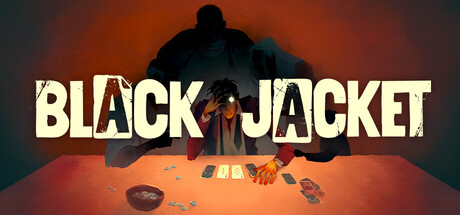
- Beautiful art and visuals
- Addictive and engaging gameplay
- Repetitive gameplay issue
- Too much luck involved
- Roguelike deckbuilder with Blackjack core
Emotions
Archetypes
Hardware
What players like:
Common complaints:
Gameplay feedback:
Performance notes:
Recommendations:
Other player notes:
Similar games
Blend with other games


Review evidence
Why players say this
Review evidence
Why players say this
Steam review verdict
Beautiful art and excellent voice acting support an addictive roguelike deckbuilder with a Blackjack core, though repetitive runs and heavy luck dependence can wear thin.
What players like
Excellent voice acting: Players consistently praise the voice acting as high-quality, emotional, and captivating, enhancing the overall experience.
Beautiful art and visuals: The art design and visuals are frequently praised as gorgeous, appealing, and high-quality.
Addictive and engaging gameplay: Gameplay is described as highly addictive, fun, and satisfying, keeping players engaged for hours.
Great story and narrative: The story is well-done, engaging, and sometimes emotionally impactful, adding depth to the game.
Well-executed roguelike deckbuilder: The game is celebrated as a great roguelike deckbuilder with solid structure and execution.
Common complaints
Repetitive gameplay: Many players find the core gameplay loop becomes repetitive and monotonous after the first few hours, lacking variability in later stages.
Too much luck involved: Luck plays a disproportionately large role, with outcomes often feeling random and unfair, especially during high-difficulty runs.
Excessive difficulty levels: The game features 21 difficulty levels, which many find intimidating and unnecessary, as they add little meaningful progression and feel torturous to complete.
Poor difficulty balance: The difficulty curve is not well-tuned, with some parts feeling too hard for newcomers and others too easy, leading to an inconsistent experience.
Unfair opponent mechanics: Opponents frequently draw perfect 21s or higher cards, making the game feel unfairly stacked against the player.
Gameplay and performance
Roguelike deckbuilder with Blackjack core: Players consistently describe the game as a roguelike deckbuilder built around Blackjack mechanics, with runs, deck-building, and synergy systems.
Blackjack-based card game: The core gameplay is a card game based on Blackjack, involving hit/stand decisions, card effects, and special cards.
21 difficulty levels: The game features a difficulty progression system with 21 levels, often labeled A1 to A21.
Deckbuilding mechanics central: Deckbuilding is a core mechanic, with players crafting and modifying decks of cards to execute strategies.
Goal to reach 21: The primary objective is to reach or approach 21 points, similar to Blackjack, while disrupting opponents.
Game hangs on Awakened Greed Three: Using the Awakened Greed Three effect causes the game to freeze and become unresponsive. This effect appears to reliably trigger a hang, blocking further play.
Process persists after normal exit: After a normal exit, the game still shows as running and cannot be stopped. This leaves a lingering process that the user is unable to terminate.
Multi-monitor launch screen issue: On Nobara Linux with two monitors, the game launches on the wrong screen and locks the primary screen to mouse input. This multi-monitor misbehavior disrupts normal play.
Running game missing from Task Manager: The game shows as running but does not appear in Task Manager. This makes it hard for users to identify or manage the active process.
Recommendations
High recommendation and value: Many players strongly recommend the game and consider it worth the price, often citing it as a must-have or worth every penny.
Ideal for roguelike deckbuilder fans: The game is highly recommended for enthusiasts of roguelike deckbuilders, with many comparisons to titles like Slay the Spire and Inscryption.
Appeals to card game lovers: Players who enjoy card games, including poker and blackjack, find this game particularly appealing due to its mechanics and tension.
Great for Balatro enthusiasts: Fans of Balatro and similar card games are encouraged to buy this game, as it offers a comparable experience.
Challenging but rewarding: The game offers a good challenge and high replay value, though some warn that it may not suit casual players seeking a fair challenge.
Buying context
Community fair range: $10.00 - $15.00.
Game completion: 16.0h.
Story completion: 8.0h.
Session length: 0.7h.
Endgame: 25.0h.
Black Jacket often starts with a steep learning curve and slow early unlocks, but many players report it becomes fun once the mechanics click and initial meta-progression arrives. Some are hooked immediately, while others find it repetitive or too progression-gated.
Friction: steep learning curve and many card abilities to learn; opaque tooltips and little explicit tutorial guidance; important mechanics and power locked behind meta-progression; starting difficulty requires losing early attempts; slow unlock trickle.
Player profiles
Deckbuilder Genre Fan: Experiments with suits, decks, and face-card combos while optimizing runs around known genre patterns. Motivation: Exploring deck-building synergies and comparing the game to favorite roguelike deckbuilders. Stance: buy.
Blackjack Gambling Enthusiast: Pushes toward 21, manages bust risk, and exploits card effects to tilt the odds. Motivation: Chasing the addictive risk-and-reward high of blackjack inside a roguelike structure. Stance: buy.
Narrative Immersion Seeker: Reads dialogue closely, pieces together story clues across runs, and progresses to advance the narrative. Motivation: Uncovering character lore, atmosphere, and the emotional story behind the card runs. Stance: buy.
Platform notes
Across the returned Windows hardware cohorts, the game is generally reported to run well, with positive recommendations dominating. A few isolated technical caveats remain, including crashes, black-screen issues, and occasional freezing or visual bugs.
Windows <8GB VRAM: positive. Most included reports recommend the game and describe strong gameplay, though one user reports frequent crashes and asks for optimization.
Windows 12-15GB VRAM: positive. All included reviews recommend the game, while noting isolated freezing during transitions, visual bugs, and a black-screen issue.
Windows 8-11GB VRAM: positive. The included review is positive, reporting smooth UI, good art, and no notable performance problems.
Steam Deck: The Steam Deck audit finds strong compatibility and controller support, but the experience is held back by recurring black-screen crashes and card text that is too small for handheld play. The crash reports are frequent enough to meet the Broken tier, while small text and UI glitches add secondary friction. No external launcher or anti-cheat barrier was found.
Linux and Proton: Evidence is sparse. One user reported a dual-monitor display issue on Nobara Linux that persisted after trying a DISPLAY launch option, while another user only noted playing on a SteamOS device. There is no consensus of launch failures, anti-cheat blockers, or Proton incompatibility, so the Linux/Proton outlook appears mostly workable with minor isolated display friction.
Other review notes
Frequent Balatro and Slay the Spire comparisons: Reviewers consistently compare the game to Balatro and Slay the Spire, often describing it as a blend of the two. It is noted for having less ridiculous RNG and its own atmosphere.
Frequent Inscryption comparisons: Many reviewers compare the game's narrative, atmosphere, and AI difficulty to Inscryption. It is often described as a spiritual successor or clone with a dark motif.
Balatro-like but less addictive and replayable: Several reviewers feel the game does not lean into addictive gambling and has less replay value than Balatro. It is still recommended for fans of that game.
Blackjack-based Balatro variant: The game is frequently described as a Balatro-style roguelike with blackjack mechanics. Some expected a simple reskin but found it has its own identity.
More chill than Balatro: Some reviewers find this game more relaxing than Balatro and prefer it. It is also noted to have a lower learning curve than Balatro and Slay the Spire.