- Good overall game experience
- Great multiplayer and RTS
- Engaging story and campaign
- Inferior to previous Dawn of War
- Too few factions at launch
- Low quality graphics and performance
Emotions
Archetypes
Hardware
What players like:
Common complaints:
Gameplay feedback:
Performance notes:
Recommendations:
Other player notes:
Similar games
Blend with other games 88%Warhammer 40,000: Dawn of War II - Anniversary Edition
 85%Warhammer 40,000: Dawn of War - Anniversary Edition
 84%Warhammer Age of Sigmar: Realms of Ruin
 84%Tempest Rising
 83%Liquidation
 83%ZeroSpace
 82%The Scouring
 82%8-Bit Armies
 81%Warhammer 40,000: Eternal Crusade
 81%Grey Goo
 81%Iron Harvest
 81%Warhammer 40,000: Dawn of War - Definitive Edition
Review evidence
Why players say this
Review evidence
Why players say this
Steam review verdict
A solid RTS with engaging story and great multiplayer, but inferior to previous Dawn of War entries with too few factions and dated graphics.
What players like
Good game overall: Players consistently describe the game as good and entertaining on its own merits.
Multiplayer mode is great: Multiplayer is described as comfortable, great, and very enjoyable, especially with friends.
Great RTS experience: The game is considered a great RTS that delivers satisfying gameplay for fans of the genre.
Better controls than predecessors: Gameplay feels more RTS-like with better controls and dynamics compared to earlier Dawn of War entries.
Engaging story: The story is considered enjoyable, well-constructed, and engaging throughout the campaign.
Common complaints
Inferior to previous Dawn of War games: Players consistently state that Dawn of War 3 fails to live up to the quality and essence of Dawn of War 1 and 2. Many consider it a downgrade that lacks the enjoyable qualities of its predecessors.
Too few factions at launch: A major point of criticism is that the game only includes three factions (Space Marines, Orks, Eldar), whereas previous titles offered more variety. Players feel this severely limits replayability and strategic depth.
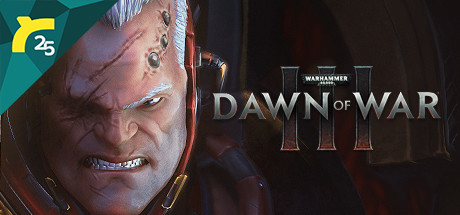
Low quality graphics and art style: Some players note that the units do not look as good and the overall art style and realism are inferior to previous Dawn of War games, detracting from the immersion.
Underwhelming campaign experience: The campaign is frequently described as poorly designed, uninspired, and boring. The forced switching between three factions is seen as disruptive rather than engaging.
Game abandoned after release: Many players report that the game received very limited post-launch support and was effectively abandoned by the developers within months. This has led to a feeling of an incomplete and unfulfilled product.
Gameplay and performance
Campaign forces faction switching: The 17-mission campaign requires players to alternate between Space Marines, Orks, and Eldar each mission, which some find disruptive to progression.
Combines RTS and MOBA elements: The game blends large-scale RTS action with hero-focused tactical depth, incorporating MOBA-like mechanics such as hero units with abilities and short cooldowns.
Returns to Dawn of War 1 style: Many players note that the game's multiplayer gameplay and overall system feel more like Dawn of War 1 than Dawn of War 2, though some see it as a mix of both.
Base building is present but limited: Base building exists, including constructing houses for requisition and generators on capture points, but it is streamlined and not as deep as in traditional RTS games.
Multiplayer modes available: The game offers multiplayer modes, including a MOBA-style Power Node mode and a 2v2 deathmatch annihilation mode, alongside the single-player campaign.
Frequent game crashing: Multiple clusters report frequent crashes, especially during the campaign. Specific missions like 10, 11, the Eldar stealth level, and Ork missions are heavily impacted, making progress impossible.
Mixed optimization opinions: While a few users report good optimization (Cluster 5, 7, 10, 30, 32), many others report poor performance, lag, low FPS, and insufficient hardware utilization, even on high-end cards like RTX 5080.
Crash on launch: Some users experience repeated crashes on launch or cannot get the game to start at all, with one user spending 3 hours trying to launch.
Mission 11 crash lock: Crashes occur consistently on Mission 11, especially when moving the camera. Many users report that this makes the campaign currently impossible to complete.
Attempted fixes ineffective: Lowering settings or switching languages does not resolve crashes for many users.
Recommendations
Recommended for Warhammer fans: The game is seen as appealing specifically to fans of the Warhammer 40K universe or RTS genre, with some recommending it for that audience.
Do not waste money: A strong sentiment among players is to avoid buying the game entirely, describing it as a waste of money and time.
Older Dawn of War titles are better: Players frequently recommend playing Dawn of War 1 or 2 instead, stating that older titles in the series are superior to this game.
Not worth even on sale: Some players assert that the game is not worth purchasing even at a discounted price, suggesting it offers poor value.
Disappointing for RTS fans: Some players warn that the game may disappoint fans of the RTS genre or those expecting a faithful Warhammer 40K experience.
Buying context
Community fair range: $7.00 - $10.00.
Game completion: 45.0h.
Story completion: 20.0h.
Session length: 0.5h.
Dawn of War III is seen as a disappointing successor where the slow tutorial and monotonous campaign prevent early fun, while the multiplayer offers brief enjoyment with friends before becoming repetitive, leading to an overall 'never clicks' stance for most players.
Friction: slow tutorial with many repetitive clicks; monotonous campaign that feels like a long tutorial; campaign locks units and buildings until near end; MOBA-style multiplayer mechanics alienate traditional RTS fans; resources take too long in campaign; multiplayer becomes repetitive after initial fun.
Unlock drivers: playing multiplayer with friends; skirmish mode with huge battles; hero progression system.
Player profiles
Classic RTS Traditionalist: Prefers strategic, macro-focused RTS; dislikes hero-centric, lane-based MOBA mechanics. Motivation: Seeking a return to complex, base-building RTS gameplay with large armies and faction variety. Stance: no buy.
Campaign Story Explorer: Plays single-player campaign on lower difficulties, focuses on completing missions and unlocking upgrades. Motivation: Experiencing the Warhammer 40k story and character-driven missions. Stance: sale.
Multiplayer Enthusiast (with caveats): Engages in online skirmish and multiplayer matches, experimenting with different factions and loadouts. Motivation: Competing with friends or other players in a casual or semi-competitive environment. Stance: sale.
Platform notes
Across all VRAM cohorts, players report frequent crashes and instability, with no positive experiences noted.
Windows <8GB VRAM: negative. Players with 4GB and 8GB VRAM report crashing consistently at or before Mission 10-11, making the game unplayable.
Windows 12-15GB VRAM: negative. A player with 16GB VRAM reports multiple crashes, indicating instability even on higher VRAM hardware.
Windows 16GB+ VRAM: negative. A player with 24GB VRAM reports crashes and screen flicker, with the game crashing despite lowering settings.
Steam Deck: User reviews highlight three major technical barriers for Steam Deck: frequent crashes (especially mission 11) and general instability, Denuvo DRM that complicates compatibility and modding, and critical UI scaling/online requirement issues that hinder play on a handheld device. These factors collectively point to a poor Deck experience requiring significant tinkering or being outright broken.
Extra review signals
Monetization: User reviews highlight a direct accusation of Pay-to-Win and loot box mechanics, along with complaints about the high base price and abandonment of post-launch support. While the Pay-to-Win evidence is limited to a single strong claim, it is sufficient to classify the monetization as predatory.
Other review notes
Advice for DOW4 technical improvements: One player advised future DOW titles to fully utilize CPU/GPU cores, avoid being over-demanding on hardware, and stay true to the Warhammer 40k universe. This reflects frustration with performance and design choices in DOW3.
DOW3 cut Necron content: A player noted that Necrons were announced but cut from the game, with speculation that the content might be moved to a potential DOW 4. This suggests disappointment over removed factions and a desire for more complete releases.
Request for Tau mod: A player expressed interest in a Tau Empire mod for the game, indicating a demand for more faction variety through community or official content.
Desire for Masters of War skin pack: A player wants to purchase the Masters of War skin pack, showing support for cosmetic DLC and a willingness to pay for additional content.