- Good graphics and visuals
- Excellent soundtrack by Frank Klepacki
- Scratches RTS itch
- Missing third faction
- Weak story and characters
- Overly difficult AI
Emotions
Archetypes
Hardware
What players like:
Common complaints:
Gameplay feedback:
Performance notes:
Recommendations:
Other player notes:
Similar games
Blend with other games





Review evidence
Why players say this
Review evidence
Why players say this
Steam review verdict
Beautiful visuals and Frank Klepacki's soundtrack scratch the RTS itch, but the missing third faction, weak story, and punishing AI hold it back.
What players like
Good graphics and visuals: Multiple players highlight the game's attractive graphics, impressive visual effects, and smooth performance, often noting them as a huge upgrade for the genre.
Excellent soundtrack by Frank Klepacki: The soundtrack is a standout feature, with many praising Frank Klepacki's contributions as phenomenal, motivating, and essential to the game's atmosphere.
Scratches RTS itch: Players note that the game satisfies the craving for classic RTS gameplay, providing a welcome addition to the genre.
Fun and enjoyable gameplay: General sentiment indicates that players find the game fun, enjoyable, and engaging to play, with positive feedback on its overall gameplay loop.
Strikes nostalgic Red Alert chords: Players often mention the game evokes memories of Red Alert, with familiar vibes and nostalgic feelings that appeal to fans of that sub-series.
Common complaints
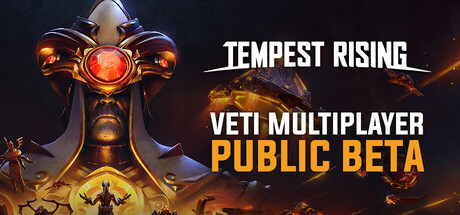
Missing third faction: A major recurring complaint is that only two of the promised three factions are playable, with the third faction (Veti) still absent over a year after release and no estimated arrival date. This severely limits strategic variety and breaks initial promises.
Weak story and characters: The narrative is widely panned as nonexistent, boring, or nonsensical, with forgettable characters and poorly executed cutscenes. Voice acting feels phoned in, and there are no memorable cinematics to drive engagement.
Overly difficult AI: AI is perceived as unfair or unbalanced—too strong even on normal or easy settings, with suspected cheating. Conversely, skirmish AI is sometimes described as braindead, spamming the same few units.
Pathfinding issues: Pathfinding is plagued by problems such as units getting stuck, ignoring orders, or moving clumsily. This disrupts gameplay flow and lowers tactical control, frustrating players in both skirmish and multiplayer.
Missing features and maps: Players note the lack of a map editor, Steam Workshop support, and only 3 maps for 6-player matches. This limits replayability and community content creation.
Gameplay and performance
C&C/StarCraft hybrid nostalgia.: Players frequently compare the game to a blend of Command & Conquer and StarCraft, highlighting classic RTS mechanics, old-school vibes, and modern enhancements. Clusters 1, 2, 3, 6, 7, 10, 13, 18, and 20 all reference this strong similarity, suggesting the game successfully channels nostalgic while updating the formula.
Spiritual successor to Command & Conquer.: Players consistently call this a spiritual successor or modern clone of C&C, especially Tiberium Wars and Red Alert. This is a common thread across clusters 3, 6, 7, and 18, indicating successful homage.
Old-school RTS design refreshed.: The game is praised for returning to classic 90s/2000s RTS style (like C&C Generals or Red Alert 2) while adding modern clarity and QoL features. Clusters 7, 8, and 10 report this satisfies nostalgia without feeling outdated.
Classic base-building and resources.: Many players note the game features traditional base construction, resource management (money, power), and unit production, typical of classic RTS titles. This is seen in clusters 8, 9, and 19, confirming the core loop is familiar and well-executed.
Two distinct factions: GDF and Dynasty.: The main factions are the GDF (Global Defense Forces) and the Tempest Dynasty (or similar spiritual successors to GDI and Nod). Clusters 4, 15, and 20 emphasize their distinct visual themes, mechanics, and playstyles, often with a third faction (Veti) in development.
Generally well-optimized: Many players report smooth performance, high frame rates, and good overall optimization across various hardware configurations. This positive feedback is consistently noted in multiple clusters.
Performance varies by hardware: Performance feedback is mixed, with some users reporting excellent frame rates on mid-to-high-end GPUs (e.g., RTX 3070, older hardware) while others note optimization issues on high-end setups or with large unit counts. This indicates that optimization may not be consistent across all configurations.
Occasional crashes and instability: A notable subset of players experience crashes, especially during loading screens or in the campaign, along with general instability issues. These problems detract from the experience for some users.
Some performance dips and lag: A few users encounter lag spikes, stuttering on first launch, or performance dips, particularly with large unit counts or default settings. While not widespread, these issues affect the experience for some.
Linux compatibility is strong: Players on Linux (including CachyOS and Arch Linux) report that the game runs smoothly without additional tweaking, highlighting excellent cross-platform support.
Recommendations
Spiritual C&C successor: The vast majority of positive reviews position this game as a direct spiritual successor to the Command & Conquer series, particularly for fans of classic C&C and Red Alert games. It is highly recommended for those seeking a modern iteration of the old-school RTS formula.
Appeals to classic RTS fans: Beyond just C&C, the game is strongly recommended for fans of traditional real-time strategy games like StarCraft, Age of Empires, and Tiberian Sun. It is seen as a worthy title for any enthusiast of the genre.
Overwhelmingly positive general sentiment: Several reviews offer a simple, enthusiastic recommendation without specific reasons, expressing high satisfaction with the game overall. This broad endorsement supports the positive reception.
Strong single-player campaign: Some feedback explicitly recommends the game for its single-player campaign and story, while cautioning against the multiplayer experience. This suggests the campaign is a standout feature.
Worth the purchase price: Many reviewers explicitly state the game is worth its cost, with some even recommending it at full price. The value for money is a recurring positive point.
Buying context
Community fair range: $8.00 - $22.00.
Game completion: 26.0h.
Story completion: 22.0h.
Tempest Rising hooks C&C fans immediately with familiar nostalgia, but the feeling often fades after a few minutes due to repetitiveness, missing features, and a small player base; post-update improvements and solo pause-play can extend enjoyment.
Friction: small player base / dead multiplayer; missing features (replays, map editor, third faction, mod support); repetitive campaign and skirmish maps; balance issues and unit spam; steep learning curve without proper tutorial for non-C&C veterans; AI pathfinding and reliability issues.
Unlock drivers: developer updates that add easier AI levels, co-op, and requested features; coordination with friends for multiplayer or co-op vs AI; single-player pause mechanic reduces micro pressure.
Player profiles
Classic C&C Veteran: Methodical base-building, campaign-focused, exploring story and units at a relaxed pace; avoids competitive stress. Motivation: Nostalgia and a modern take on classic C&C single-player campaigns. Stance: buy.
Co-op Skirmisher: Defensive, economic-focused, builds up armies for drawn-out skirmishes; often modifies starting resources or uses handicaps. Motivation: Social cooperative battles against AI with friends, relaxed large-scale RTS gameplay. Stance: sale.
Multiplayer Sweat: Fast-paced, rush-oriented, learns build orders, prioritizes unit micro and map control. Motivation: Competitive ladder ranking and challenge of micro-intensive 1v1 or 2v2. Stance: deep sale.
Platform notes
Most users on high VRAM (12-16GB) report smooth performance and high frame rates, with occasional drops in late campaign or multiplayer issues. Lower VRAM (<8GB) also runs smoothly on older hardware. Mid-range (8-11GB) reports are split between excellent performance and criticism at 1080p.
Windows 12-15GB VRAM: positive. Most users report smooth performance and high frame rates, though some note frame drops in late campaign or multiplayer connectivity issues.
Windows <8GB VRAM: positive. Runs smoothly on older hardware according to most users, with one report needing to cap at 60 FPS.
Windows 8-11GB VRAM: mixed. One user reports excellent performance even at high unit counts, while another criticizes the game's performance at 1080p.
Steam Deck: The game shows a stark division: many users experience a seamless Linux/Deck experience, while an equally vocal group suffers from frequent crashes and an unreadable UI. The crashed reports (55+ in 21 hours) and UI complaints meet the 'Broken' threshold in the scoring criteria.
Linux and Proton: All reviewed feedback indicates that the native Linux build of this game runs flawlessly with no tweaks, performance issues, or compatibility blockers. No anti-cheat, DRM, or launcher problems are reported in the context of Linux. The experience is described as smooth and effortless.
Extra review signals
Monetization: User reviews consistently praise the game for being a fair, one-time purchase without any microtransactions, battle passes, or pay-to-win mechanics. The only monetization mentioned is speculation about future traditional DLC expansions, which players welcome. There is no evidence of predatory monetization.
External guides: The predominant feedback indicates that players need external guides, walkthroughs, or better in-game tutorials to understand mechanics, campaign progression, and difficulty spikes. No evidence of farming/grinding (TIER 1), inventory/crafting (TIER 2), or navigation/bugs (TIER 4) as primary complaints. The need for instructional data is the core barrier.
Other review notes
Desire for more campaign content: Reviewers express a strong desire for DLCs and updates that add more campaign missions and factions. The current campaign offering is seen as insufficient, and players hope for expansions.
Request for Steam Workshop support: Players request the addition of Steam Workshop integration to enable user-generated content like maps and mods. This would greatly enhance replayability and community engagement.
Missing promised third faction: Players are disappointed that the Veti faction, which was promised, is still missing as of the latest update. This unfulfilled promise impacts trust and content expectations.
Focus on coop multiplayer: One review mentions playing with friends rather than the campaign, suggesting a strong preference for cooperative multiplayer over single-player story mode.
Request for Ukrainian language support: A player requests adding Ukrainian language support, highlighting the need for localization to expand the game's accessibility to a broader audience.