- Excellent large-scale RTS gameplay
- Completely free with fair monetization
- Huge unit and faction variety
- Strong multiplayer and co-op modes
- Unique terraforming and terrain mechanics
- Outdated graphics widely criticized
Emotions
Archetypes
What players like:
Common complaints:
Gameplay feedback:
Performance notes:
Recommendations:
Other player notes:
Similar games
Blend with other games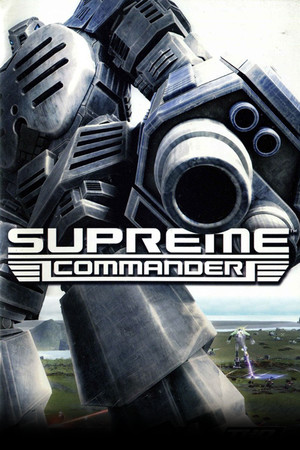


Review evidence
Why players say this
Review evidence
Why players say this
Steam review verdict
Excellent large-scale RTS, free with fair monetization, huge unit and faction variety, strong multiplayer/co-op, and unique terraforming and terrain, though outdated graphics are widely criticized.
What players like
Excellent RTS Gameplay: The game delivers a very deep yet accessible real-time strategy experience with modern mechanics. Players describe it as one of the best RTS titles available, blending classic feel with contemporary design.
Free With Fair Monetization: The game is completely free with no microtransactions, battle passes, or paid skins. Donations are the only support method, which players highly appreciate.
Huge Unit Variety: There are hundreds of unique unit types with diverse designs and roles, encouraging many strategies and experimentation. Some find the amount overwhelming at first, but the sheer scale adds depth.
Strong Multiplayer And Co-op: Multiplayer works flawlessly and is addictive, while co-op support adds significant value. Campaign missions can be played entirely in two-player co-op with shared control.
Terraforming And Terrain Modification: Players can terraform the ground to suit their strategic needs, using builders or explosives. This feature adds a unique layer of tactical depth.
Common complaints
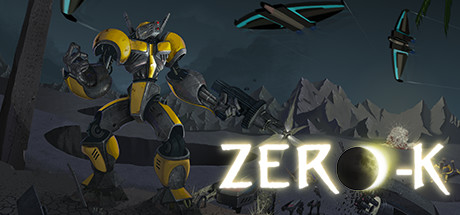
Outdated Graphics Widely Criticized: Many reviewers find the graphics dated, unimpressive, and not up to modern standards, often comparing them unfavorably to older RTS titles. Visual design is also described as cluttered with noisy terrain that makes units hard to distinguish.
Toxic Community and Moderation: Many reviewers describe the community and moderation team as toxic, controlling, and unresponsive to player concerns. Instances of bullying, questionable bans, and lack of appeal processes are frequently mentioned.
Steep Learning Curve: The game is repeatedly described as complex and difficult to learn, with many units, mechanics, and tactical possibilities to master. New players often feel lost without external resources like wikis or tutorials.
Unit and Faction Imbalance: Balance issues are prevalent, with some units favored by developers and factions lacking unique units or defenses. Aircraft are seen as useless and overpriced, while certain compositions are tough to counter.
Lack of Innovation and Soul: The game is criticized for feeling like a reskin of predecessor RTS games with no clear innovation, lacking personality and story. It is often described as mass-produced and outdated in many areas.
Gameplay and performance
Large-Scale Real-Time Strategy: The game delivers massive real-time strategy battles with hundreds of units across expansive maps, echoing the scale of Total Annihilation and Supreme Commander. Base building and unit management remain core to the experience.
Total Annihilation Style: The game is heavily inspired by Total Annihilation and its spiritual successors like Supreme Commander and Beyond All Reason. It captures the same subgenre feel with strategic depth and large-scale warfare.
Terraforming Mechanic: Players can reshape the battlefield by digging trenches, raising mountains, building ramps, and carving pathways. This terraforming adds a unique strategic layer for defense, mobility, and artillery placement.
Campaign and Skirmish Modes: A single-player campaign with creative missions, unit progression, and a galaxy map is included. Skirmish mode against AI opponents is also available for quick matches.
Extensive Unit Variety: The game features hundreds of unique units and structures, with 12 factory types each producing distinct unit sets. This enables diverse army compositions and strategies.
Excellent low-end performance: The game runs well on older and low-spec hardware, including laptops without dedicated GPUs. Many users report smooth performance on systems that typically struggle with modern games.
Lag in huge games: Performance drops occur in large-scale games, especially with many units or after long play sessions. This can make bigger matches run slowly on some machines.
Slow menus and launch: The main menu is frequently described as slow and unresponsive, and the game takes a long time to launch initially. Some users also report slow loading times overall.
Well optimized for large battles: Despite some issues, many users praise the game's optimization for handling massive battles with thousands of units and 32 players. Performance remains stable even in intense scenarios.
Black screen on AMD cards: Multiple users report the screen going black after about 15-20 minutes of gameplay specifically on AMD graphics cards. This suggests a serious driver or rendering compatibility issue with AMD hardware.
Recommendations
Strong recommendation for RTS fans: Many reviewers recommend the game to fans of real-time strategy, highlighting its appeal to both veterans and newcomers. It is seen as one of the best free options in the genre.
Appeals to Total Annihilation fans: Fans of Total Annihilation and Supreme Commander frequently recommend the game, noting its similarities and calling it a must-play for those who enjoyed those classics.
Best with friends and groups: The game is praised for its multiplayer and co-op experience, with many recommending playing with friends or in groups. Team play and social aspects are highlighted.
Free to play, worth trying: Reviewers emphasize that the game is free, making it easy to recommend trying it out. The zero cost lowers the barrier to entry.
Not recommended for some players: A few reviewers do not recommend the game due to issues like it not working, disappointment, or unsuitability for solo play. Some also mention a ban or community concerns.
Buying context
Community fair range: $0.00 - $0.00.
Game completion: 50.0h.
Story completion: 50.0h.
Session length: 1.0h.
Endgame: 800.0h.
Zero-K has a steep onboarding curve and limited quick tutorial, so sustained fun is most often reported after working through the campaign-as-tutorial and learning its systems. Some players enjoy the chaos immediately, but the stronger evidence supports delayed enjoyment through mastery.
Friction: Steep learning curve; Lack of a quick tutorial; Overwhelming start without a solid tutorial; Campaign does not help much with onboarding; Demanding learning curve.
Player profiles
Competitive Multiplayer Veteran: Plays 1v1, team, and tournament matches with a focus on map control, unit tactics, and execution. Motivation: Competitive mastery and skill-based multiplayer progression. Stance: buy.
PvE Campaign and Co-op Player: Plays co-op campaigns, skirmishes, and co-op vs AI, sometimes with shared control and large team battles. Motivation: Enjoying large-scale PvE battles and campaign or co-op content, often with friends. Stance: buy.
Classic TA/SupCom Nostalgia Fan: Plays large-scale classic RTS battles while comparing mechanics, factions, and unit variety to TA and SupCom. Motivation: Reconnecting with classic TA-style RTS gameplay and finding a worthy successor. Stance: buy.
Platform notes
Steam Deck: The audit finds high friction for Steam Deck. The game is officially categorized as Unsupported, users warn of handheld control and usability compromises, and reports list crashes, lobby black screens, UI load failures, and Linux memory leaks. Installation often requires itch.io or manual workarounds, Steam features are missing, and controls and interface are described as confusing or unpolished. Positive reports about Linux performance and content depth do not remove the compatibility and stability barriers.
Linux and Proton: The Linux/Proton audit finds a primarily native Linux experience. Positive reports say the game runs well on Linux, can be installed as a native Steam program, and works cross-platform; Proton or Wine is not required. Negative signals are limited to explicit Linux crashes, UI load failures, memory leaks, isolated claims of missing Linux support, and minor install or Steam integration friction. No repeated Proton Experimental/GE, launch-command, or community-fix dependency appears. The game is broadly playable on Linux with some stability and setup caveats.
Extra review signals
Monetization: The reviewed title is a free, open-source style strategy game whose entire monetization surface is either nonexistent or limited to an optional purchase explicitly described by users as a donation toward multiplayer server upkeep. Multiple reviewers independently confirm the absence of a cash shop, microtransactions, cosmetic purchases, and pay-to-win advantages. The only non-English review, translated, frames the optional payment as comparable to a large mod whose proceeds maintain the multiplayer servers. No evidence exists of real-money gacha, loot boxes, paid power, convenience items, currency obfuscation, or aggressive FOMO, so no predatory monetization pattern passes the real-money gate.
Other review notes
Total Annihilation spiritual successor: Many reviewers describe the game as a modern take on the Total Annihilation formula, often calling it a spiritual successor. It is repeatedly compared to Total Annihilation as a classic-style RTS with a modernized interface.
Comparable to Supreme Commander: Reviewers frequently compare the game to Supreme Commander, noting similar commander-based gameplay and large-scale battles. Some see it as satisfying the same itch, with a few calling it a 'poor man's' version but with its own identity.
Completely free to play: The game is consistently described as free to play with no monetization tricks. All features are accessible without payment, and there are no microtransactions or pay-to-win elements.
Open source project: The game is open source, with code available on GitHub. Reviewers highlight that it is libre and gratis, allowing anyone to download, modify, and contribute.
Still actively developed: The game receives regular updates, patches, and bug fixes, and is still in active development. Reviewers note ongoing graphics updates and daily contributions from players.