- Engaging and deep story
- Great variety of characters
- Excellent soundtrack enhances experience
- Significant difficulty spike present
- Frustrating level design issues
- Game-breaking bugs and glitches
Emotions
Archetypes
Hardware
What players like:
Common complaints:
Gameplay feedback:
Performance notes:
Recommendations:
Other player notes:
- -
No data available
Similar games
Blend with other games





Review evidence
Why players say this
Review evidence
Why players say this
Steam review verdict
An engaging story with great characters and a superb soundtrack, but marred by difficulty spikes, frustrating level design, and game-breaking bugs.
What players like
Significant improvement over first game: Players note that the sequel is more polished, with better graphics, gameplay mechanics, music, level design, and story compared to the original. It expands on the first game in almost every way.
Game is enjoyable overall: Players frequently describe the game as fun, great, and worth playing despite some flaws. Many consider it a masterpiece or one of the best sequels.
Engaging and deep story: The story is described as compelling, well-written, and complex, with an impactful ending and interesting non-chronological narrative. It deepens the lore and complements the first game.
Great variety of characters: Multiple playable characters with unique abilities, playstyles, and stories add significant variety and replay value. Characters are well-written and memorable.
Excellent soundtrack enhances experience: The soundtrack is highly praised for its quality, style (often synthwave), and ability to set the mood. It is frequently cited as a standout feature.
Common complaints
Significant difficulty spike from first game: The game is notably harder and more punishing than the first, with longer levels, treacherous design, and an unplayable hard mode. This spike frustrates many players.
Off-screen enemy kills prevalent: Enemies frequently kill players from off-screen due to a camera that does not show them, causing blind and unfair deaths. This is a widespread complaint across multiple clusters.
Poor and frustrating level design: Level design is criticized as worse than the first game, with some rooms being borderline bad, tedious, too large, and lacking flow. Large maps contribute to off-screen deaths and repetitive gameplay.
Game-breaking bugs and glitches: Bugs are constant and game-breaking, including issues with doors, enemies attacking through walls, and weapon mechanics. These undermine stability and enjoyment.
Inconsistent and janky enemy AI: Enemy AI is unpredictable, with inconsistent reaction times, sensitivity issues, and illogical movements like walking out of assigned rooms. This makes combat feel random and frustrating.
Gameplay and performance
Increased difficulty and challenge: Players consistently report that the sequel is significantly harder than the first game, with more challenging levels and enemies. Multiple clusters emphasize the game's hard difficulty, including a hard mode unlocked after completion that inverts levels and adds more enemies.
Multiple playable characters with unique abilities: The game features a roster of 13 playable characters, each with distinct abilities, fighting styles, and specific loadouts. Examples include Cori's roll, Ash's auto-aim, and Mark's MP5, offering varied gameplay experiences.
Level editor and custom campaigns: A major feature is the included level editor, which allows players to create and play custom levels and campaigns. Support for Steam Workshop enables sharing and accessing user-made content.
Top-down action perspective: The game is described as a fast-paced top-down shooter with extreme violence and stealth elements. This perspective is a defining characteristic, similar to the original Hotline Miami.
Fast-paced tactical action requiring reflexes: Gameplay is described as fast-paced tactical action that demands quick reflexes and strategic planning. Players must think and react quickly to survive the intense combat.
Great low-end PC performance: Multiple reviews highlight that this game runs smoothly even on very low-end hardware, including computers with minimal specifications. This is a major positive aspect consistently mentioned by players.
Occasional technical issues: Players note occasional bugs, crashes (especially on the last level), or mouse stuttering after extended play. These issues, while not widespread, affect the experience for some users.
AI behavior depends on storage: One player observed that AI behavior changes depending on whether the game is installed on an HDD or SSD. This unusual issue can affect gameplay consistency.
Recommendations
Highly recommend this game: Players strongly endorse this game, frequently giving it high scores like 10/10 or simply stating it is a must-play. This feedback comes from multiple clusters highlighting overwhelming positive recommendations.
Play the first game first: Many reviewers insist newcomers play Hotline Miami 1 before this sequel to understand the story and difficulty curve. They argue the first game serves as an essential tutorial and foundation.
Only for challenge seekers: Reviewers warn that this game is very difficult and not suitable for casual players. It is recommended primarily for those who enjoy frequent deaths and hardcore challenges.
Great value for money: Many players feel the game is worth its price, calling it excellent value. However, some suggest buying only on discount or sale.
For fans of Hotline Miami: This game is seen as a sequel that only true fans of the franchise will fully appreciate. Players familiar with the series recommend it, but warn new players may struggle.
Buying context
Community fair range: $4.99 - $9.99.
Game completion: 48.5h.
Story completion: 10.5h.
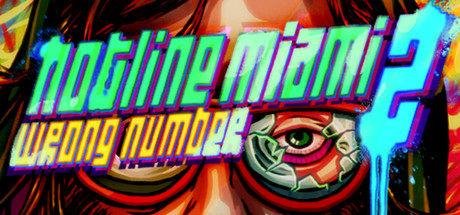
Hotline Miami 2 is initially frustrating due to its large levels, unfair difficulty, and off-screen enemies, but after a steep learning curve of about 50 hours or when the gameplay clicks, it becomes highly addictive.
Reported time to anchor: 50h.
Friction: massive levels that hide off-screen enemies; unfair difficulty with one-hit kills from unseen threats; steep learning curve requiring pattern memorization; tedious and repetitive level design; boring stealth gameplay forced by punishing combat.
Unlock drivers: instant restart mechanic that encourages trial and error; addictive soundtrack that maintains engagement; mastering map layouts and enemy patterns; achieving flow state when gameplay clicks.
Player profiles
Frustrated Purist: Prefers flexible mask-based experimentation; dislikes character-locked abilities and trial-and-error from off-screen deaths. Motivation: Seeks the freedom and balanced challenge of the first game; disappointed by restrictive design. Stance: deep sale.
Hardcore Masochist: Aggressive trial-and-error; repeats levels until perfect; uses every tool and glitch to achieve A+ ranks or all achievements. Motivation: Mastery, completion, and the dopamine rush from overcoming punishing challenges. Stance: buy.
Story-Driven Fan: Plays methodically to experience story; willing to endure difficulty for lore; prioritizes cutscenes and atmosphere over speedrunning. Motivation: Understanding the complex narrative, character development, and meta-commentary on violence. Stance: sale.
Platform notes
Across both hardware cohorts, players report smooth performance and good optimization with no technical issues mentioned.
Windows <8GB VRAM / <16GB RAM: positive. Players with 8GB VRAM and 16GB RAM report smooth performance with no frame drops or crashes.
Windows 12-15GB VRAM: positive. Players report no lag, frame drops, or crashes, and praise the game's optimization.
Steam Deck: Hotline Miami 2 has mixed feedback on Steam Deck. While some users enjoy the game with controller support, others experience frequent crashes and control issues that degrade the experience. The crashes are the most critical barrier, leading to a high friction score.
Linux and Proton: The user reviews do not contain any specific feedback regarding Linux or Proton compatibility. The only mention of Linux is a list of supported platforms, which does not provide user experience data.
Extra review signals
External guides: User feedback strongly indicates that the wiki is nearly mandatory, primarily for understanding the story (Instructional Data) and to a lesser extent for map navigation. There is no mention of farming, drop rates, inventory, or crafting dependencies, so the score is set at 50 (The Student) per the strict priority algorithm.