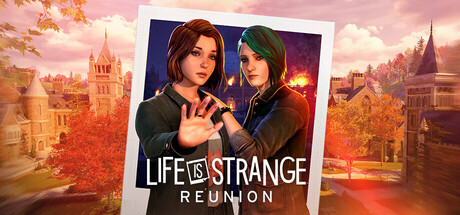
- Chloe and Max's return praised
- Graphics, music, and art direction lauded
- Strong voice acting across languages
- Boring and meaningless story
- Weak character writing
- Poor optimization overall
Emotions
Archetypes
Hardware
What players like:
Common complaints:
Gameplay feedback:
Performance notes:
Recommendations:
Other player notes:
- -
No data available
Similar games
Blend with other games 85%Life is Strange: Double Exposure
 80%Life is Strange - Episode 1
 80%Life is Strange: Before the Storm Remastered
 79%Life is Strange: Before the Storm
 79%Life is Strange 2
 78%Last Stop
 78%Lost Records: Bloom & Rage
 77%Life is Strange Remastered
 77%The Casting of Frank Stone™
 76%Tales from the Borderlands
 76%Dreamfall: The Longest Journey
 75%The Wolf Among Us
Review evidence
Why players say this
Review evidence
Why players say this
Steam review verdict
Despite strong voice acting, graphics, and music, Chloe and Max's return is undermined by a boring story, weak writing, and poor optimization.
What players like
Chloe and Max's return praised: Multiple clusters highlight the positive reception of seeing Chloe and Max together again, with their rekindled relationship and dynamic being a major draw for players.
Chloe's mature portrayal appreciated: Reviewers note that Chloe's character has matured into a balanced, charming individual with leader qualities, and her return is handled well without invalidating previous player choices.
Graphics, music, and art direction lauded: The game's art direction, beautiful environments, solid graphics, and soundtrack are frequently praised, with music being a notable merit.
Story and writing quality: The main story is considered okay with decent twists, tight writing, and some impactful decisions, though the middle and later parts have decent performances; the game provides closure for Max and Chloe.
Fun and enjoyable experience overall: Players describe the game as fun, with good setup and initial mystery, and nice fanservice moments that make it a worthwhile experience for fans of the series.
Common complaints
Boring and meaningless story: The story is repeatedly described as boring, meaningless, and uninteresting. Players feel the plot lacks sense and fails to engage, making it a core disappointment.
Weak character writing: Characters are often called uninteresting, soulless, and bland, especially those besides Max and Chloe. This lack of depth detracts from the overall experience.
Inconsequential player choices: Many reviews note that choices feel meaningless, with little to no impact on the story or outcomes. This undermines the sense of agency important to the genre.
Inferior to the first game: Players compare this game unfavorably to the original, citing a weaker premise, worse animations, and a loss of the intimate charm that made the first game special.
Ruins first game's ending: The sequel is criticized for nullifying the impact of the first game's final choice, making that ending feel irrelevant or meaningless. This is a major point of frustration.
Gameplay and performance
Story-driven choice-based gameplay: Reviews highlight that the game is heavily story-driven with choices and consequences, reminiscent of Telltale games. This is a core element emphasized by multiple reviewers.
Dual protagonists experience: Players control both Max and Chloe as dual protagonists, each with unique abilities—Max's time rewind and Chloe's argument skill. This dual perspective is frequently mentioned.
Time rewind power returns: Max's time rewind ability makes a return as both a narrative and gameplay feature. Some reviewers note it feels like a gimmick, but it remains a central mechanic.
Players can play as both Max and Chloe: Multiple reviewers confirm that players can control both characters, reinforcing the dual protagonist setup.
Choices affect relationships: Player choices directly impact character relationships, a common element in choice-driven narratives noted by one review.
Poor optimization overall: Many reviews describe the game as poorly optimized, unoptimized, or glitchy. Several claim it is the worst optimization they have seen.
Missing DLSS and FSR support: Multiple players note the game lacks DLSS and FSR, missing key upscaling technologies. The game relies on a basic Unreal Engine upscaler leading to blurry visuals.
Low FPS on high-end hardware: Even powerful GPUs like RX 7900 XT, RTX 4080, and RTX 5090 struggle to maintain 60 FPS at 1440p or 4K. The game is very demanding.
Graphic bugs and display issues: Players report display bugs, pixelated textures, broken depth-of-field causing flickering edges, and missing geometry in scenes. Graphics appear dated but still cause performance problems.
Crashes and instability: Players experience crashes, GPU crash dumps, and freezes during gameplay. These issues make the game unplayable for some.
Recommendations
Overwhelmingly negative purchase advice: The vast majority of feedback strongly advises against buying the game, with many calling it a cash grab or a waste of money. The most common recommendation is to avoid the game entirely.
Not worth the price: Reviewers consistently state the game is not worth the full asking price, with some suggesting it should only be bought at a significant discount of 70% or more.
Only for specific fans: The game is seen as acceptable only for certain subsets of fans, such as those who never played the original or are just fans of Max and Chloe. For others, it is not recommended.
Fanbase division over ending: The game is specifically recommended only for players who chose to sacrifice Arcadia Bay and is not recommended for those who sacrificed Chloe. This indicates a strong division based on the original game's ending choice.
Harmful to the series legacy: Some feedback criticizes the game for nullifying the first game's ending, trampling on the DNA of Life is Strange, and being an unnecessary addition. Reviewers suggest the studio should stop making such games.
Buying context
Community fair range: $20.00 - $30.00.
Game completion: 10.0h.
Story completion: 7.0h.
Most players find the first hour to first half of Life is Strange: Reunion slow and boring, after which the narrative picks up and becomes emotionally engaging, though timing varies.
Reported time to anchor: 1h.
Friction: slow pacing in early sections; tedious tutorial and repetitive gameplay; boring side characters and shallow dialogue; lack of urgency in the plot during first half; limited interesting use of rewind powers.
Unlock drivers: story escalation in the third act; emotional payoff for invested series fans; meaningful choice consequences later; character development for Max and Chloe.
Player profiles
Pricefield Nostalgia Devotee: Focuses on character interaction and emotional scenes, replays to explore relationship outcomes, explores all dialogue options for Max and Chloe moments. Motivation: To witness the final chapter of Max and Chloe's relationship and satisfy years of emotional investment. Stance: buy.
Critical Story & Value Analyst: Explores thoroughly to find all evidence and missable content, may replay for achievements or different endings, but criticizes lack of skip options and forced replays for achievements. Motivation: To experience a well-crafted narrative and meaningful choices, balanced against technical performance and content value. Stance: sale.
Platform notes
Performance is inconsistent across hardware tiers; low-end and high-end Windows systems face severe issues, while mid-range and some high-RAM configurations see better results.
Windows 8-11GB VRAM: negative. Users report frequent crashes, freezes, input lag, and lack of upscaling, with most experiencing poor performance even on recommended hardware.
Windows 12-15GB VRAM / 16-31GB RAM: mixed. Opinions are split; some enjoy the game with minor issues like blurry backgrounds, while others suffer from unstable FPS and no upscaling support.
Windows <8GB VRAM / 16-31GB RAM: positive. Many users manage to play with reduced settings, reporting occasional FPS drops and visual bugs but overall playable and enjoyable.
Steam Deck: Life is Strange: Double Exposure runs on Steam Deck with significant tinkering: users must lower graphics settings to low/medium and accept ~30fps. The lack of DLSS/FSR forces native resolution and worsens performance. Some users experience frequent crashes (especially in the final chapter) and visual artifacts. Linux compatibility is present but occasionally requires troubleshooting. Overall, the game is not broken but demands compromises, fitting the 'Tinkering Required' category.
Linux and Proton: The game has strong Day 1 Linux support with most users reporting smooth gameplay. A few initial issues were easily resolved, and one user noted minor performance concerns.
Extra review signals
Monetization: The game is a single-player story-driven experience with no microtransactions, no required DLC, and no pay-to-win mechanics. The predominant criticism of being a 'cash grab' relates to perceived lack of creative effort and reliance on nostalgia, not to any real-money monetization beyond the initial purchase. Some players find the base price too high for the content length, but the game offers a complete package without predatory add-ons. Therefore, the monetization model is fair and non-exploitative.
External guides: Users primarily report needing external walkthroughs and guides to understand the game's narrative context (following a previous title) and to decide on purchase. A secondary theme is curiosity about alternative choices, reflecting a desire for better in-game feedback. No evidence of farming, inventory, or spatial dependency.