- Stunning and beautiful graphics
- Excellent memorable soundtrack
- Compelling emotional well-written characters
- Game pacing is too slow
- Ending disappoints many players
- Underused supernatural elements
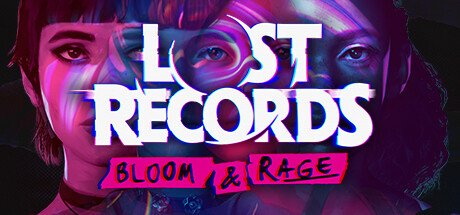
Emotions
Archetypes
Hardware
What players like:
Common complaints:
Gameplay feedback:
Performance notes:
Recommendations:
Other player notes:
Similar games
Blend with other games





Review evidence
Why players say this
Review evidence
Why players say this
Steam review verdict
Beautiful graphics and excellent soundtrack with compelling characters, but slow pacing, a disappointing ending, and underused supernatural elements hold it back.
What players like
Graphics are stunning and beautiful: Reviewers consistently praise the game's high-quality graphics, visual beauty, and artistic design. The visuals are described as breathtaking, immersive, and detailed, significantly enhancing the overall experience.
Game is amazing and enjoyable: Many players call the game amazing, fantastic, and even a masterpiece. They highlight the fun and engaging gameplay, immersive atmosphere, and overall high quality.
Characters are well-written and relatable: Players appreciate the depth and realism of the characters, noting they feel alive and relatable. The character development is consistently highlighted as a strong point of the game.
Soundtrack is excellent and memorable: The soundtrack is highly praised for being emotional, memorable, and fitting every moment. Reviewers mention that the music enhances the atmosphere and overall experience.
Story is compelling and emotional: The narrative is described as excellent, captivating, and touching. Reviewers emphasize the story's strong emotional impact and its ability to connect with players.
Common complaints
Game pacing is too slow: Multiple clusters highlight that the game, especially its first few hours and conversations, suffers from a very slow pacing that tests player patience. This is the most frequently mentioned critique.
Ending disappoints players: The ending is a major source of frustration, described as disappointing, rushed, open-ended, and leaving unresolved threads and questions. Many players felt the conclusion was unsatisfying and nonsensical.
Supernatural elements underused: The supernatural aspect, expected to be central, feels insignificant, underused, and poorly integrated into the plot. It is often ignored until the ending and leaves many questions unanswered.
Antagonists are poorly developed: The main antagonist and other villains are seen as bland, one-dimensional, and stereotypical, lacking depth and motivation. Characters like Corey are singled out as particularly weak.
Dialogue and choices feel forced: Interactions and dialogue choices are criticized as contrived, far-fetched, and giving an illusion of choice, with players needing to guess the right responses. This diminishes immersion and narrative quality.
Gameplay and performance
Camcorder recording mechanic: A core gameplay feature is using a camcorder to record surroundings, capture memories, and collect optional content. Recordings can be edited and spliced into tapes, integrating player-created content into the narrative.
Choice-based narrative with multiple endings: The game is heavily choice-driven, offering branching paths and multiple endings based on player decisions. Dialogue and action choices significantly affect story outcomes and character relationships, providing high replay value.
Dialogue choices affect relationships: Conversation choices directly impact relationships with characters, including friendships and romance options. Players must be careful with dialogue to avoid negative outcomes, with a relationship system tied to choices.
Story-driven narrative adventure: The game is a narrative-focused adventure with strong character development and dialogue-heavy storytelling. It is widely described as story-driven, with gameplay supporting the narrative rather than action.
Split into two tapes: The game is structured into two distinct parts, labeled Tape 1 and Tape 2, functioning as chapters or episodes. This tape-based structure organizes the narrative and mirrors the camcorder theme.
Poor optimization causes FPS drops: Multiple clusters report frame rate instability, with drops from high FPS to around 20-30 FPS in various scenes, even on high-end hardware. This suggests widespread optimization issues affecting gameplay smoothness.
Performance issues on various devices: Feedback from a range of devices, including Steam Deck, Legion Go, and low-end PCs, indicates inconsistent performance. While some users can play on low settings, others face severe lag or FPS drops even on supported hardware.
Game demands high system specs: The game has high system requirements, with recommendations like a 3080 and frequent reports of demanding hardware usage. Users on powerful GPUs still experience performance issues, indicating the game is not well optimized for the hardware it requires.
Settings reduction required for playability: To achieve acceptable performance, many players must lower their graphics settings to low or medium. This is a common workaround but impacts the visual experience and is not ideal for a game that is demanding on hardware.
Visual and animation glitches: Users report various graphical anomalies, including texture loading delays, animation bugs, and issues with hair and lip sync. These glitches can detract from immersion and occur throughout the game.
Recommendations
Recommended for Life is Strange fans: Multiple reviewers explicitly recommend the game to fans of Life is Strange and Dontnod's narrative-driven games. This is the most common sentiment, appearing in many clusters.
General positive recommendation: Many reviewers simply state that they recommend the game, often without specific caveats. This indicates a broadly positive reception.
Recommended for narrative game fans: The game is praised for its story-driven and atmospheric nature, making it appealing to fans of narrative-heavy genres and studios like Telltale.
Wait for a sale: A notable number of reviewers suggest waiting for a price drop, indicating concerns about the value proposition at full price.
Slow-paced but impactful: The game is often described as slow and dialogue-heavy, which may not suit everyone, but those who enjoy character-driven, atmospheric stories will find it rewarding.
Buying context
Community fair range: $20.00 - $30.00.
Game completion: 12.0h.
Story completion: 12.0h.
The game is a very slow burn: Tape 1 feels tedious and eventless, but most players who persist to Tape 2 find the story and emotional beats rewarding.
Friction: extremely slow pacing in Tape 1; tedious camera and object inspection mechanics; long stretches where nothing story-important happens; boring and repetitive exploration tasks; forced dialogue and cringe moments.
Unlock drivers: Tape 2's faster pacing; story revelations and character development; emotional payoff in the ending; reduced reliance on unskippable exploration.
Player profiles
Nostalgic Life is Strange Fan: Slow, narrative-focused exploration with attention to detail and emotional moments. Motivation: Reliving the emotional storytelling and character connection reminiscent of Life is Strange. Stance: buy.
Cautious Recommender: Patient, willing to endure slow start, values narrative over action. Motivation: Character-driven story with emotional payoffs, tempered by awareness of flaws. Stance: sale.
Disappointed Veteran: Comparative, critical, seeks narrative depth and resolution. Motivation: Expectation of a compelling narrative similar to earlier DON'T NOD successes. Stance: no buy.
Platform notes
All hardware cohorts report generally positive performance, with minor caveats such as occasional frame drops on lower VRAM systems and recommended settings adjustments.
Windows <8GB VRAM: positive. Mostly positive with some frame drops and stuttering; playable at low settings with DLSS help.
Windows 12-15GB VRAM: positive. Generally smooth performance; some recommend locking frame rate and disabling DLSS frame gen to avoid instability.
Windows 8-11GB VRAM: positive. Runs well with minor limitations like not exceeding 100 FPS.
Steam Deck: The game runs poorly on Steam Deck, with frequent frame drops to 20-24 FPS and at least one crash. Upscaling methods like FSR3 cause flickering, further hampering the experience. Performance and stability are the primary barriers, making the game playable only with significant compromises.
Linux and Proton: Based on two Steam Deck performance reports, the game runs on Linux/Proton with sufficient playability but suffers from performance issues that may disappoint some users. No blocking issues or required tweaks were mentioned.
Extra review signals
External guides: The primary complaint is a lack of in-game explanation for story events, which could drive users to external sources. However, a contrasting positive review highlights that the game is self-sufficient, suggesting the wiki tax is moderate rather than severe.
Other review notes
Extensive comparisons to Life is Strange: A large portion of reviews compare this game to the Life is Strange series, with many seeing it as a spiritual successor. Some feel it matches or improves on the formula, while others believe it falls short of the original games.
Mixed reception versus Life is Strange: While some reviewers feel the game rivals or surpasses Life is Strange, others think it does not match the emotional impact or character depth of the original series. Sentiments vary widely.
Desire for a sequel: Multiple reviews express a hope for a sequel or continuation of the story. Some mention the ending leaves room for further chapters, and a few specifically request a 'Tape 3'.
Gameplay mechanics similar to Life is Strange: The game borrows mechanics and ideas from Life is Strange, such as choice-driven storytelling and chapter-based progression. These similarities are often noted in comparisons.
Developer is Don't Nod: Many reviews acknowledge that the game is developed by Don't Nod, the creators of Life is Strange. This association influences expectations and comparisons to their previous works.