- Max Caulfield's compelling return and development
- High-quality visuals and outstanding animations
- Exceptional voice acting and motion capture
- Strong narrative but rushed story progression
- Game length and pacing issues frustrate players
- Technical problems and performance instability

Emotions
What players like:
Common complaints:
Gameplay feedback:
Performance notes:
Recommendations:
Other player notes:
Similar games
Blend with other games 88%Life is Strange 2
 87%Life is Strange: True Colors
 86%Life is Strange: Reunion
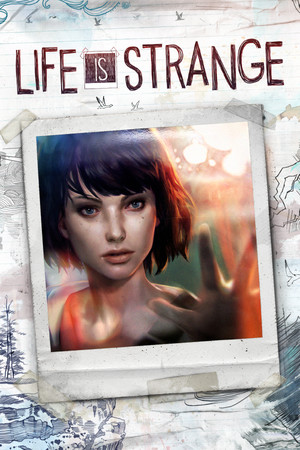 85%Life is Strange - Episode 1
 84%Lost Records: Bloom & Rage
 84%Last Stop
 83%Life is Strange: Before the Storm Remastered
 82%Life is Strange Remastered
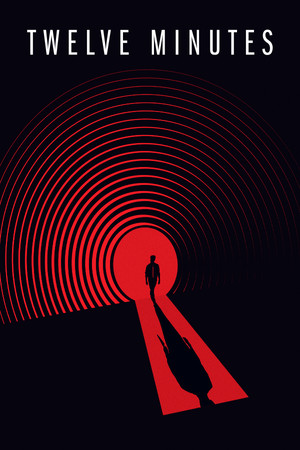 82%Twelve Minutes
 81%BAD END THEATER
 81%Life is Strange: Before the Storm
 81%Otaku's Adventure - The World Just Keeps Turning
Review evidence
Why players say this
Review evidence
Why players say this
What players like
Max Caulfield's return and development: Players appreciate the return of Max Caulfield as the protagonist, noting her consistent character development, emotional maturity, and growth since the first game. Her portrayal as an adult resonates well with fans.
High-quality visuals and animations: Players highlight the game's stunning visuals, detailed environments, and impressive facial animations. The use of Unreal Engine 5 and attention to detail in character models and lighting elevate the overall experience.
Outstanding voice acting and mocap: The voice acting, particularly for Max Caulfield, is widely praised for its emotional depth and realism. Motion capture technology enhances character expressiveness, making interactions feel natural and immersive.
Strong narrative and storytelling: The game is widely praised for its well-written, engaging, and emotionally impactful story. Players highlight the mature themes, relatable characters, and well-paced storytelling, which are hallmarks of the Life is Strange franchise.
Nostalgic callbacks and references: The game successfully integrates nostalgic elements, Easter eggs, and references to the first Life is Strange game. These callbacks resonate with long-time fans and enhance the emotional connection to the franchise.
Common complaints
Rushed and weak story progression: The narrative is criticized for being underdeveloped, with a lack of depth, coherence, and emotional impact. Many players felt the story disintegrated in the last two episodes, leaving unanswered questions and unresolved plot points.
Game length and pacing issues: The game is described as too short, with uneven pacing—slow starts and rushed endings. Many players felt the experience was incomplete, resembling a setup for a sequel rather than a standalone story.
Poor character development: Characters, including Max and Safi, are perceived as shallow, inconsistent, or poorly written. Side characters lack depth, and relationships feel forced or underdeveloped, particularly romances and key dynamics like Max and Chloe’s.
Technical and performance problems: Frequent bugs, poor optimization, and performance issues (e.g., FPS drops, blurry visuals, T-posing NPCs) detract from immersion. The game struggles to run smoothly even on high-end hardware.
Disrespect to franchise legacy: The game is accused of undermining previous entries, particularly *Life is Strange 1*, by ignoring its endings, misrepresenting characters like Max and Chloe, and failing to capture the emotional depth of earlier titles.
Gameplay and performance
Choices with limited impact: While the game emphasizes decision-making and narrative choices, many players felt these choices had minimal or superficial consequences, often only affecting minor interactions or the ending wrap-up rather than the core story.
Narrative-driven episodic structure: The game employs a chapter-based or episodic structure with short, engaging segments, focusing on choice-based storytelling and branching narratives. Players noted varying quality across episodes but appreciated the climactic endings and emotional impact.
Supernatural mystery-solving: The narrative revolves around solving mysteries, often involving supernatural abilities, deaths, or investigations in a university setting. Players enjoyed the detective-style gameplay but found some puzzles basic or underutilized.
Environmental exploration: Players could explore environments, interact with NPCs, and uncover details like collectibles or lore. However, some noted interactions were more limited compared to previous games in the series.
Character depth and relationships: The game focuses heavily on character development, interactions, and emotional storytelling, with a strong emphasis on relationships and identity politics. Players appreciated the colorful characters and their backstories but noted some inconsistencies in portrayal.
Severe optimization issues: The game suffers from widespread performance problems, including FPS drops, stuttering, and poor optimization across various hardware configurations, particularly on mid-to-low-end systems. High-end hardware can run the game smoothly, but inconsistent performance persists even on capable setups.
Graphical and physics glitches: Players encounter a variety of visual bugs, including T-posing NPCs, floating doors, frozen elements, and texture pop-ins. These issues often require reloading checkpoints or areas to resolve.
Frequent crashes and instability: The game is prone to crashes, particularly during loading screens or exploration. Some crashes can be mitigated using -dx11 or -vulkan launch options, but stability remains a significant issue.
Blurry and pixelated visuals: Numerous reports highlight blurry textures, pixelation, and resolution issues, even on high settings or high-end hardware. Adjusting resolution scalers or graphics settings often fails to resolve these problems.
Lack of upscaling support: Players report the absence of critical performance features like DLSS, FSR, or XESS, which exacerbates optimization issues, especially on lower-end or handheld devices like the Steam Deck and Legion Go S.
Recommendations
Recommended for Life is Strange fans: The game is highly recommended for fans of the series, particularly those who enjoy Max's character or emotionally engaging narratives. However, some fans of specific endings or Chloe may feel disappointed.
Avoid if not a diehard fan: Several players explicitly state the game is not worth the time or money unless the player is a diehard fan of the series or Max's character. Some even advise against playing entirely.
Mixed recommendations for casual players: Players not deeply attached to the franchise or narrative-driven games are less likely to find value in the game. Many suggest it is only worth playing if heavily discounted or for its unique story.
Buy on sale, not full price: The majority of players strongly recommend purchasing the game only during a discount, citing its flaws and lack of value at full price. Many suggest waiting for a 50% or greater sale to justify the purchase.
Play previous games first: Many reviewers suggest playing the first *Life is Strange* and *Before the Storm* to fully understand the story and characters. Some even recommend replaying them to avoid nostalgia overload.
Other review notes
Criticism of monetization practices: Players express frustration with DLC pricing, paywalls, and the requirement of DLC content for full game completion. Marketing strategies for DLCs are also seen as aggressive or unfair.
Nostalgia and atmospheric additions: Positive emotional responses are tied to nostalgia and new atmospheric locations like a secluded boarding school. However, some collectibles (e.g., Polaroids) lack clear context, causing confusion.
Inconsistent NPC voice triggers: Players report immersion-breaking inconsistencies in NPC voice triggers, which are described as frustrating and disruptive to gameplay flow.
Desire for sequel with multiple protagonists: Players express hope for a future sequel that expands storytelling by featuring multiple main characters, suggesting a demand for narrative depth.
Request for decision comfort function: Players desire a feature to change decisions without replaying entire chapters, highlighting a need for improved quality-of-life mechanics.