- Era progression adds deep strategic layers
- Engaging city-building with immersive gameplay
- Multiplayer enhances long-term replayability
- Base game lacks sufficient content
- Outdated graphics and art style
- Repetitive and linear campaign missions
Emotions
What players like:
Common complaints:
Gameplay feedback:
Performance notes:
Recommendations:
Other player notes:
Similar games
Blend with other games







Review evidence
Why players say this
Review evidence
Why players say this
What players like
Era progression adds depth: The progression through historical eras is highlighted as a key feature that introduces variety, challenge, and structure. Unique buildings, technologies, and events for each era enhance replayability and immersion.
Engaging city-building gameplay: Players consistently praise the city-building mechanics, describing them as engaging, deep, and fulfilling. The blend of management, creative freedom, and strategic decision-making creates a highly enjoyable experience.
Multiplayer enhances replayability: Multiplayer modes, including cooperative and competitive play, are well-received for adding variety and social interaction. Players enjoy the ability to engage with friends or other players in shared or competitive scenarios.
Beginner-friendly yet deep: The game is accessible to newcomers while offering enough complexity to satisfy experienced strategy and simulation fans. Its balance of fun and depth makes it appealing to a broad audience.
Franchise improvements over predecessors: Compared to earlier *Tropico* games, this entry is praised for its improved graphics, balanced difficulty, and refined mechanics. Players note it retains the series' charm while offering meaningful enhancements.
Common complaints
Base game lacks content: The base game is perceived as incomplete, with many features and missions locked behind DLC. Players feel the game relies on DLC to deliver a full experience, making it feel like an expansion pack.
Inferior to Tropico 4: Players consistently compare the game unfavorably to Tropico 4, citing degraded graphics, humor, voice acting, and overall gameplay experience. Many features and quality-of-life improvements from Tropico 4 are missing.
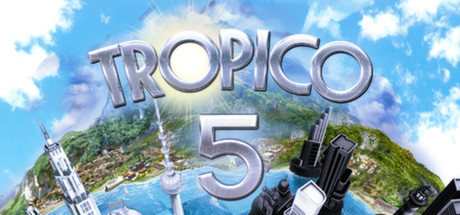
Outdated graphics and art: The game’s visuals are criticized for being uninspired, dated, and inferior to previous entries. The art direction and UI design are seen as lacking polish and clarity.
Disjointed island mechanics: The island-switching mechanic in the campaign is frustrating and breaks immersion. Players find it disorienting and poorly integrated into the gameplay experience.
Repetitive and linear campaign: The campaign is criticized for its repetitive missions, lack of variety, and linear progression. Players find it disjointed, with scripted events and poor mission design that reduces replay value.
Gameplay and performance
Political factions and rebellion: Players must manage political factions, public approval, and rebellions through elections, constitution amendments, and faction-specific policies. Rebellion suppression and faction popularity are key mechanics.
Dynasty system for legacy: The dynasty system replaces traditional minister mechanics, allowing players to manage family-based influence, inheritance, and political maneuvering. This adds temporal continuity and strategic depth to ruling.
Campaign and mission structure: The game includes a campaign mode with connected story missions, reusable islands, and persistent infrastructure. Standalone missions and sandbox modes offer additional gameplay variety.
Election and governance mechanics: Elections, coups, and political strategies (e.g., democracy vs. dictatorship) are core to maintaining power. Players must balance repression, incentives, and faction approval to avoid revolutions.
Economic and diplomatic systems: Trade, diplomacy, and economic logistics are central to gameplay, including relations with global powers, trade routes, and resource management. Political systems like constitutions and edicts further shape strategy.
Optimization inconsistencies: The game runs well on low-end hardware but suffers from poor optimization in other areas, leading to FPS drops (e.g., due to notification boxes) and infinite loading loops at higher population counts.
Platform-specific stability: The game performs well on Linux and ultrawide monitors (3440x1440) with minimal crashes, but game-breaking updates and technical issues persist on other platforms.
Multiplayer performance issues: Players report significant latency, sync lag, and server instability during multiplayer sessions, particularly at launch. Road mechanics in multiplayer are also noted as frustrating.
Game crashes and corruption: Frequent crashes occur when starting new games, during online multiplayer, or while performing specific actions like placing a logging camp. Save file corruption is also reported.
Graphical quality concerns: While some praise high-quality textures and water effects, others note dim lighting, poor color choices, and lower-quality textures compared to previous titles like Tropico 4.
Recommendations
Highly recommended for strategy fans: The game is frequently recommended for fans of city-building, empire development, and classic strategy games. Its humor, customization, and relaxed gameplay make it appealing for both newcomers and veterans of the genre.
Engaging gameplay with humor: The game’s satirical humor, political themes, and economic strategy mechanics create a unique and immersive experience. Players appreciate the thematic depth and the ability to role-play as a dictator.
Best value on sale with DLC: Players advise purchasing the game during sales, preferably bundled with DLCs for full enjoyment. The base game alone or the Complete Collection is recommended for better value.
Multiplayer potential untapped: While the game is recommended for multiplayer fans, its low player population limits its appeal. Players suggest playing with friends or other Tropico fans to enhance the experience.
Diverse playstyles and mechanics: The game offers flexibility through constitutional amendments, trade systems, and policy management. Players can experiment with different strategies, such as repression, incentives, or economic focus.
Other review notes
Localization errors present: Players report frequent localization issues, such as incorrect translations (e.g., 'Fire' instead of 'Dismiss'), which disrupt gameplay clarity. These errors affect user experience and immersion.
40-50 hours for 100% completion: Players report a moderate completion time of 40-50 hours for full game completion, indicating a balanced length for its genre and scope.
Discounted complete collection: Players highlight the value of purchasing the complete collection with all DLCs at a steep discount, suggesting strong satisfaction with the bundled offering.
Requested 'Absolute Power' mode: A feature suggestion proposes an 'Absolute Power' mode to disable economy and rebellion mechanics, catering to players who prefer unrestricted gameplay.
UI and control limitations: Feedback points to limitations in the user interface and controls, which may hinder usability or immersion for some players.