- Improved sequel overall
- Great for time-limited players
- Complex yet well-designed mechanics
- Slow progression and long timers
- Starting island resource scarcity
- Poor idle-active balance
Emotions
Archetypes
What players like:
Common complaints:
Gameplay feedback:
Performance notes:
- -
No data available
Recommendations:
Other player notes:
Similar games
Blend with other games








Review evidence
Why players say this
Review evidence
Why players say this
Steam review verdict
A solid sequel with complex, well-designed mechanics for time-limited players, though slow progression, long timers, scarce early resources, and a weak idle-active balance hold it back.
What players like
Improved sequel overall: Players consistently note the game is a clear upgrade from the first version, citing improvements in UI, content, QoL additions, and overall polish. It feels more refined and improved in nearly every category.
Ideal for time-limited players: The idle mechanics and offline progress make it ideal for players with limited time. It can be played in short sessions and still offers meaningful progress.
Complex yet well-designed mechanics: Players appreciate the well-thought-out mechanics, including complex production chains and supply chain management. The game offers significant depth without becoming overwhelming.
Anno-style with idle mechanics: The concept of combining Anno-style gameplay with idle mechanics is highly praised. Players enjoy the simplified, more relaxed approach compared to Anno, with attention to detail.
Progress continues while offline: The game calculates progress while closed, allowing players to continue progressing without staying online. This is a key feature that adds convenience for casual players.
Common complaints
Slow progression and long timers: Multiple clusters report that game actions like research, ship movement, and battles take excessively long, ranging from hours to days. This leads to frustration and a feeling of being time-gated.
Starting island resource scarcity: The starting island is mostly built up, leaving little space for new resource generation. This makes early resource gathering difficult and limits expansion options.
Poor idle-active balance: The game demands more active input than typical idle games, yet also enforces long waits, creating an awkward mix. This imbalance frustrates players expecting a more idle experience.
Island limit frustration: The game limits how many islands players can build on, which feels restrictive and frustrates expansion. This is compounded by the favor system's exponential curve for island slots.
Overall negative reception: Some reviewers simply state the game is not well designed, not fun, or not a simulation. These broad criticisms indicate a fundamental mismatch between expectations and execution.
Gameplay and performance
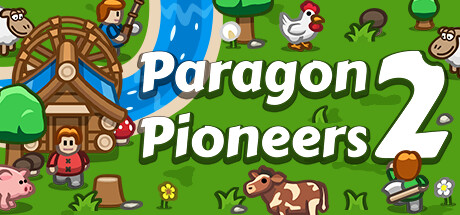
Hybrid city builder and idle: Players describe the game as a blend of classic strategy city building (like Anno) with idle/incremental mechanics. It is seen as more of a puzzle idle game than a pure city builder, emphasizing waiting and resource management.
Combat and orc conquest: Players build armies and send troops to fight orc fortresses, which serve as roadblocks. Combat involves troop types, special abilities, and limitations on troop numbers, with bosses having high HP and healing completely between battles.
Research and tech trees: The game features an in-depth research system with over 200 perks, divided into circles by population tier, each covering combat, resources, building, navigation, and population. Higher-tier research points can be used for lower-tier, and research is gated by island population and satisfaction.
Supply chains and production: Players build resource-gathering buildings, manage production chains, and maintain supply lines. The game features increasingly complex industry branches and puzzle-like fitting of buildings on tile-based islands, with limited crop fertility and deposits per island.
Expanding to new islands: The core gameplay involves starting on a small island and expanding to new ones through exploration, conquest, or liberation. Players must manage resources across islands and decide which to colonize, with some islands offering unique resources or requiring higher-class ships.
Recommendations
Recommended for Anno fans: Multiple reviews highlight that the game appeals to fans of the Anno series and economic simulations, describing it as a loving 'mini-Anno' or 'Anno-lite' experience without pressure or stress.
Suitable for limited playtime: Several reviews point out that the game is ideal for players with limited time, such as those who can only play for 30 minutes to an hour each night, and for those who prefer a slower pace.
Not for traditional city builder fans: The game is not recommended for players seeking a traditional city builder experience or for those who log in frequently for short sessions, as the city management aspect can be frustrating.
Recommended for idle genre fans: The game is recommended for fans of the idle genre, suggesting it offers a satisfying idle gameplay loop that fits well with the city-building mechanics.
May require too much time: Some reviews note that the game may require a significant time investment, which could be a drawback for certain players.
Buying context
The game gives a strong first impression with a good tutorial and relaxed expansion gameplay, but later becomes tedious due to island limits, leading to a drop in enjoyment.
Player profiles
Time-Pressed Casual Builder: Plays in short bursts, uses idle mechanics, and adjusts difficulty to a casual level to unwind. Motivation: Relaxing, low-stakes building and progression in short play sessions. Stance: buy.
Deep-Research Alpha Veteran: Researches many perks, tailors builds meticulously, and plays extensively across alpha phases. Motivation: Mastery of complex perks and systems, plus early access involvement. Stance: buy.
Series Continuity Enthusiast: Plays through the series in order, compares iterations, and seeks more sophisticated mechanics. Motivation: Continuing the franchise and experiencing expanded complexity over the predecessor. Stance: buy.
Other review notes
Frequent comparisons to Anno and Factorio: Many users compare Paragon Pioneers to popular strategy titles like Anno and Factorio, highlighting similar production chains and development options. Some specifically call it an 'Anno-lite' or reference Anno 1404 and its History Edition.
Available across mobile and Steam: The game is accessible on multiple platforms, including mobile devices and Steam. This cross-platform availability is frequently mentioned, with some noting it originally appeared on Android/iOS.
Achievements planned but delayed: Achievements are on the developer's To-Do list but not considered high priority, so they are not yet available in the game. This is noted as a planned future feature rather than an omission.
Developed by a single person: The game is developed by one independent individual, which is noted positively by reviewers. This includes responsive support via Discord.
Long playthrough lasting months: A single playthrough is designed to last for months, suggesting substantial depth and long-term engagement. This is tied to the game's idle mechanics and offline gains over multiple days.