- High price, low content
- Enjoyable casual strategy
- Bland, repetitive story
- Easy, repetitive combat
- Simplified Persona system
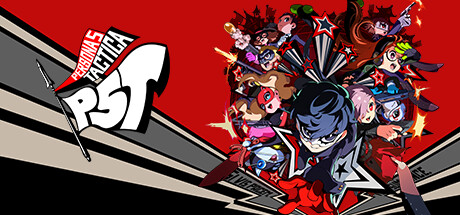
- Charming chibi art style
Emotions
What players like:
Common complaints:
Gameplay feedback:
Performance notes:
Recommendations:
Other player notes:
Similar games
Blend with other games




Review evidence
Why players say this
Review evidence
Why players say this
What players like
Enjoyable Casual Strategy: The game offers a fun and accessible tactical RPG experience, praised for its engaging gameplay, well-structured story, and balanced difficulty, making it enjoyable for both genre veterans and newcomers. Its length is also noted as being just right.
Charming Chibi Art Style: Reviewers consistently praise the game's cute and stylish chibi art style, noting its effectiveness in character expressions and visibility. The high quality of animations, cutscenes, and overall visual effects also contributes to a vivid and appealing presentation.
Compelling Story & Characters: The narrative is highlighted for its engaging plot, witty dialogue, and emotional depth, particularly in the development of new characters like Toshiro and Erina. While some found the start slow, the story generally picks up, offering satisfying twists and a strong conclusion.
Strategic Combat Mechanics: The game successfully integrates Persona's signature "1more" and "All-Out Attack" systems into its tactical RPG combat, creating a unique and satisfying experience. These mechanics, combined with strategic movement and level design, offer deep and engaging gameplay.
Authentic Persona 5 Spin-off: The game is highly regarded for successfully extending the Persona 5 universe, utilizing its beloved characters, lore, and signature style. It feels like a natural continuation, offering more content for fans while adapting the series' charm to a new genre.
Common complaints
High Price, Low Content: Many reviewers felt the game was significantly overpriced for the amount and quality of content offered, often describing it as short, lacking volume, and a "cash grab." This sentiment was consistent across various price points and included criticism of expensive DLC.
Bland, Repetitive Story: Reviewers found the narrative to be bland, predictable, and slow-paced, often relying on rehashed JRPG tropes like "god-slaying" and feeling like inconsequential filler. There was also a noted lack of meaningful character development for the main cast.
Easy, Repetitive Combat: The gameplay, particularly combat, was widely criticized for being too easy even on the highest difficulties, leading to monotony and a lack of tactical depth. Character skill trees and abilities were also seen as homogenized, limiting player choice and growth.
Simplified Persona System: The Persona system is heavily simplified, with Personas having only 1-2 skills and limited customization, making fusion and growth feel pointless. This deviates significantly from the depth expected in a Persona series game, reducing tactical choice and individuality.
Technical & Presentation Flaws: The game suffered from long loading times, performance issues like lags and crashes, and a generally unpolished presentation. Reviewers also criticized the weak music, poor voice acting, repetitive and static dialogue, and the unappealing chibi art style.
Gameplay and performance
Limited Persona System Impact: The game features a sub-Persona system and fusion, but Personas often serve as 'stat sticks' with only two skills, limiting their strategic depth and build variety. This implementation feels less impactful compared to mainline Persona games.
Simplified Tactical RPG Combat: The game is a turn-based tactical RPG with grid-based movement, often compared to titles like Mario + Rabbids or XCOM. While adopting the SRPG format, its combat is noted as simplified and puzzle-oriented, focusing on specific solutions.
Engaging '1more' & 'All-out Attack': The combat system heavily relies on '1more' and 'All-out Attack' mechanics. Players knock down enemies to gain extra turns ('1more') and then position three characters in a triangle to unleash powerful 'All-out Attacks,' which are central to strategic play.
Strategic Cover & Positioning: Combat emphasizes strategic positioning and the use of cover to resist damage and avoid critical hits. Players must utilize mechanics like pushing enemies out of cover to set up '1more' and 'All-out Attack' opportunities.
Accessible Difficulty & Playtime: The game is generally considered to have a moderate to easy difficulty, even on higher settings, with optional quests sometimes reducing challenge. A standard playthrough takes around 24-25 hours, with 100% completion extending to 35-40 hours.
Critical Bugs & Data Loss: Several critical bugs were reported, including unreadable save files for second playthroughs, disappearance of unlocked DLC content, and general loss of game progress. These issues severely impact player progression and reliability.
Performance & Loading Issues: Some players experienced significant performance drops, freezes, and even crashes, particularly when interacting with complex menus. Additionally, loading times were noted as noticeably long, even on fast SSDs.
Playable on Steam Deck: The game was reported to run well and be very playable on the Steam Deck, even during missions. This indicates good optimization and compatibility for portable gaming.
Low System Requirements: The game is noted for its low hardware demands, running well even on older integrated graphics or mid-range laptops. This makes it accessible to a wide range of PC setups.
Stunning Art Direction: The game's art direction received praise, particularly for how well it displayed on portable OLED screens. This highlights a strong and appealing visual aesthetic.
Recommendations
For Persona 5 Fans: The game is primarily recommended for fans of Persona 5 who desire more story and interactions with the Phantom Thieves cast. New players or those not familiar with Persona 5 are strongly advised to play the main game first to fully appreciate the spin-off.
Buy on Sale/Discount: The overwhelming sentiment is that the game is not worth its full price, but becomes a worthwhile purchase when heavily discounted (e.g., 50% off or specific price points like $20-35 USD, 100-4000 yen). Many reviewers strongly recommend waiting for significant sales before purchasing.
Mixed/Not Recommended: Overall reception is mixed, with many reviewers not recommending the game, especially at full price or if players are expecting challenging tactical gameplay. Some consider it a 'hit-or-miss' title.
DLC Considerations: Reviewers provide specific advice regarding the game's DLC, with some recommending its purchase, especially on sale, and even suggesting playing it first as a prequel to unlock characters for the main game. There's also a sentiment that the DLC should be included or priced lower.
Story/Fan Service Focus: The game is primarily seen as a fan-service title, appealing to those interested in the story and the continued interactions and chemistry of the Phantom Thieves. Some reviewers suggest watching a playthrough if curiosity is limited to the narrative.
Other review notes
High Production Quality: Reviewers praise the game's high production quality, particularly its art style, UI, and cutscene transitions, which evoke a well-produced manga/anime feel. The 'Q-version' or 'chibi' character designs are generally well-received for their expressiveness and charm, though some found them distracting.
Persona Spin-off Identity: The game is seen as a minor Persona 5 spin-off, often overshadowed by other titles like Persona 3 Reload. Reviewers note it doesn't significantly add to the Persona lore and is considered a 'half-baked' experience by some.
Short Game Length: The game is consistently noted as a small-scale title with a short main story, typically ranging from 20-25 hours for a single playthrough. Even with DLC, the total playtime is around 30 hours, which some reviewers found short for the price.
Phantom Thieves' Supporting Role: While the Phantom Thieves' interactions are amusing and a main selling point, their role is primarily to facilitate the growth of new characters. They are seen as supporting characters, though their struggles from the main game are well-utilized to relate to newcomers.
Awkward Lore Integration: The game's story is placed awkwardly in the Persona 5 timeline, specifically between the main game's ending and Persona 5 Royal's new content. While it aligns with Persona 5's themes, its initial lack of connection and small scale compared to main titles make its lore contribution feel minor.