- Excellent mining simulation
- Multiplayer and co-op support
- Heavy machinery and digging
- Physics are janky and buggy
- Bad controls and controller support
- Numerous bugs and crashes
Emotions
Archetypes
Hardware
What players like:
Common complaints:
Gameplay feedback:
Performance notes:
Recommendations:
Other player notes:
Similar games
Blend with other games


Review evidence
Why players say this
Review evidence
Why players say this
Steam review verdict
An excellent mining sim with multiplayer co-op and heavy machinery, but janky physics, poor controls, weak controller support, and bugs and crashes hold it back.
What players like
Excellent mining simulation: Many users highlight the game as a top-tier mining simulator, praising its mining and heavy-equipment mechanics. It is frequently compared favorably to other mining games.
Overall positive game quality: The majority of reviewers describe the game as great, excellent, awesome, or very good. This broad praise indicates a high level of general satisfaction with the game.
Strong potential for growth: A significant number of reviews note that the game has a lot of potential and a promising future. This suggests that players see room for improvement and expect continued development.
Best with friends: Playing together with friends is repeatedly mentioned as a highlight, making the experience more enjoyable and allowing for shared progress. The game is also praised for being great solo or with a group.
Fun and enjoyable gameplay: Players consistently report that the game is fun, surprisingly fun, and enjoyable to play. This reinforces the game's core entertainment value.
Common complaints
Physics are janky and buggy: Many players report that physics are often janky, with machines sliding, bouncing, flipping, or sinking into the ground. Terrain and dirt physics are also inconsistent and need significant work.
Bad controls and controller support: Controls are widely criticized as awful, annoying, impossible, or unnatural. Controller support is particularly poor, and controls are unintuitive and hostile to keyboard and mouse players.
Early Access with unfinished systems: The game is still in Early Access with many bugs and unfinished features, but it is not always labeled as such. Players note that it has been in development for years and still feels like a work in progress.
Numerous bugs and crashes: The game is filled with bugs, described as janky and bug-ridden, with occasional random crashes. Players report a constant stream of errors.
DLC sold for unfinished game: Paid DLC is being sold while the game is still in early access, before it is anywhere near complete. The DLC costs about 40% of the game price, which players see as a cash grab.
Gameplay and performance
Multiplayer and co-op support: Many players note the game supports both solo and multiplayer with friends. Co-op server joining and team play are highlighted as a major plus.
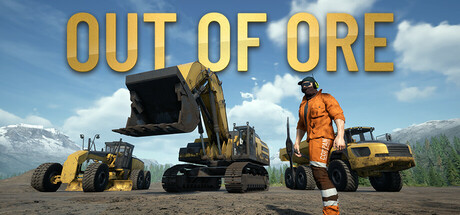
Heavy machinery and digging: The core loop involves operating heavy equipment such as excavators and bulldozers to dig and move material. Machines interact with dirt, ore, and terrain.
Varied vehicles and equipment: Players mention a range of vehicles including graders, loaders, excavators, dozers, and haul trucks. Tracked vehicles and wheel loaders are also commonly cited.
Terraforming and digging physics: The game features terraforming and realistic dirt physics with terrain changes. Digging, piling, and reshaping terrain are core mechanics.
Mining simulator with progression: Feedback describes a mining and heavy-equipment simulator with digging, hauling, blasting, and building. Progression includes leveling up and unlocking more content.
Frequent crashes and stability issues: Many reviewers report crashes during simple actions, occasional random crashes, and frequent disconnections. The beta version is described as having too many bugs and ridiculous errors, indicating significant stability problems.
Poor optimization reported: Users describe the game's optimization as poor or subpar, with some calling it normal but not impressive. Specific complaints include poor CPU and GPU utilization, high hardware demand per update, and inability to run smoothly even on lowest settings.
Smooth performance for some: A number of players experience smooth performance without major issues, crashes, or bugs. Some note no lag even with over 1000 bombs and an auto-clicker, or online play without lag.
Inconsistent performance across hardware: Performance varies wildly, with some users running smoothly at ultra graphics while others cannot achieve stable frames on lowest settings. Frame timing is poor, with peak FPS around 220 but average 45 and 1% lows at 4 FPS, indicating severe stuttering.
60FPS cap requires workaround: Multiple users report the game is locked to 60 FPS, and bypassing this limit requires editing configuration files. Config changes often revert, and forcing higher frame rates causes severe lag, limiting performance for high-refresh-rate monitor owners.
Recommendations
Mining And Heavy Machinery Appeal: Reviewers repeatedly recommend the game for players who enjoy mining, digging, heavy equipment, and sandbox gameplay. Multiple clusters emphasize this niche appeal.
Strong Overall Recommendation: A large number of reviewers gave the game a wholehearted recommendation and described it as fully recommendable. This is the dominant sentiment across multiple recommendation clusters.
Better With Friends: Many reviewers say the game is best experienced with friends or in groups. The multiplayer aspect is a major positive theme.
Not Recommended By Some: A notable set of reviewers explicitly do not recommend buying the game at this time. This negative sentiment coexists with the otherwise positive recommendations.
Appeal To Simulator Fans: The game is recommended for fans of simulator games, terraforming, and business building. It is seen as a must for players who enjoy simulation style gameplay.
Buying context
Community fair range: $10.00 - $25.00.
Game completion: 40.0h.
Session length: 6.0h.
Out of Ore most often becomes fun after players clear a rough onboarding curve: roughly an hour in the tutorial plus learning equipment and conveyor setups, with co-op often triggering sustained enjoyment. Some players report immediate fun or never passing the tutorial, but the dominant profile is that it clicks after early friction.
Friction: Tutorial is too basic, janky, or unpassable for some players; Steep learning curve for terrain deformation, machinery placement, and conveyors; Poor in-game explanation of how systems connect; External guides or videos are often needed to progress; Solo play becomes tedious without friends; Multiplayer griefing and lack of anti-cheat.
Unlock drivers: Completing the tutorial; Learning equipment and conveyor setups; Watching external clips or guides; Playing with friends or co-op; Updates and patches improving systems.
Player profiles
Chill Sandbox Terraformer: Solo or low-pressure sandbox digging, moving dirt, building, and operating big machines without strict goals. Motivation: Relaxation and creative terraforming with heavy equipment. Stance: buy.
Co-op Crew Miner: Joins friends' servers, splits roles, digs and builds together, and reshapes large areas cooperatively. Motivation: Shared teamwork and social progress in multiplayer mining. Stance: buy.
Cautious Hardcore Sim Tinkerer: Minmaxes progression, grinds selectively, learns automation/machinery, and plays hardcore self-guided sims. Motivation: Deep self-guided simulation, optimization, and fair value from an unfinished game. Stance: sale.
Platform notes
Overall, Windows players with under 12GB VRAM generally report positive, playable performance, though the <8GB cohort notes some bugs and FPS drops. The 12-15GB VRAM cohort's only included review is negative, citing handling and physics issues.
Windows <8GB VRAM: positive. Mostly positive: players recommend the game, though some report crashes, desync, quest bugs, and FPS drops, and one notes performance worsens as the car wash grows.
Windows 12-15GB VRAM: negative. Negative: the only included review is not recommended and cites odd handling and physics issues rather than smooth performance.
Windows 8-11GB VRAM: positive. Positive: the included review says the game runs very well with no lag.
Steam Deck: The provided reviews do not explicitly mention Steam Deck, Proton Experimental, external launchers, battery drain, or small text. The main friction is poor controller support and awful menu navigation, which are directly relevant to handheld play. Users also report bad vehicle controls and graphics errors early in the tutorial, suggesting an alpha-like level of polish. At the same time, several reviews describe the controls and gameplay as smooth and enjoyable, indicating the game is playable but likely requires controller configuration or other tinkering on Steam Deck. No evidence suggests frequent crashes, anti-cheat errors, or a complete failure to launch.
Extra review signals
Monetization: The audit finds frequent and strong complaints about paid DLC: it is described as overpriced relative to the base game, released during early access, and built from reused assets that players believe should have been in the base game. However, the reviews do not report real-money gacha, loot boxes, paid power, paid convenience, currency obfuscation, or a cash shop. Some users call the DLC optional and acceptable, and free updates are noted. Under the scoring rules, DLC or expansion complaints alone cannot push the score above 20.
External guides: The reviews consistently highlight a lack of instructional data: an incomplete/outdated wiki, no tutorial or manual, and specific building mechanics that require external research. This creates a high dependency on external sources for learning the game, classifying the primary complaint as Tier 3: The Student (Instructional Data).
Other review notes
Active developer updates praised: Many reviewers highlight that the developers are actively releasing updates and adding new content. This ongoing support is seen as a positive sign of dedication and passion.
Ongoing development and constant updates: The game is under constant development, with regular updates improving the experience. Reviewers note that development is still ongoing and not fully finished.
Early access development stage: Players frequently note that the game is still in early access and mid-development, with version numbers as low as 0.29. This status is widely acknowledged and accepted, though some feel it should be more clearly labeled.
DLCs available for purchase: DLC packs, including minor cosmetics, are available to support the team. Some players purchase them to show support for the developers.
Missing language localizations: Reviewers report a lack of Russian, Chinese, and German language support. This localization gap is a common complaint among non-English speakers.