- Physics-based mechanics praised
- Unique physics-based challenges
- Excellent optimization and stability
- Conveyor system poorly implemented
- Confined cave spaces hinder
- Content critically thin
Emotions
Archetypes
What players like:
Common complaints:
Gameplay feedback:
Performance notes:
Recommendations:
Other player notes:
Similar games
Blend with other games






Review evidence
Why players say this
Review evidence
Why players say this
Steam review verdict
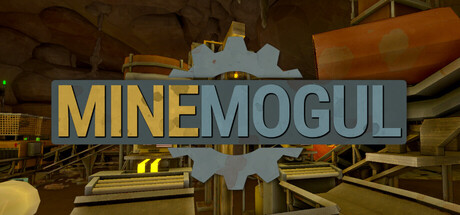
Unique physics-based mechanics and rock-solid optimization impress, but poorly implemented conveyors, cramped caves, and critically thin content hold it back.
What players like
Physics-based mechanics praised: The physics simulation is a standout feature, making gameplay satisfying and unique. It differentiates the game from other factory games and adds depth.
Unique physics-based challenges: The physics-based items create tactical and dynamic challenges not found in other factory games. Players enjoy the unpredictability and need for creative solutions.
Excellent optimization and stability: The game runs smoothly even with thousands of physics objects, with no lag or crashes. This optimization is highly praised.
Satisfying conveyor management: Managing conveyor belts and seeing production lines work is extremely satisfying. The tactile nature of moving items adds to the enjoyment.
Addictive gameplay loop: Many players find the gameplay loop highly addictive and lose track of time while playing. The core mechanics keep them engaged for long sessions.
Common complaints
Conveyor System Poorly Implemented: Conveyor belts have numerous issues: items fall off, get stuck, and splitters are unreliable. The building system requires placing individual pieces with poor snapping, making it tedious and imprecise.
Confined Cave Spaces Hinder: Caves are too narrow and claustrophobic, making it difficult to expand production lines or place machines efficiently. Spatial constraints force spaghetti conveyors and limit large-scale factory building.
Content Critically Thin: Many players report that the game lacks sufficient content, with most mechanics and resources seen within a few hours. Early access limitations mean very little to do after 20 hours.
Long AFK Waiting Periods: After building automated systems, players often stand idle for hours waiting for production to complete. Late-game objectives become waiting games with little active engagement.
Uninspiring Progression and Goals: Progression lacks meaningful upgrades and long-term incentives, with many players feeling the game runs out of content quickly. The ending leaves players with little to do.
Gameplay and performance
Factory building similar to Satisfactory: The game is an automation and factory management game comparable to Satisfactory and Factorio. It focuses on building production chains with conveyors and machines.
Limited building space in caves: The map is set in a mine or cave with tight, claustrophobic spaces and limited room for building. This constraint forces players to optimize layouts carefully.
Conveyor belt mechanics and segments: Conveyor belts are built from discrete segments and are central to gameplay. Misplaced belts can cause chaos, and managing item flow is a key challenge.
Mining and resource processing: Players dig ore and gems, use autominers on infinite deposits, and process ores into finished goods to sell. Sorting ore from dross and smelting are key activities.
Mining automation game with simplicity: It is a mining and production game with a simpler approach to automation. Players extract resources and build automated systems to process them.
Well optimized for many: Many users praise the game's optimization, noting smooth performance even with hundreds or thousands of physics objects on various hardware, including lower-end machines and Steam Deck.
Scattered ore causes lag: Unprocessed ore scattered on the ground is simulated as physical objects, leading to significant performance degradation as more ore accumulates. This often occurs when using auto miners that output ore without processing.
Late game optimization issues: Some players experience optimization problems in the late game, particularly during the final quests, where performance can become rough. This may be due to increased complexity and object counts.
Engine update improved performance: One reviewer mentioned that the new engine update reportedly improved the game's performance. However, this is a single report and may not reflect widespread experience.
In-game slowdown warning: A message appears indicating that the game must slow down to maintain FPS when adding more machines. This suggests a built-in performance management system that may impact gameplay.
Recommendations
Appeals to Automation Fans: The game is highly recommended for players who enjoy automation games, physics-based challenges, and factory-building. It is seen as a strong contender in the genre, even in early access.
Strong Overall Recommendation: Many reviewers give a full recommendation for the game, citing it as a positive experience worth playing. The consensus is that it delivers a fun and engaging factory-building experience.
Good Value for Money: Several reviewers state that the game is worth its price, with some even saying it is worth full price. A few mention that the price is justified, though some caution that it may be a stretch for the current amount of content.
Early Access Development Concerns: Many reviewers recommend waiting for further updates and maturity before purchasing, citing the game's current state. They believe the game has potential but needs more content and polish.
Comparison to Other Factory Games: Reviewers frequently compare the game to Satisfactory, Factorio, and Hydroneer, noting that it offers a simpler or more physics-based experience. It is recommended for fans of those games who want something different or less time-consuming.
Buying context
Community fair range: $10.00 - $15.00.
Game completion: 15.0h.
Session length: 7.0h.
Endgame: 15.0h.
The game is addictive and fun from the first session, but several players report that enjoyment fades after roughly 10 hours as progression turns into a rebuilding grind and late-game goals feel tedious.
Friction: Fiddly and slow building mechanics; Early access state with missing content; Tedious long-distance resource transport (1-3 hours); Tedious space constraints for conveyors; Conveyor merging and junction bugs cause stuck items.
Player profiles
Automation Genre Veteran: Builds and untangles conveyor systems, optimizes production lines, and commits to long early-access sessions when the potential is there. Motivation: To explore a fresh, personality-rich take on conveyor automation while judging its long-term depth against established factory games. Stance: buy.
Cozy Factory Newcomer: Plays casually, builds rough conveyor lines, leaves the game running, and does not chase perfect efficiency. Motivation: A low-pressure, cozy introduction to factory automation that is easy to understand and forgiving of messy setups. Stance: buy.
Multiplayer Co-op Seeker: Wants group sessions with cooperative goals rather than solo factory management. Motivation: To play with friends in a shared objective mode, especially a quota-based challenge like Lethal Company. Stance: buy.
Platform notes
Steam Deck: The Steam Deck experience is mixed but playable. Some reviews report good early and mid-game performance, no display glitches, no crashes, and no FPS drops. However, late-game factories with around 2,000 active objects can gradually lose FPS, and users needed to bind several new keys while finding the controls cumbersome. No external launcher, anti-cheat, unreadable-text, or battery-drain barriers appear in the evidence. The friction level fits a tinkering-required classification rather than seamless or broken.
Linux and Proton: The Linux/Proton evidence is sparse but positive. Users report that the game runs acceptably on Steam Deck/SteamOS, with good early and mid-game performance. The only caveat is a late-game FPS drop when the object count becomes very high on Deck hardware. There are no reports of Proton launch failures, crashes, anti-cheat blocks, or required Linux-specific workarounds. Overall friction is low.
Other review notes
Comparisons to Factorio and Satisfactory: Reviewers frequently compare this game to Factorio and Satisfactory, noting similarities in automation and building. Many describe it as a more casual, simplified, or smaller-scale version of Satisfactory.
Early access with limited content: The game is in early access and currently lacks content, with many reviews stating it can be completed in a few hours. Players note it is incomplete and needs more ores, processes, and features to extend playtime.
Responsive and active developers: Several reviews praise the developers for being responsive to community feedback and actively updating the game. They are noted to be a small team, possibly one person, who regularly release patches and communicate via Steam forums.
Comparison to Hydroneer: Many reviewers compare this game to Hydroneer, describing it as a more polished version with better gameplay loop and inventory system. Some say it is what Hydroneer should have been, with fewer bugs and better optimization.
Lack of localization support: Multiple reviews mention that the game lacks official localization for several languages, including Japanese, French, Portuguese, and Russian. Some players use third-party tools like XUnity.AutoTranslator to play in Japanese.