- Stunning visuals and detailed world
- Satisfying factory automation and logistics
- Highly addictive and replayable gameplay
- Weak story and narrative depth
- Spiders trigger phobia in players
- Grinding and minor bugs frustrating

Emotions
Archetypes
Hardware
What players like:
Common complaints:
Gameplay feedback:
Performance notes:
Recommendations:
Other player notes:
Similar games
Blend with other games
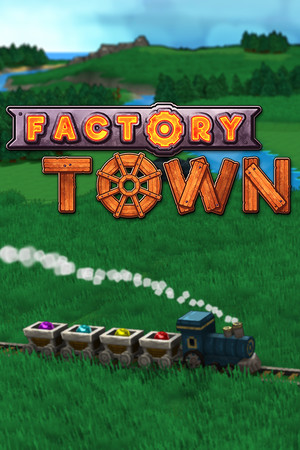
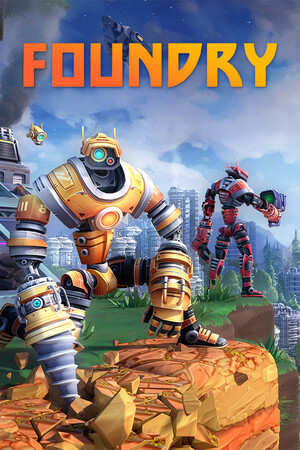


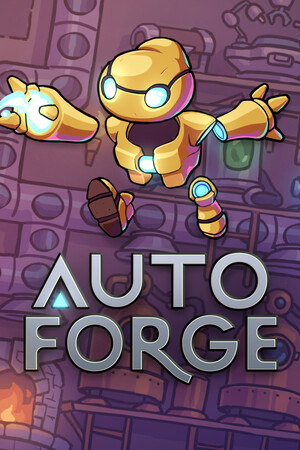



Review evidence
Why players say this
Review evidence
Why players say this
Steam review verdict
Stunning visuals and addictive factory automation are let down by a weak story, phobia-inducing spiders, and frustrating grinding with minor bugs.
What players like
Stunning visuals and world: The visuals are widely praised for their beauty, with multiple mentions of gorgeous graphics, beautiful alien worlds, and visually impressive biomes. The game's graphical fidelity contributes significantly to its appeal.
Satisfying factory automation: The core factory-building and automation mechanics are deeply satisfying, with notable praise for the optimization, planning, and expansion loops. Players enjoy perfecting their factories and find the process addictive.
Extremely addictive and engaging: Players consistently describe the game as highly addictive and engaging, with many noting that it scratches a specific itch and is hard to put down.
Fun and highly replayable: Players find the gameplay loop fun, satisfying, and highly replayable, often leading to long play sessions as time passes quickly. The engaging mechanics keep players coming back.
Rewarding progression system: The progression system is smooth, logical, and rewarding, with a meaningful loop that keeps players engaged. The sense of achievement from advancing through the game is a key positive.
Common complaints
Scary spiders trigger phobias: Spiders are frequently cited as terrifying and triggering arachnophobia, with some players finding them disgusting and hard to kill. They are a major source of discomfort.
Weak and shallow story: The story is often described as weak, short, and lacking depth, with a poor ending. Many players feel the narrative could be much stronger.
Grinding and minor bugs: There are minor bugs but also a significant amount of grinding required, which can be tedious. Together, these factors detract from the overall experience.
Constant rebuilding due to inefficiency: Players often find that optimizing factories is complex and inefficient, leading to complete rebuilds. This frustration is a common theme among experienced players.
Steep learning curve: The game becomes harder and more complex as you progress, with a steep learning curve for newcomers. This can be intimidating and unwelcoming.
Gameplay and performance
Complex automated production chains: Gameplay centers on building complex production chains and automating production lines with resource management. Players gather raw materials, smelt, craft, and assemble parts using interconnected systems that grow in complexity.
Core factory-building simulation: Reviews consistently identify the game as a factory-building and automation simulation, similar to Factorio, with a unique twist. It involves constructing, managing, and optimizing factories across a large world.
Conveyor belts and logistics: Conveyor belts are a fundamental mechanic, with players using splitters, merges, and lifts to manage logistics. As players progress, they build intricate belt networks to transport goods efficiently.
Freedom for megafactory construction: Players have the freedom to build giant factories horizontally and vertically, with options for multi-story buildings and conveyor bridges. The game encourages large-scale construction across the whole map, including megafactories.
Expansive world exploration: The game features a large, handcrafted open world with distinct biomes and map exploration. Exploration is a major part of gameplay, often tied to finding resources and setting up bases in diverse environments.
Excellent performance optimization: Multiple reviewers highlight excellent optimization, with consistent high frame rates (90+ FPS) even on max settings and mid-range hardware. The game runs smoothly across various PC configurations.
Large factories cause FPS drops: As factories grow to massive sizes, frame rates drop significantly, sometimes halving or causing stutters. This is a common complaint for players who build large-scale factories.
High hardware requirements: The game demands a powerful PC, especially for ultra settings, requiring at least an RTX 5070 or causing high fan noise. Some users need to adjust settings to achieve playable performance.
Minor lag and loading issues: Some players report rare lag spikes or minor lag when loading worlds, while others find performance okay or fine. These are low-severity issues that do not significantly affect gameplay.
Autosave and object lag: Autosave and rendering many objects cause performance lag, especially for clients in multiplayer. This is a common issue in co-op play when many structures are built.
Recommendations
Recommended for factory fans: The game is highly praised by fans of automation and factory games, with many comparing it to Factorio and recommending it to that audience. It is considered one of the best in the genre.
Perfect for optimizers: Many reviews highlight the game's appeal to players who enjoy optimization, problem-solving, system building, and long-term planning. The way complex systems come to life is a key draw.
Strongly recommended overall: Multiple clusters strongly endorse the game. Reviewers call it a must-play for everyone, while others say any gamer could love it, making it a broad recommendation.
Worth full price: Several reviews affirm the game is worth its full price, and some even buy it without a sale. Value for money is consistently highlighted.
Better with friends: Reviewers note the game is more enjoyable with 2-3 friends and that solo play can become tedious. Multiplayer is highlighted as the ideal way to experience the game.
Buying context
Community fair range: $30.00 - $40.00.
Game completion: 130.0h.
Story completion: 100.0h.
Session length: 6.0h.
Endgame: 160.0h.
Satisfactory typically becomes fun after players overcome an early slow phase and reach tier 4, where automation and exploration open up.
Friction: Steep learning curve; Slow early game; Tedious manual resource gathering; Overwhelming complexity for newcomers.
Player profiles
The Efficiency Engineer: Meticulous, calculating, iterative redesign. Motivation: Achieving perfect efficiency and order. Stance: buy.
The Creative Sandbox Player: Relaxed, exploratory, aesthetic-driven. Motivation: Creative expression and exploration. Stance: buy.
The Factorio Veteran Comparer: Analytical, critical, comparative. Motivation: Comparing systems and seeking depth. Stance: sale.
Platform notes
Performance varies by hardware tier: low-VRAM setups often run well with some issues, mid-range hardware shows mixed reports with frequent crashes, and high-end systems generally deliver smooth experiences.
Windows <8GB VRAM / <16GB RAM: positive. Most players report smooth performance on low-end hardware, though some experience crashes and optimization issues.
Windows 8-11GB VRAM: mixed. Reports are balanced; many enjoy stable performance but others frequently encounter crashes and late-game frame drops.
Windows <8GB VRAM / 16-31GB RAM: mixed. Opinions are split; some find the game runs well after tweaks, while others report persistent crashes and stuttering.
Steam Deck: Satisfactory generally runs well on Steam Deck but suffers from major compatibility regressions after updates (especially 1.0 and 1.2), requiring Proton Experimental and causing broken menu navigation, crashes, and limited controller support. UI scaling is a minor annoyance. Tinkering is often needed, and stability varies by version.
Linux and Proton: Satisfactory on Linux has a split reputation. Many users enjoy smooth performance out of the box or with minimal Proton version selection, and the game is Steam Deck Verified (1.0). However, update 1.2 introduced a severe regression that makes the game entirely unplayable for some Linux users, with no ability to roll back. Additionally, a subset of users needs launch options (Vulkan/DX11) to avoid crashes. Overall, the game is playable with tinkering, but the breaking update creates significant uncertainty and a risk of incompatibility.
Extra review signals
Monetization: All relevant user reviews confirm the game is a one-time purchase with no additional monetization such as microtransactions, paid DLC, loot boxes, or pay-to-win mechanics. The only financial transaction is the initial purchase price, which some players consider high but is not a monetization issue. The community strongly appreciates the lack of predatory practices.
External guides: User feedback consistently reports that Satisfactory requires extensive use of external tools like Excel spreadsheets and online calculators to manage production planning and optimization. This external dependency is the primary complaint, indicating a high barrier for players who prefer self-contained experiences.
Other review notes
Distinct from Factorio: Players frequently draw parallels to Factorio and other factory games, noting that Satisfactory is distinct and complementary rather than a substitute. The 3D perspective and reduced combat are seen as differentiating features.
Long and addictive: The game is described as highly time-consuming and addictive, with completion times ranging from 100 to 180 hours. The long playtime is generally seen as a positive for engagement.
High playtime hours: Many reviewers report hundreds to over a thousand hours of playtime, with some noting they are still not finished with the game. This indicates exceptional longevity and replay value.
Continuous updates supported: Continuous updates and strong developer communication from Coffee Stain Studios are frequently mentioned. Players appreciate the ongoing improvements and community engagement.
Worth price: Reviewers repeatedly state that the game offers great value for its price, often noting that the content exceeds what the cost would suggest. This makes it a worthwhile purchase.