- Engaging economic and resource management elements.
- Deep strategy RPG hybrid gameplay.
- Innovative conflict management system.
- Promising core gameplay with high replay value.
- Lacks depth and unintuitive mechanics.
- Unfinished, unstable, and needs significant polish.
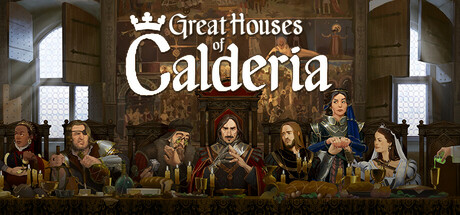
What players like:
Common complaints:
Gameplay feedback:
Performance notes:
Recommendations:
Other player notes:
Similar games
Blend with other games



Review evidence
Why players say this
Review evidence
Why players say this
What players like
Deep, immersive strategy RPG hybrid: The game blends grand strategy with RPG and dynasty management, drawing comparisons to Crusader Kings but offering unique mechanics and a more local focus. It emphasizes family dynamics, intricate economies, and character-driven narratives, creating a deeply immersive experience.
Engaging economic, resource management: The game features intricate economic and resource management systems, offering players greater control over their lands and production. Managing the realm and its resources is a core gameplay loop, with variable prices and city-state bonuses adding depth to trade.
Innovative conflict management system: The game implements innovative conflict management systems, including diplomacy and social conflicts, often resolved through unique mini-games. These systems offer strategic opportunities and make negotiations and battles more engaging.
Enjoyable, promising core gameplay: The game is enjoyable and promising, with a solid foundation and potential for future greatness. Reviewers appreciate the core concepts, mechanics, and the hybrid strategy gameplay, even in early access.
High replay value, dynamic gameplay: The game offers high replay value due to modding support, dynamic gameplay elements, and character-driven stories. Each playthrough provides a fresh experience, and the game is engaging enough to warrant multiple complete playthroughs.
Common complaints
Lacks depth, unintuitive mechanics: The game lacks depth, complexity, and sufficient explanation of its mechanics, leading to a steep learning curve and unengaging gameplay. Players find themselves struggling with unintuitive systems, a lack of clear direction, and missing features expected in similar titles, resulting in a shallow and tedious experience.
Poor UI and inadequate tutorial: The user interface (UI) and tutorial are poorly designed and unintuitive, making it difficult for players to understand core mechanics and manage essential tasks. Players struggle with clunky interfaces, a lack of clear guidance, and inadequate explanations, leading to frustration and hindering their ability to engage with the game's depth.
Repetitive gameplay and encounters: The game suffers from repetitive gameplay loops, particularly in trade, diplomacy, and combat, which rely on the same 3-way battle mechanic. Players are bombarded with undesirable trade offers and find themselves constantly auto-resolving encounters due to their repetitive nature, leading to boredom and frustration.
Lacks engaging endgame content: The late game lacks purpose and content, with the civil war ending abruptly and failing to provide meaningful post-war activities or consequences. Players find themselves with nothing to do after achieving victory, indicating a lack of depth and implementation in the game's final stages.
Erratic and unintelligent AI: The AI exhibits erratic behavior, with inconsistent resource management, questionable unit placement, and a tendency to spam peasant militias. This leads to tedious and unrealistic war scenarios, forcing players to adapt to illogical AI actions and potentially compromising their strategic choices.
Gameplay and performance
Focus on family, diplomacy, politics: The game centers around managing a noble family, focusing on internal affairs, diplomacy, and social interactions rather than traditional territorial expansion. Players engage in politics, forge alliances, manage family relationships, and develop their city-state, with the ultimate goal of achieving dominance through influence and strategic decision-making.
City-state, resource, population management: Players manage resources, develop their city-state, and grow their population, which is the main source of power. City-states and fiefs have specific bonuses and maluses to resource production, and upgrading provinces can lead to an economic end-state.
Real-time battles, mini-games, tactics: Battles and negotiations are conducted through mini-games, with each unit type having its own strengths and weaknesses. Real-time tactical battles require strategic planning and resource management, but the number of companions and troops is limited.
Limited timeframe, victory objectives: The game is not a sandbox and requires players to 'win' within three generations, either by ruling Calderia or fulfilling a secondary victory objective chosen at the start. The game's timeframe is limited to a few decades, ending relatively quickly compared to Crusader Kings 3.
Trade, bandits, resource limitations: Players need to find trading partners due to limited population and production capabilities. Bandits burn farms and pillage resource bases, requiring the player to hunt them down not only in their own fiefdom but also on roads to neighbors.
Frequent crashes and poor optimization: The game suffers from significant performance issues, including frequent crashes, stuttering, and frame rate drops, especially after extended play or progressing through multiple generations. Lowering graphics settings does not consistently resolve these issues, and the game's optimization seems poor relative to its visual quality.
Outdated graphics and infrequent patches: Several reviews mention the game's graphics being poor and outdated. Additionally, the game has not received a patch in six months, according to Steam.
Recommendations
Unfinished, unstable, needs polish: Many reviewers highlight the game's potential but caution that it feels unfinished due to bugs, poor UX, and instability. Some even find it unplayable due to frequent crashes. They suggest waiting for patches or purchasing only at a significant discount, if at all, until these issues are resolved.
Promising grand strategy title: Reviewers see the game as a promising addition to the grand strategy genre, especially for fans of political intrigue and medieval settings. Some suggest it could be a good entry point for newcomers, while others compare it to Crusader Kings, noting its potential as a competitor if further developed.
Active development, listen community: The game is in early access, and the developers are actively working on it. Reviewers suggest joining the Discord to provide suggestions to the development team, as listening to the community will help the game's development.
Improve alliance and battle mechanics: One reviewer's continued enjoyment of the game depends on finding a solution to the alliance issue. They also suggest that the 3-way battle mechanic should not be the only mechanic for important aspects of the game.
Add language support: Some reviewers suggest that adding language support for Korean and Chinese would attract more players. One reviewer also mentions that they will buy future DLCs if Korean translation, UI improvement, and some bugs are fixed.
Other review notes
Early Access, incomplete features: The game is in early access, with some features still unimplemented. Players should expect ongoing development and incomplete elements.
Not like Crusader Kings: The game is frequently compared to Crusader Kings 3, but this comparison is misleading due to differences in timeframe and gameplay style. It is not a traditional 4X game.
Fantasy world: Calderia: The game is set in the fantasy world of Calderia and features dynastic rivalries, suggesting extensive world-building.
Unique character traits: Characters possess unique traits that can either aid or hinder their progress, adding complexity to gameplay.
Demand Turkish language support: There is a demand for Turkish language support in the game.